





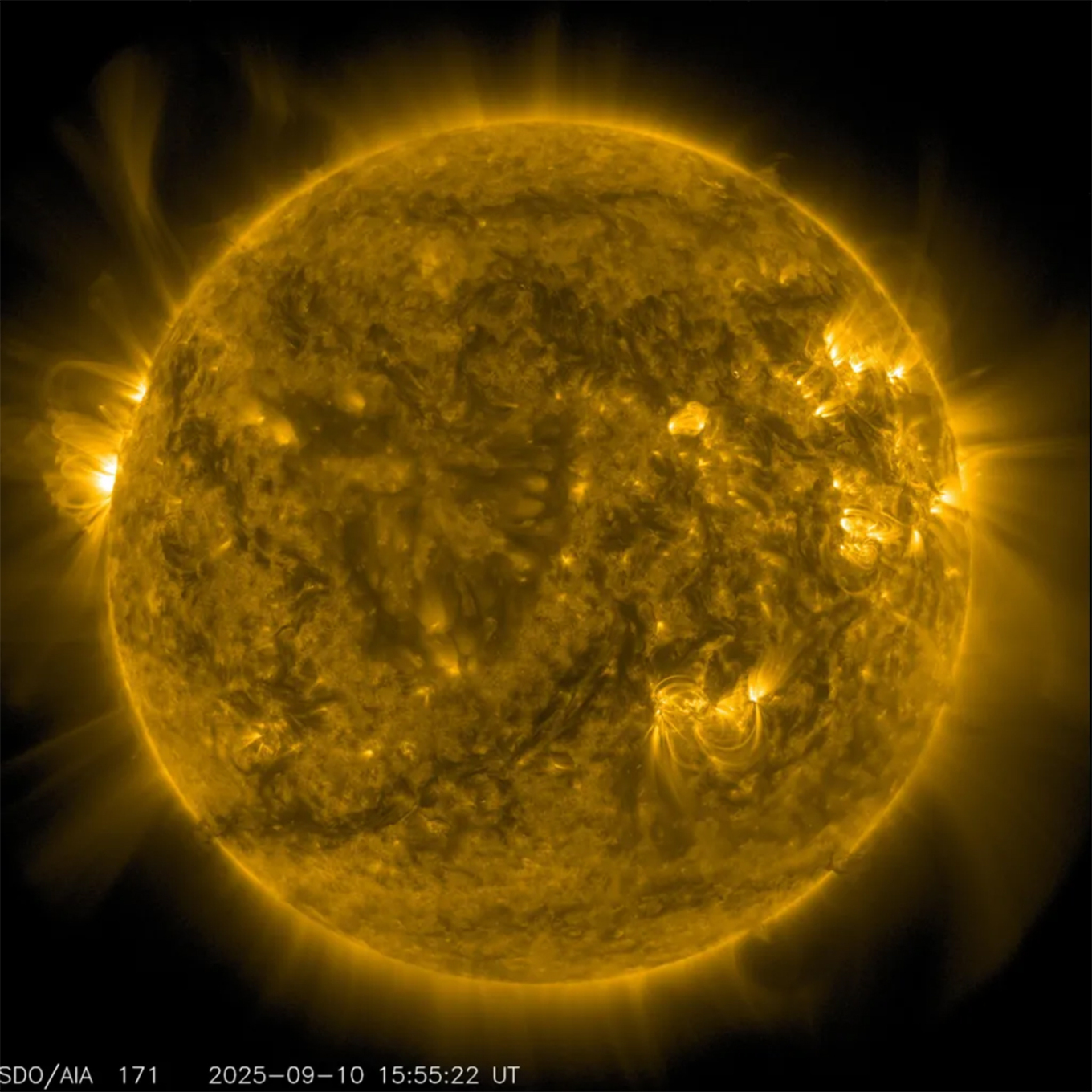
Observations reveal, for the first time, giant rotating plasma vortices that play a crucial role in generating what is known as space weather. The findings, published in the journal Nature, were made possible by the Daniel K. Inouye Solar Telescope, sited at high altitude on the Hawaiian island of Maui.
The area’s exceptionally clear atmospheric conditions allow scientists to observe the Sun at a resolution that was previously impossible.
Watch: The new footage revealed. The Most Detailed Images of the Sun EVER Captured
The images and footage capture swirling patterns of hot plasma on the Sun’s surface. These motions twist and rotate the star’s magnetic field, building up vast amounts of magnetic energy.
“The Sun is the source of all this energy and space weather. If we are ever to predict these phenomena more accurately, we need to understand its physics down to the smallest scales,” said Dr David Boboltz, deputy director of the National Solar Observatory (NSO) in the United States.
The phenomenon behind solar flares
Scientists observed a natural phenomenon known as the Kelvin-Helmholtz instability, which occurs when two fluid layers move at different speeds, creating spiralling vortices. A similar effect is seen in the oceans, where small ripples can develop into large, powerful waves.
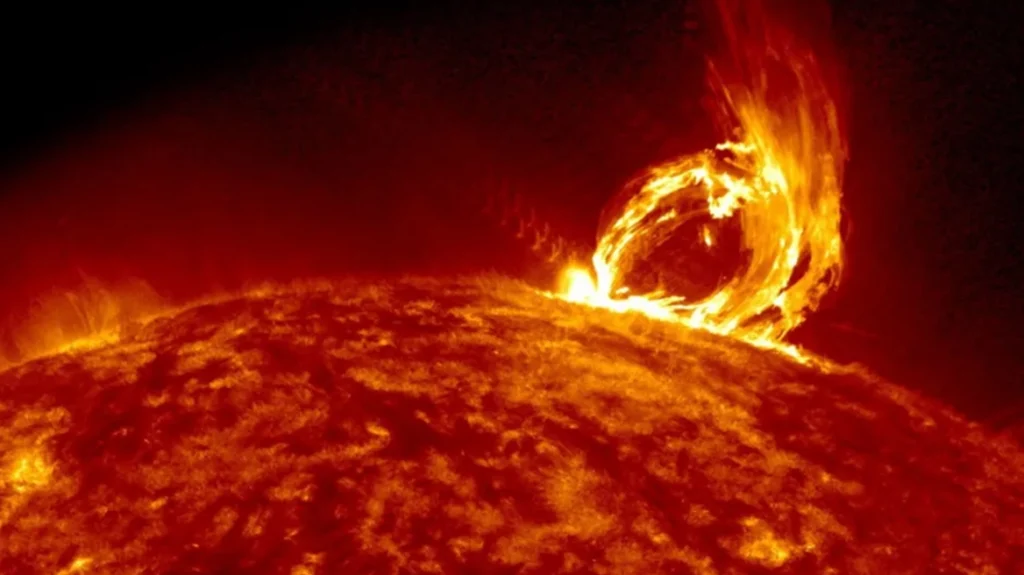
In the Sun’s case, these vortices generate magnetic energy that builds up in the upper layers of the solar atmosphere. When that energy is released, it triggers powerful solar flares or coronal mass ejections. “These rotational motions generate magnetic energy that can lead to major eruptions,” explained NSO astronomer Dr David Kuridze.
These phenomena are the main driver of space weather, which can disrupt satellite communications, GPS systems, power grids and other critical infrastructure on Earth, as well as raise the risks faced by astronauts in space.
A step closer to predicting space weather
According to Dr Friedrich Wöger, a senior scientist at the NSO and instrument programme scientist for the Inouye Telescope, the discovery helps scientists better understand not only the mechanisms behind space weather, but also one of solar physics’ biggest mysteries: why the upper layers of the Sun’s atmosphere are far hotter than its visible surface.
The observations, he explained, show how energy is transferred from the surface to the upper layers of the solar atmosphere, where it is ultimately released in the form of explosive events.
Researchers believe a better understanding of these processes will lead to more reliable models for forecasting solar activity in future, allowing for the timely protection of satellites, telecommunications systems, power networks and space missions.
Boboltz also notes that the Sun remains a unique natural laboratory for understanding the fundamental laws of physics.
“It is the closest star to us and helps us understand fundamental laws of nature. The first experimental confirmation of Einstein’s general theory of relativity came from observations of a solar eclipse. Research of this kind is worth carrying out for the advancement of human knowledge alone,” he concluded.
Ask me anything
Explore related questions




