





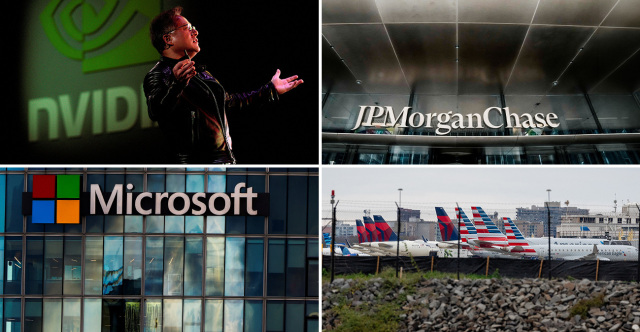
First, the company at the heart of America’s artificial intelligence revolution faced suspicions of foreign espionage. Then came disruptions to digital communications, grounded aircraft and problems with banking transactions. At the same time, cabinet officials were moving to military installations and reports of Iranian assassination plots were reaching the media. On 17 November, the NSA’s classified internal network joined the list. Problems were also reported shortly afterwards with several Apple services, including Apple Pay, iCloud, the App Store and Apple Support, as well as with the 911 emergency number and Microsoft 365.
Over the 20 days from 29 October to 17 November, with incidents piling up particularly quickly in the final week, the United States faced a series of disruptions and security incidents spanning technology, transport, finance and national security.
No common cause has been established. The timing nonetheless raises a question about how resilient the systems underpinning American power are.
The outage that reached the NSA
The latest incident carries particular symbolic weight. CNN reported that NSA Net, the network National Security Agency employees use to exchange classified information, went down. The broadcaster’s sources said staff were given staggered arrival times as the agency tried to determine the extent of the problem.
The initial reports gave no indication of a cyberattack. The cause, duration and full operational impact of the outage had yet to be made public. The report concerned a specific internal system and did not establish that the NSA had lost its overall ability to collect or analyse intelligence.
Even within those limits, the outage leaves the agency responsible for monitoring foreign networks and protecting critical communications facing questions about a failure on its own network.
At Nvidia, a private affair becomes a national security matter
On 12 November, Jensen Huang resigned as Nvidia’s chief executive following revelations about extramarital affairs. Colette Kress took over as interim chief executive. The matter had already taken on national security implications, with reports linking one of the women to suspicions among US agencies that she had spied for China, which Beijing denied. Nvidia had said it had no reason to believe that company secrets or national security had been compromised.
On 13 November, Reuters reported, based on sources and internal correspondence it had reviewed, that Huang had misled senior executives, including the company’s top lawyer, about the nature of his relationship with Chinese businesswoman Alice Huang. The independent members of Nvidia’s board had commissioned an external law firm to investigate on 10 November.
On 17 November, Huang said he was willing to return if the board decided that doing so would serve the company’s interests. On the same day, Nvidia announced an oversight committee for national security, export controls and international trade risks.
The case shows how closely corporate governance and national security have become intertwined. When a company supplies critical computing power, its executives’ personal ties and the internal checks on their conduct matter well beyond its shareholders.
When flights stopped taking off
On 13 November, the US Federal Aviation Administration encountered a technical problem at around 3.30pm Eastern time. A nationwide halt to departures followed. Traffic resumed at 8.15pm, almost five hours later. The FAA said ageing equipment became unstable when its FTI telecommunications network received about 1,000 connection attempts every four to five seconds. Problems first appeared at 17 of the 22 air traffic control centres and then spread.
The agency linked the incident to a routine equipment replacement at a remote facility. It disabled the relevant function on the routers where the problem originated and, as a precaution, on more than 60 similar devices. Radio frequencies and radar feeds remained partially available, and the FAA said all aircraft landed safely.
The volume of connection attempts alone offered no proof of hostile activity. The incident showed how a technical failure can spread through critical infrastructure.
On 16 November, United Airlines was affected. A problem with its systems delayed departures for about an hour, affecting applications used by pilots and the delivery of information they needed before take-off. Flights already in the air and United Express services were unaffected. The airline said there was no indication of a cybersecurity incident, and no link to the FAA outage had emerged.
Microsoft and the banks show how much depends on a handful of systems
The disruption had already reached workplaces. From 12 November, Microsoft services including Outlook and Teams suffered serious problems that affected businesses and public bodies.
Services were fully restored on 14 November after an outage lasting more than 24 hours. Microsoft attributed the problem to a technical failure during an upgrade following a network change and said there was no indication of malicious activity. It also ruled out a link to AI agents.
On 16 November, JPMorgan Chase announced that a software error was delaying transactions, including those involving other banks. It said customers could still access their accounts and money and that there was no evidence of a cyberattack.
Concentrating critical functions among a handful of providers brings speed and economies of scale. It also means that a failure can have consequences far beyond where it began.
Cabinet officials move to military bases as drone reports emerge
As the technical failures unfolded, officials were also taking steps to protect senior figures. On 13 November, US Treasury Secretary Scott Bessent confirmed he had moved from his home to a military base on the advice of the Secret Service amid Iranian threats to his life.
On the same day, the US Air Force responded to suspected unauthorised drone activity over RAF Lakenheath in Britain. There were no reports of any impact on personnel, aircraft or infrastructure. No one was publicly identified as responsible.
On 14 November, Israel Hayom reported on an alleged Iranian plan to use drones to attack Donald Trump and senior US officials. Citing Israeli and American sources, it said Mossad had passed intelligence to the CIA and that another Western agency had corroborated it. The report linked the warnings to additional security measures and fewer public appearances by the president. The US agencies concerned had yet to confirm the alleged plot publicly.
In Bahrain, a military engagement was documented. On 13 November, US Central Command said it had shot down two Iranian drones and reported no injuries or damage, rejecting Iran’s claim that a US radar system had been destroyed.
A confirmed downing, a suspected drone flight and intelligence about a possible assassination each carry different evidential weight.
The ‘dirty bomb’ and the limits of the intelligence
On the evening of 16 November, CNN reported the most alarming scenario. Citing seven US officials, it said new intelligence pointed to Iranian planning for a strike against administration officials in Washington using a ‘dirty bomb’ or a chemical weapon.
The sources described specific targets and locations but characterised the planning as preparation for possible operations and gave no indication that an attack was imminent. It remained unclear whether a decision had been made to proceed or whether the personnel needed to carry it out were available. Doubts also remained about the reliability of intercepted conversations claiming that materials had already been placed in the United States. The White House said there was no credible threat to US territory at the time.
On 17 November, Trump said Washington was taking the intelligence seriously and threatened retaliation. Iran’s foreign ministry dismissed the allegations as baseless. A ‘dirty bomb’ uses a conventional explosion to disperse radioactive material without producing a nuclear blast.
A crisis of confidence amid political pressure
All this comes after the 3 November midterm elections, in which Democrats secured control of both chambers of the next Congress. Trump faces the combined pressures of an electoral setback, a protracted war and questions about the reliability of critical infrastructure.
Diplomatic efforts continued. On 30 October, Qatari mediators returned to Tehran for talks co-ordinated with the United States. The sides remained far apart, with Washington seeking talks on nuclear issues and Tehran prioritising the lifting of the blockade and oil sanctions.
Intelligence reports about chemical and radiological weapons bring back memories of Iraq. Post-war investigations failed to confirm the stockpiles put forward as a central justification for the 2003 invasion. The current warnings still warrant attention, and intelligence assessments should remain provisional until evidence emerges.
The United States is dealing with corporate investigations, technical failures, military incidents and reports of attacks that have yet to materialise. There is no evidence that they are part of a single operation.
Taken together, the incidents test confidence in the ability of government and major companies to maintain control. Washington has to weigh who might strike it and, more troublingly, how vulnerable it could prove even in the absence of an attack.
Ask me anything
Explore related questions




