

×
GreekEnglish

×
  • Politics
  • Diaspora
  • World
  • Lifestyle
  • Travel
  • Culture
  • Sports
  • Cooking
Saturday
02
May 2026
weather symbol
Athens 13°C
  • Home
  • Politics
  • Economy
  • World
  • Diaspora
  • Lifestyle
  • Travel
  • Culture
  • Sports
  • Mediterranean Cooking
  • Weather
Contact follow Protothema:
Powered by Cloudevo
> World

NASA: Hubble photographed an entire galaxy – See what Seifert NGC 3254 looks like

NGC 3254 was first spotted in March 1785 by astronomer William Herschel, about 118 million light-years from Earth

Newsroom June 22 10:02

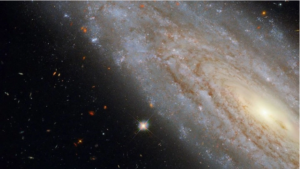
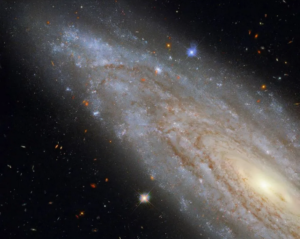
A stunning photograph of the galaxy named NGC 3254 was captured by NASA’s Hubble Space Telescope.

The Seifert Galaxies make up 10% of all galaxies and were named after the American astronomer Carl Seifert, who first studied them in the 1950s.

Seifert Galaxies are a type of galaxy, which includes an extremely bright small nucleus, which sometimes exceeds the brightness of the entire surrounding galaxy. According to NASA, these types of galaxies have “extremely active nuclei” and belong to the “active galaxies”.
>Related articles

NASA employee’s death: Burned to death in his Tesla; 12 missing and deceased scientists in the US

Videos & photos from the historic return of the Artemis II mission from the Moon: The path opens for permanent human presence in space

Stunning NASA satellite images show snow-Covered patagonia desert

The photo of NGC 3254 is a composition of infrared and visible images. On the one hand it refers to a typical spiral galaxy. However, it is actually a Seifert Galaxy, which can be best seen in light outside the visible spectrum, according to NASA.

Galaxies have oversized black holes at their center, which accumulate material which, according to NASA, emits huge amounts of radiation. Oversized black holes are defined as those that have a mass 1 or 2 billion times the typical black hole.

See Also:

Alco poll: New Democracy leads with 12.9 points

These celestial objects release gases, dust, stars and planets, which they pull and eventually destroy. NGC 3254 was first spotted in March 1785 by astronomer William Herschel, about 118 million light-years from Earth.

Ask me anything

Explore related questions

#galaxy#Hubble Space Telescope#nasa#space
> More World

Follow en.protothema.gr on Google News and be the first to know all the news

See all the latest News from Greece and the World, the moment they happen, at en.protothema.gr

> Latest Stories

From Kansas city to Thessaloniki: The american who put her trust in Greece’s public healthcare system — and went viral

May 2, 2026

Port hub worth hundreds of millions behind Ionian drilling operations

May 2, 2026

Rainy weather persists in Athens until midday – when sunshine is expected to return

May 2, 2026

Trump escalates clash with Merz and withdraws 5,000 troops from Germany: What it means for NATO and Europe

May 2, 2026

Partial climbdown by Iran: Says “yes” to negotiations without lifting the naval blockade, puts nuclear issues and the opening of Hormuz on the table

May 2, 2026

The 5-year-old boy who had his finger amputated at a kindergarten in Evosmos was operated

May 1, 2026

Iran submits new proposal to US to end the war

May 1, 2026

Rain and strong winds bring a cooler start to May

May 1, 2026
All News

> Greece

In reverence, the emotional deposition in Jerusalem, see photos & video

The Holy Temple of the Resurrection opened after many days due to the war between Israel and Iran

April 10, 2026

In the final stretch for the accreditation of joint master’s degrees: Aiming for their launch in the coming academic year

April 10, 2026

Schedule for Epitaph Procession today (10/4)

April 10, 2026

Perfect weather for Easter excursions, according to Tsatrafyllia’s forecast

April 10, 2026

Easter in Greece: The customs that continue in Greek tradition – From Nafpaktos to Corfu

April 10, 2026
Homepage
PERSONAL DATA PROTECTION POLICY COOKIES POLICY TERM OF USE
Powered by Cloudevo
Copyright © 2026 Πρώτο Θέμα



