

×
GreekEnglish

×
  • Politics
  • Diaspora
  • World
  • Lifestyle
  • Travel
  • Culture
  • Sports
  • Cooking
Saturday
18
Apr 2026
weather symbol
Athens 21°C
  • Home
  • Politics
  • Economy
  • World
  • Diaspora
  • Lifestyle
  • Travel
  • Culture
  • Sports
  • Mediterranean Cooking
  • Weather
Contact follow Protothema:
Powered by Cloudevo
> Culture

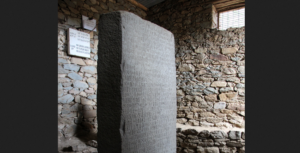
The “Ezana Stone” of Aksum: A trilingual monument, similar to the “Rosetta Stone”

These liturgical epigraphs were written in various ancient languages, including the Ethiopian Semitic Ge'ez, the South Arabian Sabaean & Greek

Newsroom September 8 09:28

The Ezana Stone is an ancient stele still standing in modern day Axum, the centre of the ancient Kingdom of Aksum. This stone monument, that probably dates from the 4th century of the Christian era, documents the conversion of King Ezana to Christianity and his conquest of various neighbouring areas, including Meroë. The name Ezana is possibly of Amharic origin and means “King of king elected by God king of axume”. An other opinion suggests that Ezra is a biblical name meaning “help” or “helper” in Hebrew. The Ezra of the Bible was a Jewish priest who helped reintroduce the Torah to the Jewish people who escaped captivity in Babylon.

From AD 330 to 356, King Ezana ruled the ancient Kingdom of Aksum centred in the Horn of Africa. He fought against the Nubians, and commemorated his victories on stone tablets in praise of God. These liturgical epigraphs were written in various ancient languages, including the Ethiopian Semitic Ge’ez, the South Arabian Sabaean, and Greek. The king’s engravings in stone provided a trilingual monument in different languages, similar to the Rosetta stone.

See Also:

>Related articles

Tankers convoy departs from the Gulf and passes through the Strait of Hormuz

A thirteen-year-old student discovered a rare ancient Greek coin in Berlin

Iran opens the Strait of Hormuz to commercial shipping for the duration of the Lebanon ceasefire

The Philistines were likely of Greek origin, according to new DNA evidence

The earliest known inscriptions in the Ge’ez script date to the 5th century BC. At first the script represented only consonants. Vowel indication started to appear in 4th century AD during the reign of king Ezana, though might have developed at a earlier date.

Read more: The archaeologist

Ask me anything

Explore related questions

#Aksum#archaeology#culture#Ezana Stone#language#stone#world
> More Culture

Follow en.protothema.gr on Google News and be the first to know all the news

See all the latest News from Greece and the World, the moment they happen, at en.protothema.gr

> Latest Stories

Investigations into the involvement of other individuals in the death of Myrto are underway, communications of the arrested suspects are being examined

April 18, 2026

Tankers convoy departs from the Gulf and passes through the Strait of Hormuz

April 18, 2026

Acquitted of the rapes of her children due to “inability to recognize the wrongdoing” – the ex-wife of the Parliament police officer

April 18, 2026

The secret of Pickaxe Mountain: What is Iran’s nuclear fortress that no bomb can reach and may be hiding uranium stockpiles

April 18, 2026

Kanye West concert in Poland in June cancelled

April 17, 2026

Emergency arrival of “Champion Jet I” at the port of Lavrio after injury to a 32-year-old sailor

April 17, 2026

Bloomberg: France and Greece renew defence cooperation and expand their bilateral relationship

April 17, 2026

A thirteen-year-old student discovered a rare ancient Greek coin in Berlin

April 17, 2026
All News

> Greece

In reverence, the emotional deposition in Jerusalem, see photos & video

The Holy Temple of the Resurrection opened after many days due to the war between Israel and Iran

April 10, 2026

In the final stretch for the accreditation of joint master’s degrees: Aiming for their launch in the coming academic year

April 10, 2026

Schedule for Epitaph Procession today (10/4)

April 10, 2026

Perfect weather for Easter excursions, according to Tsatrafyllia’s forecast

April 10, 2026

Easter in Greece: The customs that continue in Greek tradition – From Nafpaktos to Corfu

April 10, 2026
Homepage
PERSONAL DATA PROTECTION POLICY COOKIES POLICY TERM OF USE
Powered by Cloudevo
Copyright © 2026 Πρώτο Θέμα



