×
GreekEnglish

×
  • Politics
  • Diaspora
  • World
  • Lifestyle
  • Travel
  • Culture
  • Sports
  • Cooking
Friday
30
Jan 2026
weather symbol
Athens 16°C
  • Home
  • Politics
  • Economy
  • World
  • Diaspora
  • Lifestyle
  • Travel
  • Culture
  • Sports
  • Mediterranean Cooking
  • Weather
Contact follow Protothema:
Powered by Cloudevo
> Culture

Is the Assyrian Nimrud Lens the oldest telescope in the world?

“This piece of rock crystal has been carefully ground and polished, and undoubtedly has optical properties”

Newsroom August 4 01:00

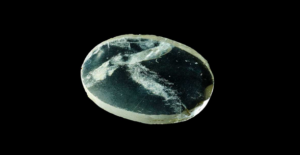
The Nimrud lens is a 3,000-year-old piece of rock crystal unearthed by Sir John Layard in 1850 at the Assyrian palace of Nimrud, in modern-day Iraq. Since its discovery over a century ago, scientists and historians have debated its use, with one prominent Italian professor claiming the lens was used by the ancient Assyrians as part of a telescope. This was used to explain how the Assyrians knew so much about astronomy.

The Nimrud lens (also called the Layard lens), which has been dated to between 750 and 710 BC, is made from natural rock crystal and is a slightly oval in shape. It was roughly ground, perhaps on a lapidary wheel. It has a focal point about 11 centimeters (4.33 in) from the flat side, and a focal length of about 12 cm (4.72 in).

See Also:

>Related articles

Senior diplomatic source: Critical juncture for the Cyprus issue – No basis for discussion of continental shelf and EEZ with Turkey

In February in Washington, the crucial ministerial meeting on the Vertical Energy Corridor: What Joshua Volz said in Athens

Aluminium Dunkerque: Six foreign “bidders” for Europe’s largest aluminum smelter – Metlen in the spotlight

Hagia Sophia desecration: Hundreds of children shout “Allahu Akbar” (video)

These dimensions would make the Nimrud lens equivalent to a 3× magnifying glass. Combined with another lens, it could achieve much greater magnification. The surface of the lens was created with twelve cavities that were opened during grinding. These would have contained naptha or some other fluid trapped in the raw crystal. The lens is said to be able to focus sunlight, although the focus is far from perfect.

Read more: Ancient Origins

Ask me anything

Explore related questions

#archaeology#Assyrians#culture#history#Nimrud Lens#science#technology#telescope#world
> More Culture

Follow en.protothema.gr on Google News and be the first to know all the news

See all the latest News from Greece and the World, the moment they happen, at en.protothema.gr

> Latest Stories

Cyprus: 13 kilograms of TNT go missing from National Guard firing range

January 30, 2026

Kyriakos Mitsotakis at the construction site of Kastelli airport

January 30, 2026

Municipality of Trikkaion for the fire in Violanda: We are fully cooperating with the authorities by providing every element

January 30, 2026

Gaza: The Israeli army announced it “neutralized three terrorists” in Rafah

January 30, 2026

National Hellenic Society opens applications for summer 2026 heritage Greece programs

January 30, 2026

AHIF and Queens College release special journal of Modern Hellenism Issue on genocide

January 30, 2026

Barbarity in Indonesia: Illegal couple punished with 140 lashes, woman fainted – see photos

January 30, 2026

Imia, thirty years later: The 10+1 mistakes in the crisis that brought Greece and Turkey to the brink of war

January 30, 2026
All News

> Lifestyle

Celia Kritharioti: Her new collection was presented at Paris Fashion Week with an “Old Hollywood” feel

Soft, sensual, and airy style – See photos

January 29, 2026

Eurovision 2026: Greece climbs to third place in predictions

January 28, 2026

Athina Onassis makes rare public appearance at Paris Haute Couture week

January 28, 2026

Paul Newman in a rare, unpublished photo from his visit to Athens in 1962

January 27, 2026

Stefi: ‘The song I sent to Eurovision is about the unity of people across Europe

January 24, 2026
Homepage
PERSONAL DATA PROTECTION POLICY COOKIES POLICY TERM OF USE
Powered by Cloudevo
Copyright © 2026 Πρώτο Θέμα