





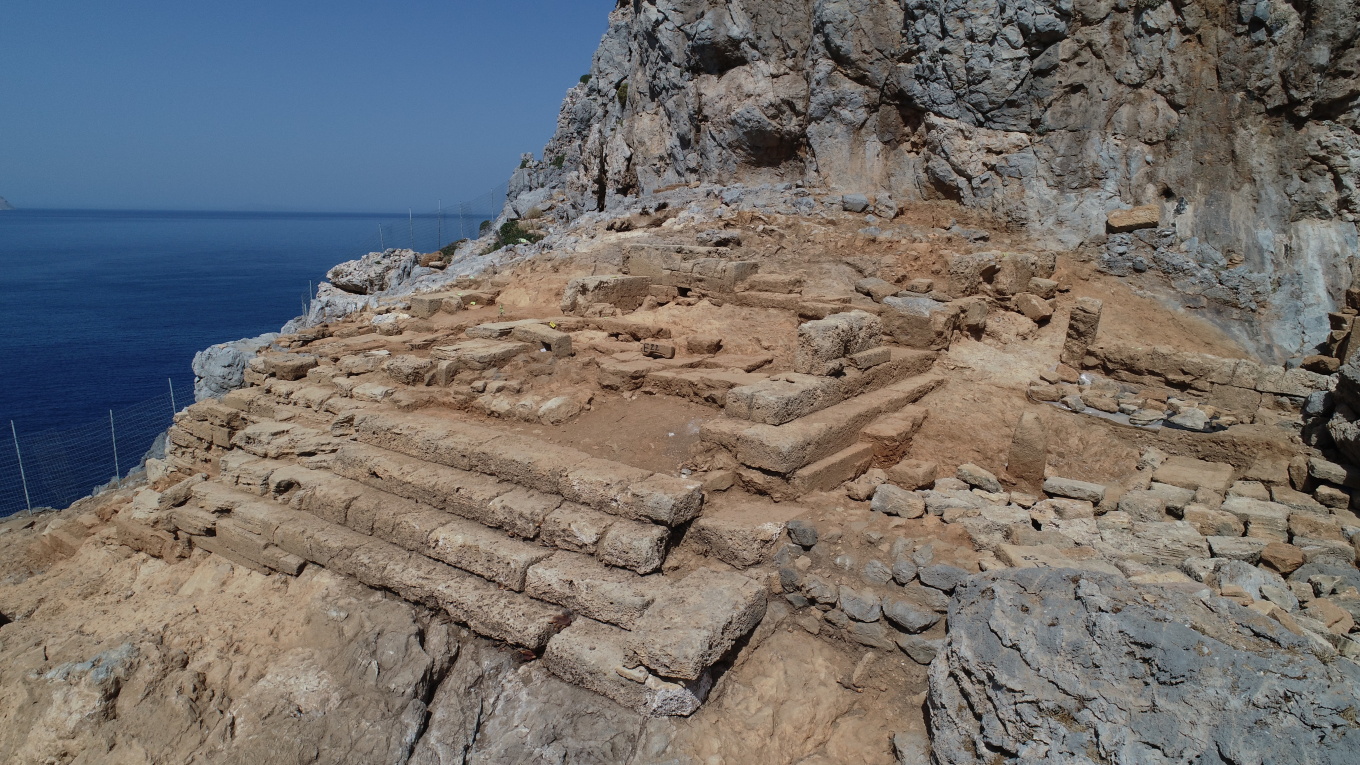
Artifacts dating from the archaic era (800BC-400BC) came to light during the excavation of the central area of the ancient temple in the acropolis of Falasarna in western Crete. The excavations revealed a temple that was originally located on a rocky hill at the junction of two high mountain peaks in a natural cave with plenty of water, which collapsed and then functioned as an outdoor sacred place for the worship of an underworld (chthonic) deity.
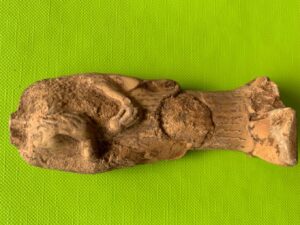
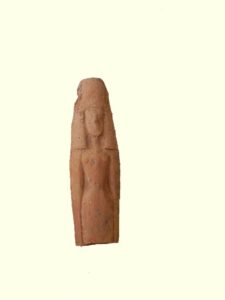
From the hundreds of clay female figurines, enthroned deities, heads with a pole that resemble the goddess Demeter, miniature hydria, and water-carrying women, all typical findings in the sanctuaries of the ancient goddess Demeter, it can be concluded that the temple was dedicated to her.
The rocky areas and the ancient deposits in excavated pits revealed finds mainly from the Archaic times. Daedalic art seems to dominate the early Archaic period (650 BC) in the form of nude female figures with Daedalic headdresses and high poles. From the findings of the 6th c. BC objects from Egyptian and Phoenician glass, clay bird and animal figures, arrowheads and spearheads, miniature vases, enthroned female figures, as well as a female figurine holding a poppy and a pomegranate stand out. Regarding the findings of the 4th and 3rd c. BC the hydriskoes stand out, a “beak-shaped” Prochus with a red representation of a flying Eros, iron spikes, and alabaster vessels.
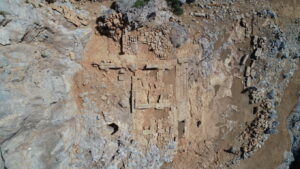
The architectural structure of the temple that is preserved today was rebuilt with stones for a second use in the late 4th/early 3rd century. e.g. on the same rock, where the cave and the earliest worship existed. The temple is defined by an enclosure that is mostly preserved, except for a part that seems to have been destroyed by a huge boulder. A monumental staircase led to two single-room buildings with a common intermediate wall and a common parapet wall on the north side. The eastern building was the main temple building, while the western one probably served as an auxiliary structure. A door in the eastern part of the sanctum led to an outdoor area, where the sacrifices were made.
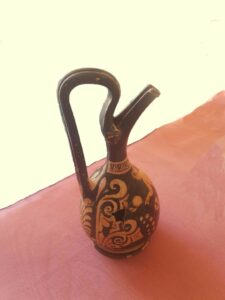
The sanctuary of the temple had a tiled floor, as did the rest of the floors of the temple. On the floor, there were five offering cases, inside which vases of good quality with elegant shapes were revealed, some ceremonial, one of which was inscribed in the Doric dialect with the name of the goddess to whom the temple was dedicated: AKE S T O I D A M A T R I, Akestoi dedicates to the goddess Demeter.
The temple was in the Doric style, built on natural rock with two fluted columns, parts of which have been preserved. The roof was of the Corinthian type with clay sleepers and covers. Based on the study of the excavation data and the architectural members, it seems that the graphic restoration of the monument will be possible, as well as the future restoration of the temple.
The geophysical surveys were carried out by professors G. Tsokas and G. Vallianatos with teams from the Mediterranean University of Crete. The scans showed architectural remains underground and their shape at the bottom appeared to be semi-circular. However, in the upper part, the image did not clearly show the semi-circular arrangement to identify the ruins as belonging to what was once a public building, e.g. theatre or parliament. Only the physical excavations and the geophysical survey will be able to offer a complete picture and lead to its complete interpretation.
Ask me anything
Explore related questions




