×
GreekEnglish

×
  • Politics
  • Diaspora
  • World
  • Lifestyle
  • Travel
  • Culture
  • Sports
  • Cooking
Tuesday
20
Jan 2026
weather symbol
Athens 8°C
  • Home
  • Politics
  • Economy
  • World
  • Diaspora
  • Lifestyle
  • Travel
  • Culture
  • Sports
  • Mediterranean Cooking
  • Weather
Contact follow Protothema:
Powered by Cloudevo
> World

Scientists discover closest star-shredding black hole to Earth ever seen

Astronomers comparing maps of the universe uncovered the nearest example of a black hole devouring a star ever detected

Newsroom May 4 10:57

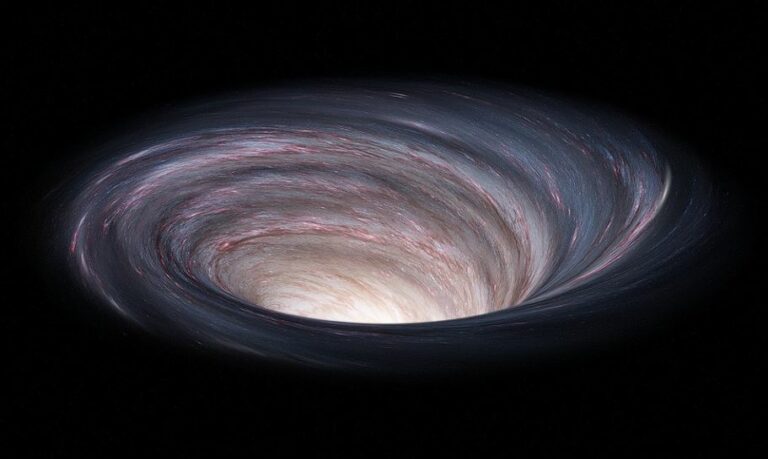
A long time ago, in a galaxy not so far away, a supermassive black hole ripped a star to shreds in the center of the galaxy NGC 7392. The flash of light from the black hole’s dinner finally reached Earth in 2014 — and astronomers just discovered it in their data.

This newly detected outburst from the center of NGC 7392 is the closest-yet example of a tidal disruption event (TDE), where a star is pulled apart by the massive gravitational pull of a black hole. The findings were published April 28 in The Astrophysical Journal Letters.(opens in new tab)

>Related articles

Sick astronaut on mission – NASA considers early return of International Space Station crew

NASA published a new map of the universe; the “SPHEREx” space telescope changes the data landscape

Voyager 1 ready to make history again: in 2026 it will reach a distance of “one light-day” from Earth

The hungry black hole was spotted roughly 137 million light-years from Earth — or about 35 million times as far as Proxima Centauri, the closest star to the sun. As distant as that sounds, astronomers have only observed around 100 of these events so far, and this one is four times closer than the previous title-holder of “closest TDE to Earth.” Scientists discovered the TDE in infrared, a different wavelength than most conventional TDE detections, which usually come in X-rays, ultraviolet, and optical light.

“Finding this nearby TDE means that, statistically, there must be a large population of these events that traditional methods were blind to,” said lead author Christos Panagiotou(opens in new tab), an astronomer at the Massachusetts Institute of Technology, in a statement(opens in new tab). “So, we should try to find these in infrared if we want a complete picture of black holes and their host galaxies.”

more at livescience.com

Ask me anything

Explore related questions

#black hole#space#star
> More World

Follow en.protothema.gr on Google News and be the first to know all the news

See all the latest News from Greece and the World, the moment they happen, at en.protothema.gr

> Latest Stories

Generation X: The ‘contemporaries’ of PASOK, MTV, fast food, ONE, the drachma, the Euro, and adaptability to change

January 20, 2026

Pierrakakis: ‘We cannot face enormous geopolitical challenges and delay important institutional decisions’

January 20, 2026

Political dialogue between Greece-Türkiye: Bilateral relations at the centre of today’s meeting

January 20, 2026

European Parliament freezes ratification of the EU–US trade agreement

January 20, 2026

Extremely dangerous rainfall tomorrow and schools closed in Attica: The 7 areas set to receive large volumes of rain – see maps

January 20, 2026

Athens reluctant to take part in Trump’s Peace Council – Most Europeans leaning toward “no,” except Orban

January 20, 2026

Fox spotted strolling around Pangrati

January 20, 2026

No state has the right to occupy the territory of another, says Kaya Callas

January 20, 2026
All News

> World

European Parliament freezes ratification of the EU–US trade agreement

According to information, the relevant decision is expected to be announced tomorrow afternoon in Strasbourg

January 20, 2026

No state has the right to occupy the territory of another, says Kaya Callas

January 20, 2026

Inside the opulent world of Iran’s elite families, as citizens faced deadly repression

January 20, 2026

Guterres will not travel to Davos for the World Economic Forum due to a “severe cold”

January 20, 2026

Trump wants signatures in Davos for the “Peace Council”: Invitation to 50 countries, including Greece and Cyprus

January 20, 2026
Homepage
PERSONAL DATA PROTECTION POLICY COOKIES POLICY TERM OF USE
Powered by Cloudevo
Copyright © 2026 Πρώτο Θέμα