





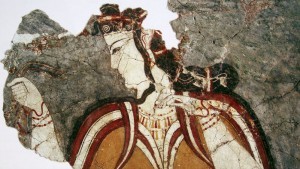
Ever since the days of Homer, Greeks have long idealized their Mycenaean “ancestors” in epic poems and classic tragedies that glorify the exploits of Odysseus, King Agamemnon, and other heroes who went in and out of favor with the Greek gods. Although these Mycenaeans were fictitious, scholars have debated whether today’s Greeks descend from the actual Mycenaeans, who created a famous civilization that dominated mainland Greece and the Aegean Sea from about 1600 B.C.E. to 1200 B.C.E., or whether the ancient Mycenaeans simply vanished from the region.
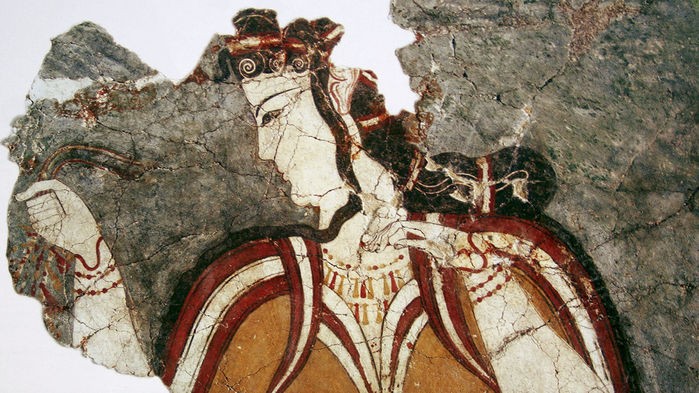
(A Mycenaean woman depicted on a fresco at Mycenae on mainland Greece)
Now, ancient DNA suggests that living Greeks are indeed the descendants of Mycenaeans, with only a small proportion of DNA from later migrations to Greece. And the Mycenaeans themselves were closely related to the earlier Minoans, the study reveals, another great civilization that flourished on the island of Crete from 2600 B.C.E. to 1400 B.C.E. (named for the mythical King Minos).
The ancient DNA comes from the teeth of 19 people, including 10 Minoans from Crete dating to 2900 B.C.E. to 1700 BCE, four Mycenaeans from the archaeological site at Mycenae and other cemeteries on the Greek mainland dating from 1700 B.C.E. to 1200 B.C.E., and five people from other early farming or Bronze Age (5400 B.C.E. to 1340 B.C.E.) cultures in Greece and Turkey. By comparing 1.2 million letters of genetic code across these genomes to those of 334 other ancient people from around the world and 30 modern Greeks, the researchers were able to plot how the individuals were related to each other.
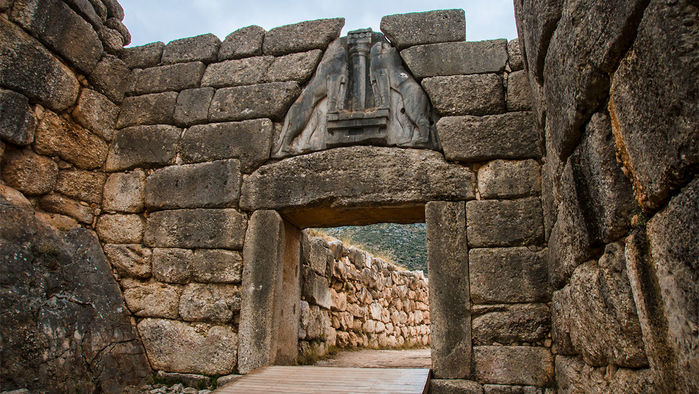
(The Lion Gate was the main entrance to the Bronze Age citadel of Mycenae, the center of the Mycenaean civilization)
The ancient Mycenaeans and Minoans were most closely related to each other, and they both got three-quarters of their DNA from early farmers who lived in Greece and southwestern Anatolia, which is now part of Turkey, the team reports today in Nature. Both cultures additionally inherited DNA from people from the eastern Caucasus, near modern-day Iran, suggesting an early migration of people from the east after the early farmers settled there but before Mycenaeans split from Minoans.
Repeated COVID-19 Vaccination Weakens Immune System, Study Reveals
The Mycenaeans did have an important difference: They had some DNA—4% to 16%—from northern ancestors who came from Eastern Europe or Siberia. This suggests that a second wave of people from the Eurasian steppe came to mainland Greece by way of Eastern Europe or Armenia, but didn’t reach Crete, says Iosif Lazaridis, a population geneticist at Harvard University who co-led the study.
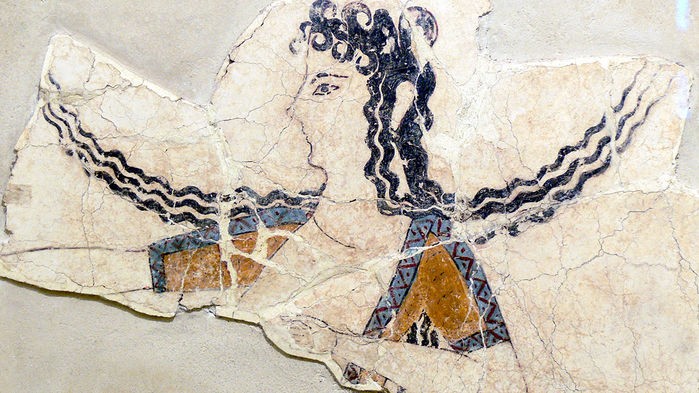
(This dancing Minoan woman from a fresco at Knossos, Crete, 1600–1450 B.C.E., resembles the Mycenaean women -above-)
Not surprisingly, the Minoans and Mycenaeans looked alike, both carrying genes for brown hair and brown eyes. Artists in both cultures painted dark-haired, dark-eyed people on frescoes and pottery who resemble each other, although the two cultures spoke and wrote different languages. The Mycenaeans were more militaristic, with art replete with spears and images of war, whereas Minoan art showed few signs of warfare, Lazaridis says. Because the Minoans script used hieroglyphics, some archaeologists thought they were partly Egyptian, which turns out to be false.
The continuity between the Mycenaeans and living people is “particularly striking given that the Aegean has been a crossroads of civilizations for thousands of years,” says co-author George Stamatoyannopoulos of the University of Washington in Seattle. This suggests that the major components of the Greeks’ ancestry were already in place in the Bronze Age, after the migration of the earliest farmers from Anatolia set the template for the genetic makeup of Greeks and, in fact, most Europeans. “The spread of farming populations was the decisive moment when the major elements of the Greek population were already provided,” says archaeologist Colin Renfrew of the University of Cambridge in the United Kingdom, who was not involved in the work.
The results also show it is possible to get ancient DNA from the hot, dry landscape of the eastern Mediterranean, Renfrew says. He and others now have hope for getting DNA from groups such as the mysterious Hittites who came to ancient Anatolia sometime before 2000 B.C.E. and who may have been the source of Caucasian ancestry in Mycenaeans and early Indo-European languages in the region. Archaeologist Kristian Kristiansen of the University of Gothenburg in Sweden, who was not involved in the work, agrees. “The results have now opened up the next chapter in the genetic history of western Eurasia—that of the Bronze Age Mediterranean”.
Source: Science
Ask me anything
Explore related questions




