





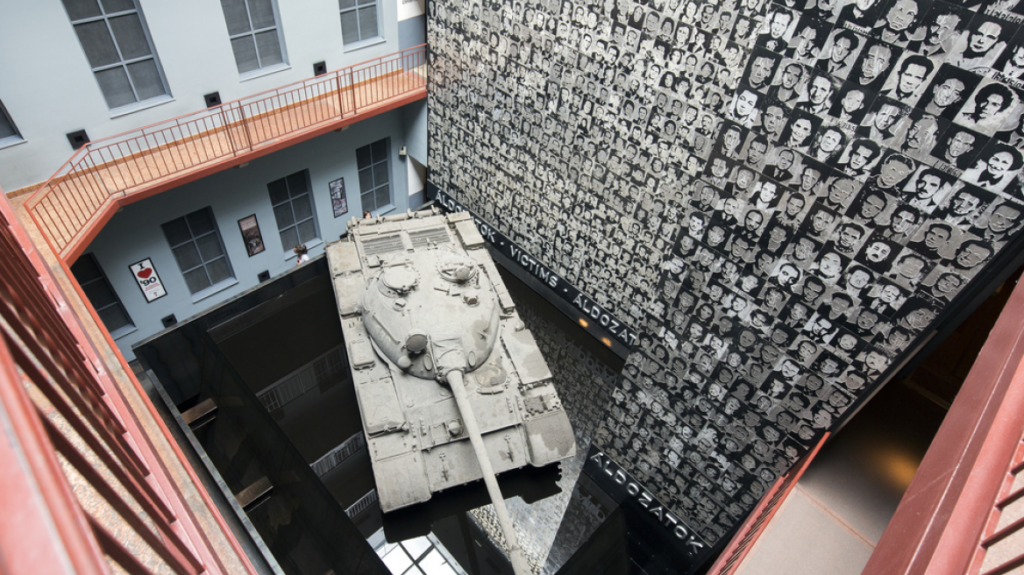
Hungary has made tens of thousands of secret service files from the communist era publicly available by uploading them to an online public database, opening a window onto the vast network of informants and agents used by the communist regime for decades to monitor Hungarian citizens.
The historic move comes more than 36 years after the collapse of the communist regime and fulfills a commitment made by Prime Minister Péter Magyar during his election campaign.
The release of the secret files begins today, November 4, 2026, exactly 70 years after Soviet tanks entered Budapest to crush the Hungarian uprising, which had begun on October 23.
“We are now fulfilling, 36 years later, the promise made at the time of the change of regime,” Péter Magyar said, explaining that approximately 60,000 names are now publicly accessible.
Additional files will be released in February 2027. However, the archives are incomplete, as many files were destroyed in 1956 during the Hungarian uprising against the communist regime and Soviet domination, as well as during the period from 1988 to 1989.
“I ask everyone to treat this very long-overdue release of the files with dignity and humanity, as many families will now be confronted with difficult information concerning a deceased member of their family. It is impossible to deal with trauma without discussion and questions,” the Hungarian prime minister said.
The communist regime came to an end in 1989, but Hungary delayed opening the files held in an enormous underground facility in Budapest because successive governments lacked the political will to allow Hungarian society to come to terms with its communist past.
Until now, apart from researchers, citizens could apply for access to their own files or those of close relatives. From today, everyone will be able to access the records through an online database.
During the Cold War, the secret police services of Eastern European countries, such as the Stasi in East Germany and the security services in Hungary, relied on information provided by informants and collaborators who were recruited through blackmail, threats or rewards. Between 1956 and 1989, approximately 55,000 secret informants were registered in Hungary.
They monitored friends, family members, neighbors and colleagues in order to identify signs of anti-regime sentiment and Western influence. Their reports often led to arrests and interrogations.
Many apartments in central Budapest — known as “K-apartments” — served as safe houses for secret meetings between secret police agents and citizens or informants.
The Historical Archives of the Hungarian State Security manage the files of the communist regime’s state security services, which contain the names of between 50,000 and 60,000 informants.
Poland opened its archives much earlier, but does not allow unrestricted searches of the kind that will be possible in Hungary.
Germany also adopted a restrictive approach to opening the Stasi files, while in the Czech Republic, not all the files have been uploaded to the online database.
Hungarian law stipulates that understanding the past and ensuring transparency in public institutions are “fundamental prerequisites” for the functioning of a democratic state.
Certain information contained in the files will be redacted to protect sensitive personal data, such as medical records and information about addictions or individuals’ sexual orientation.
Ask me anything
Explore related questions




