





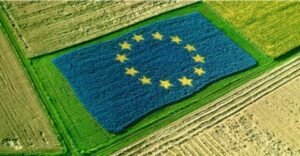
The issue of external convergence of payments in the Common Agricultural Policy 2024-2034 is gradually returning to the forefront of the discussions of the agriculture ministers.
Among the Member States of the European Union there are differences in the level of payments, especially between the “old” and the “new” members of the “27”.
The usual “suspects” of the discussions’ pressures in this direction are mainly the Baltic countries (Estonia, Latvia, Lithuania), Slovakia, Bulgaria, Poland and Romania, but they avoid mentioning the multiple reasons for these differences.
Other countries affected by the issue of external convergence are Italy, Belgium, Belgium, the Netherlands, Denmark, Slovenia and Cyprus. With these states Greece intends to “build” alliances to avoid any “unpleasant surprises.
As the Secretary General of Agricultural Policy and International Relations of the Ministry of Rural Development and Food, Kostas Baginetas “in the Multiannual Financial Framework 2021-2027 and in the latest reform of the CAP, a gradual partial external convergence of payments was foreseen (during the last two periods 2014-2020 and 2021-2027 with the Union gradually making up part of the difference), while with regard to the next MFF (2028-2034) and assuming that the Union will proceed to a full gradual convergence of payments (in seven equal steps), it is expected that the resources for our country will be significantly reduced. In particular, it is estimated that in the next MFF 2028-2034 the resources for the 1st pillar will be reduced by approximately 24% or in absolute terms €3.17 billion or €450 million per year.”
What applies to our country
For our country, external convergence is a very important issue as Greece ranks second among the 27 Member States in terms of the number of direct payments per hectare, while the average aid per hectare received is about twice the EU average.
As Baginetas explained to APE-MPA, “In the theoretical scenario where full external convergence was applied from the first year of the previous MFF (2021-2027), the losses would amount to about 42%, i.e. about €895 million per year or €6.28 billion over the seven years.
He adds “Our country would have the largest losses, in absolute terms, followed by Italy (with about €5.2 billion), a fact that was avoided in the demanding negotiation for the MFF in 2021, with the intervention of the Prime Minister himself, Kyriakos Mitsotakis.”
However, according to the Secretary General of the Ministry of Agriculture and Rural Development, “the distribution and level of aid in each Member State is a highly complex and multifactorial issue, as they contribute decisively to economic, social and environmental ambitions and requirements. Thus it becomes clear that a holistic approach is required in addressing the equalisation of aid if we want to support a fairer distribution, beyond the simplistic and unilateral criterion of area.”
Direct aid resources, within a Member State, are allocated according to specific needs and flexibilities in order to more effectively achieve the overall EU objectives. For example, in our country, three agronomic regions (arable crops, permanent crops, and pastures) are recognised on the basis of which income support is based.
What happened at the last meeting of agriculture ministers
The last “battle” for external convergence was fought at the Council of Agriculture & Fisheries Ministers held at the end of October in Luxembourg.
Greece clearly expressed its full opposition to the proposed report on external convergence of direct payments (Pillar I-CAP), as it raises concerns about the impact on the agricultural sector. “This proposal does not meet with our approval and raises serious concerns. For us, this is an extremely sensitive issue,” Baginetas pointed out.
Among the arguments put forward by our country was that, external convergence:
– in its current form, does not seem to contribute to the objectives of the CAP as outlined in the EU Treaty. Moreover, the Treaty, by providing that: “In drawing up the common agricultural policy and the specific methods for its application, account shall be taken of:
a)the particular nature of agricultural activity, resulting from the social structure of agriculture and structural and physical disparities between the various agricultural regions,
b)the need for a gradual implementation of appropriate adjustments,
c)the fact that in the Member States agriculture is a sector closely linked to the economy as a whole”, recognises the specificities that need to be taken into account when implementing the policy. Full external convergence based solely on the criterion of area is contrary to the stated objectives of the Treaty.
– an area-based approach overlooks the specific nature of the agricultural activity and the structural, physical, and economic disparities between agricultural areas, i.e. it does not take into account
* soil and climate characteristics/areas with natural or other handicaps and the type of crops (risk of desertification),
* input costs including land and labour costs,
– does not take into account the impact on employment and overall economic activity, correctly taking into account:
* The difference between average agricultural income and average income in other sectors of the economy,
* the viability and competitiveness of agricultural holdings.
– does not take into account the level of support per farm and transfers resources, within the EU, from small family farms to larger farms with high average incomes, increasing inequalities. It should be taken into account, especially for our country:
* the amount of aid per farm (AFM),
* The average farm size and the number of small farmers.
– does not optimize the provision of public goods and the added value of the CAP as the reward for farmers to adopt environmentally sustainable practices differs in each MS.
* There is a noticeable difference in the cost of public goods services for climate and environment between MS to maximize their production (which directly affects farmers’ reward for eco schemes).
– will make a large number of farms (mainly small and multifunctional ones in Greece and other MS) unsustainable, as they will face a significant reduction in their incomes. In such a case, agricultural activity runs a serious risk of being abandoned, with incalculable consequences for the economy, social cohesion, the environment, and the food security of the EU itself.
– The distribution of direct payments should favour agricultural productivity to ensure the EU’s food security.
Ask me anything
Explore related questions




