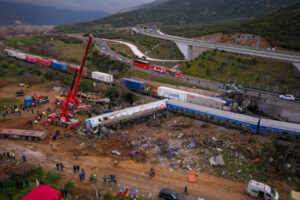
The newspaper Kathimerini has published the first findings from the draft report of the National Organization for the Investigation of Aviation and Railway Accidents and Transport Safety (EODASAM) regarding the Tempi tragedy.
According to the report, there is no evidence of a tank with a capacity of several tons or a hidden wagon in the freight train.
However, by the final version of the report, it is expected that the presence of 3.5-4 tons, likely of aromatic hydrocarbons, in the third wagon of the freight train—which ignited after the collision—will be substantiated.
The draft also argues that the leakage of silicone oils from the transformers in the first two wagons of the freight train was not sufficient to cause the explosion that followed the collision. This conclusion is reinforced by the fact that the transformers sustained only minimal cracks.
As for the type of cargo that caused the explosion, the reports commissioned from the University of Pisa, Ghent University, and the Swedish Institute have not yet definitively determined its exact nature. However, all three institutions have validated the most suitable methodology—namely, the Computational Fluid Dynamics (CFD) method—which can yield reliable conclusions if the correct parameters (humidity, wind speed, temperature, etc.) are taken into account.
The Sequence of Explosions
According to Kathimerini, citing information from the draft report of EODASAM, the first electric arc causing a short circuit occurred six fractions of a second after the collision of the locomotives.
Tempi: The Report on the Explosions – How Ghent University Interprets the Massive Flames After the Collision
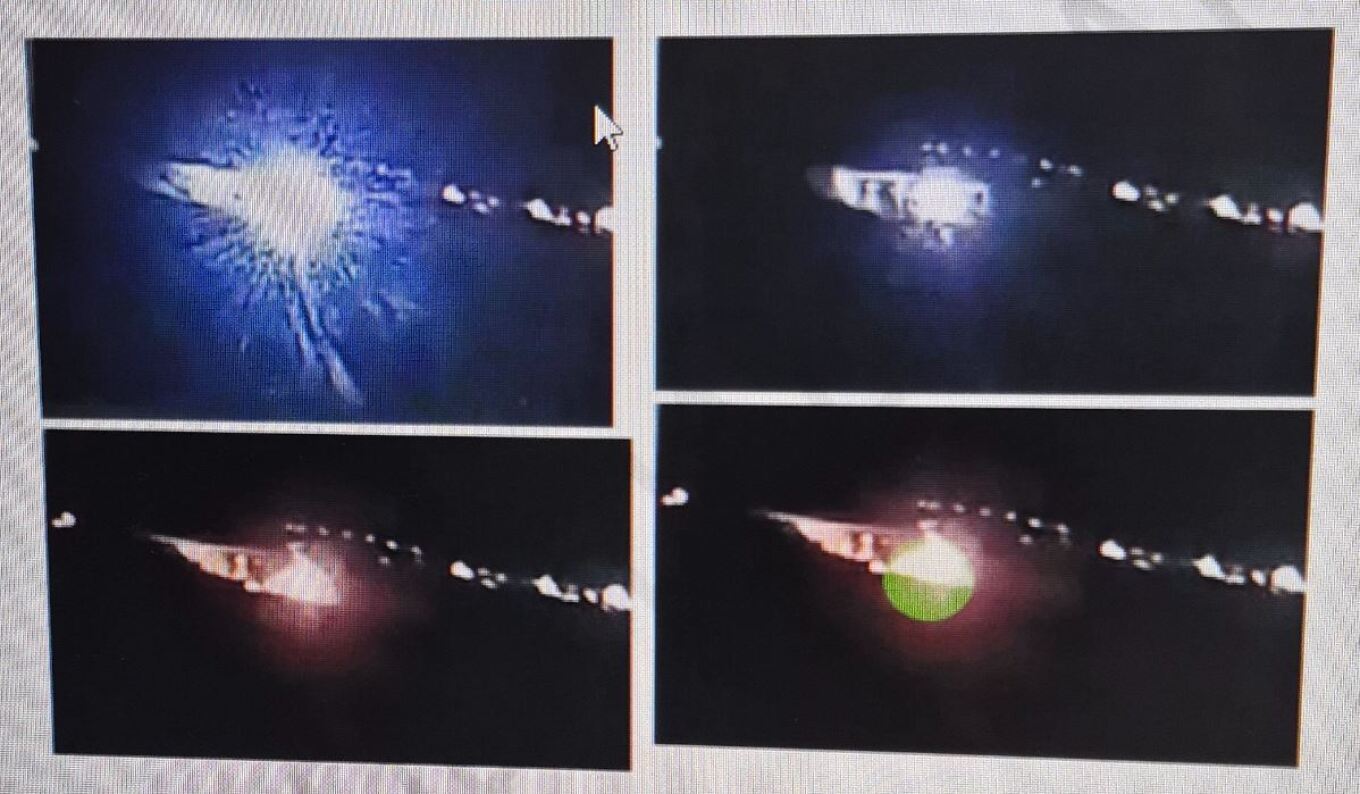
The first phase of the fire involved the first four vehicles of both trains: the two locomotives of the freight train, the locomotive of the passenger train, and the A1 first-class carriage.
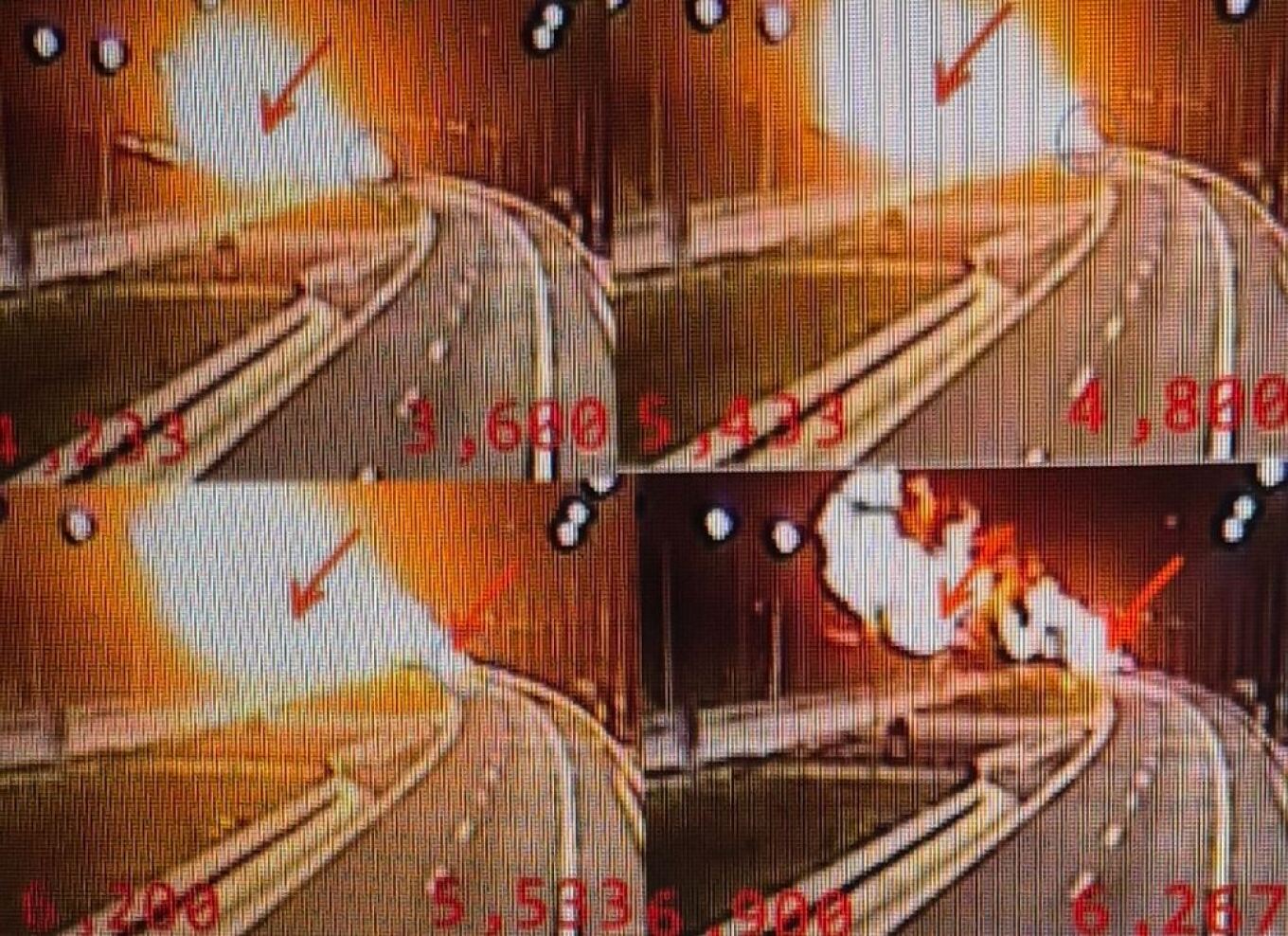
Three fractions of a second later, an explosion began at ground level, possibly triggered by sparks from the brakes. The explosion spread upwards, forming a fireball approximately 42 meters in diameter, which burned for about two seconds.
The Second Phase
A few seconds after the initial ignition, the draft report describes a second phase involving a new fire in an “undefined volume or area” away from the initial blaze. This new fire then fueled the original fire, doubling its size. This sequence suggests, according to the draft, that a significant quantity of fuel was involved.
The Third Phase
The third phase of the fires on that fateful night included two separate fires that continued burning at ground level. One was near the locomotives of the freight train, possibly heating the silicone oils, creating a fire that eventually extinguished itself before consuming all the oil in the transformer. Another fire raged in the remnants of the restaurant car, burning intensely for a total of two hours.
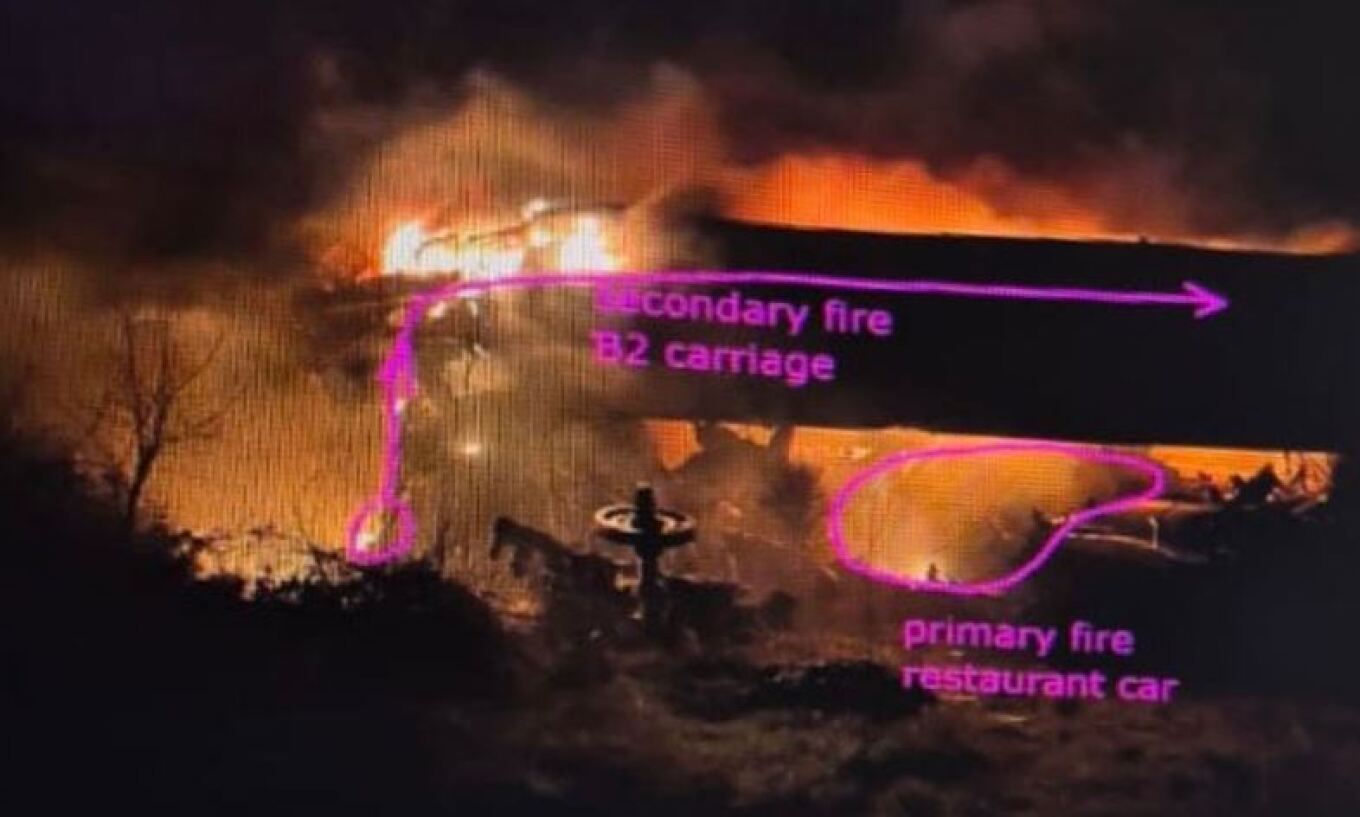
The fire in the B2 carriage of the passenger train started from the lower part at 23:35 and spread throughout its length, “without any active firefighting until it began burning with very intense flames, fueled by the large seat fabrics, curtains, and interior materials,” according to the draft report.
The Three Phases of the Collisions
The Kathimerini report also outlines the three phases from the moment of the initial head-on collision to the point where each vehicle came to a final stop.
First Phase
The first phase primarily involved the first four wagons of both trains: the two freight wagons housing the locomotives and the first two passenger wagons, including the locomotive and the first-class carriage. The initial impact was head-on, causing the wagons to be flung to one side and crushed against the highway wall. The first-class carriage was completely destroyed, with its seats scattered across the broader accident site. As the first four wagons of both trains disconnected from the rest of the carriages, the remaining wagons slowed down due to the collision and the activation of the brakes. The report indicates that the emergency handbrake was engaged one second before the first head-on collision, while the mechanical brakes of the passenger train activated automatically due to the loss of air pressure from the initial impact.
Second Phase
The second collision was also severe and occurred between the restaurant car and the first freight wagon carrying steel plates.
The second collision of the remaining wagons was also head-on, involving the restaurant car of the passenger train (its third wagon) and the freight wagon carrying steel plates. This collision caused extensive damage to the restaurant car, which ended up crumpled in the shape of a “final sigma” (Σ).
Third Phase
In the third phase of the collision, wagons continued to crash with slightly less force, according to the report.
Ask me anything
Explore related questions