At the 6th Delphi Forum in Washington, a discussion was held on the strategic direction of energy policy under the new US administration, with particular reference to the increasing significance of Greece as an energy hub in the region. During the event, which was coordinated by Antigoni Vafeidou, Deputy Director of Regulatory Compliance at the Greek Electricity Distribution Network Operator (DEDDHE), the participants highlighted the decisive role of geopolitical developments in Europe’s energy security, as well as the prospects for cooperation between Greece and countries such as Cyprus, Israel, and Egypt.
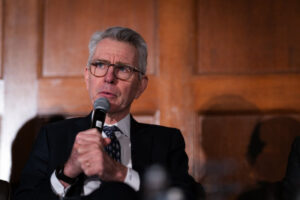
Jeffrey Pyatt, US Deputy Secretary of Energy (2022-2025) and former US Ambassador to Greece, emphasized the importance of Greece as “an extremely important ally” in energy developments, stressing that “the bridges that Greece can build with Cyprus, the EU, Israel, and Egypt.”
He highlighted the significance of American companies in Greece’s energy sector, providing examples of Chevron and ExxonMobil, and mentioned Microsoft’s investment in Greece, which leverages renewable energy sources.
“Europe must understand that Russia has lost its credibility as an energy partner,” he said, adding that “Greece plays a critical role in the new global energy map.”
Osama Mobarez, Secretary-General of the East Mediterranean Gas Forum (EMGF), noted that the countries of the Eastern Mediterranean were driven to cooperation due to the need to exploit new natural gas fields. “The East Med does not compete with American LNG imports,” he said, adding that “through the cooperation of states and businesses, we have developed a mutually beneficial relationship,” which continues to strengthen.
Vivian Bouzali, Chief Corporate Affairs & Communication Officer of Metlen Energy & Metals, presented the company as “one of the largest energy and mining groups in Europe and the world,” with operations on five continents and in 40 countries. “Transatlantic cooperation is key,” she emphasized, noting that the energy challenges and rising prices “make stability in the industry necessary.” She also referred to the importance of LNG imports to Greece, stating that 50% of the country’s LNG imports come from transatlantic partnerships.
In the second part of the discussion, Zhecho Stankov, Minister of Energy of Bulgaria, pointed out that his country “plays an important role as an LNG transit hub,” facilitating the energy flow to Europe. He referred to the Vertical Corridor Initiative, an energy project that could help Ukraine and Moldova meet their energy needs. “I came to the US to secure funding for energy investments,” he said, while noting that there is a 70% acceptance of nuclear energy in Bulgarian society.
Kalin Peshov, Chairman of the Board of Glavbolgarstroy, mentioned that energy security is a key focus of his talks in the US. “We face three major problems in energy supply,” he said, listing:
- Lack of specific technology
- Bureaucracy and excessive regulations, especially in the EU
- Lack of skilled personnel
He emphasized that “the US has a more pragmatic approach, while the EU imposes excessive regulations.” He proposed training to meet sector needs and noted the difficulty caused by European bureaucracy, saying that the processes are excessively slow.
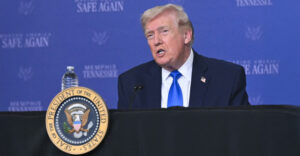
Frank Fannon, Managing Director of Fannon Global Advisors and former Assistant Secretary of State for Energy Resources (2018-2021), stressed that energy policy is a top priority for the new Trump administration. “Greece and Bulgaria have a reliable energy partner in the US,” he said, adding that “energy collaborations will increase.” He criticized the EU’s regulatory framework, saying that “perhaps it’s time for countries to make energy decisions without the restrictions from Brussels.”
Ann Bluntzer, Executive Director of the Hamm Institute for American Energy and a member of the Ralph Low Energy Institute, TCU, emphasized that project implementation is key. “We’ve seen projects that took decades to realize. We must not let that happen again,” she said. She highlighted that “Greece has done an excellent job in the energy sector,” adding that the country “is positioned very well on the new energy map.”
Olga Khakova, Deputy Director for European Energy Security at the Global Energy Center of the Atlantic Council, analyzed the differences in energy approaches between Europe and the US. “We all want energy security and sufficiency,” she said, pointing out that there are common values and needs. “The question is how we can make it easier for businesses to show that they want to do the right thing,” she emphasized, referring to the importance of stability. “Energy cooperation between Europe and the US must achieve the necessary results on both sides of the Atlantic,” she concluded.
In a discussion that followed between Spilios Livanos, Chairman of the Board of HELLENiQ ENERGY, and Tom Ellis, Editor-in-Chief of the English edition of Kathimerini, the importance of energy as a key pillar of the Greek economy was stressed. “Greece is now an exporter of electricity and an energy hub,” he said, highlighting the country’s strong relationships with Israel, the Arab world, and Bulgaria. He referred to Greece’s two major LNG terminals in Revithoussa and Alexandroupolis, emphasizing that investment in these was “strategically correct.” “The new American administration promotes fossil fuels,” he noted.
Ask me anything
Explore related questions