





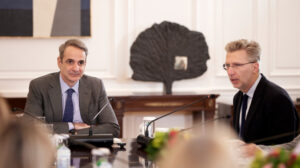
Prime Minister Kyriakos Mitsotakis chaired the first meeting of the Special Committee on Autism, which was established last December. The committee’s goal is to provide interdisciplinary recommendations for significantly improving lifelong support for our fellow citizens on the autism spectrum.
During the meeting, the committee’s initial priorities were discussed, including the development and finalization of the digital Autism Guide, which will offer practical advice—primarily for parents—on appropriate actions following a child’s diagnosis.
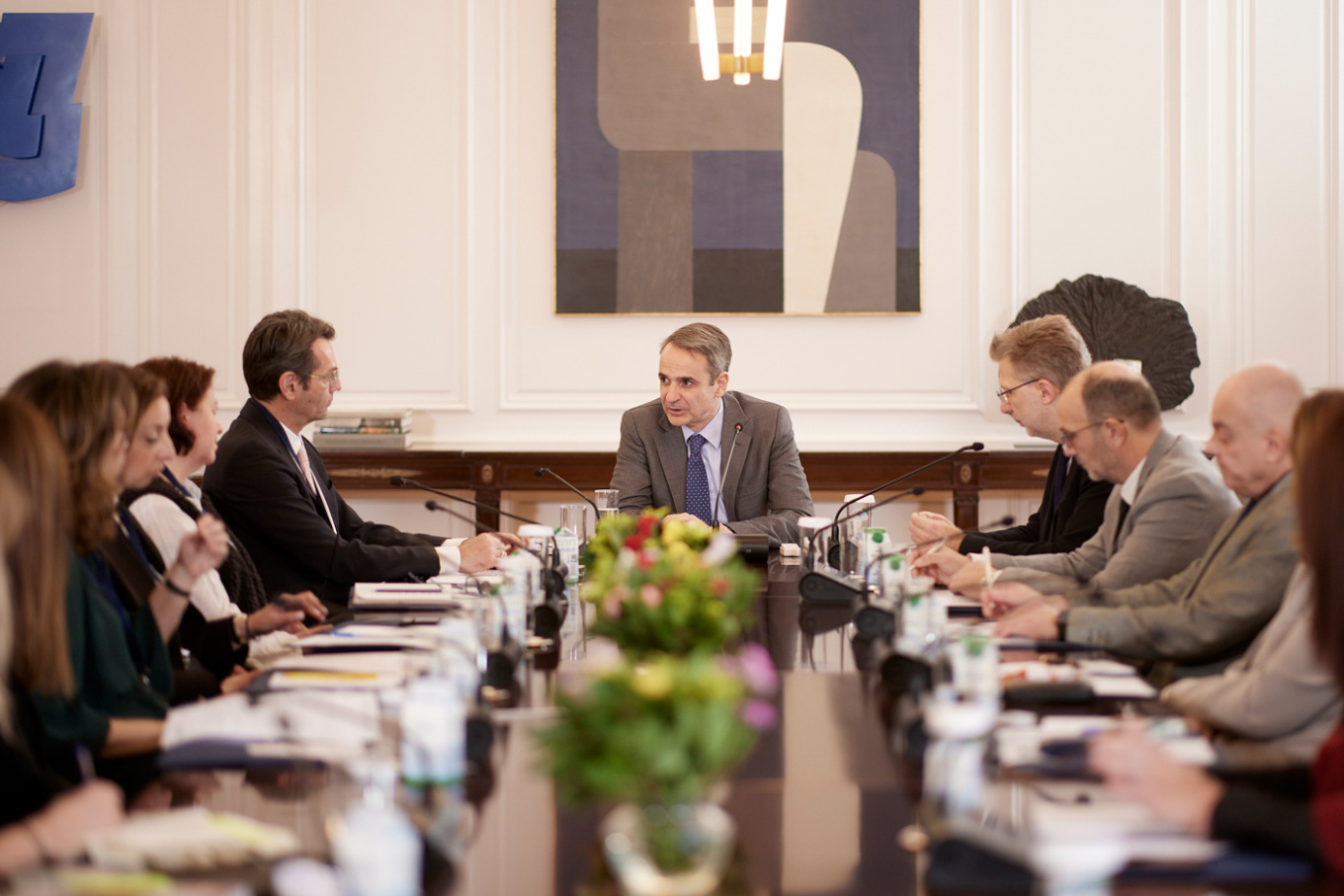
The Prime Minister and Minister of State Akis Skertsos held discussions with the committee on ways to provide support at all stages of life. Views were exchanged on the creation of a roadmap with specific policies for every age group, based on international best practices, to ensure that individuals with autism are equal members of society, have opportunities for professional integration, and do not experience discrimination.
Regarding education, it was noted that most children diagnosed with autism can fully participate in mainstream schooling, emphasizing the need for training more teachers to provide the appropriate parallel support for children on the spectrum. The importance of further strengthening special education was also highlighted.
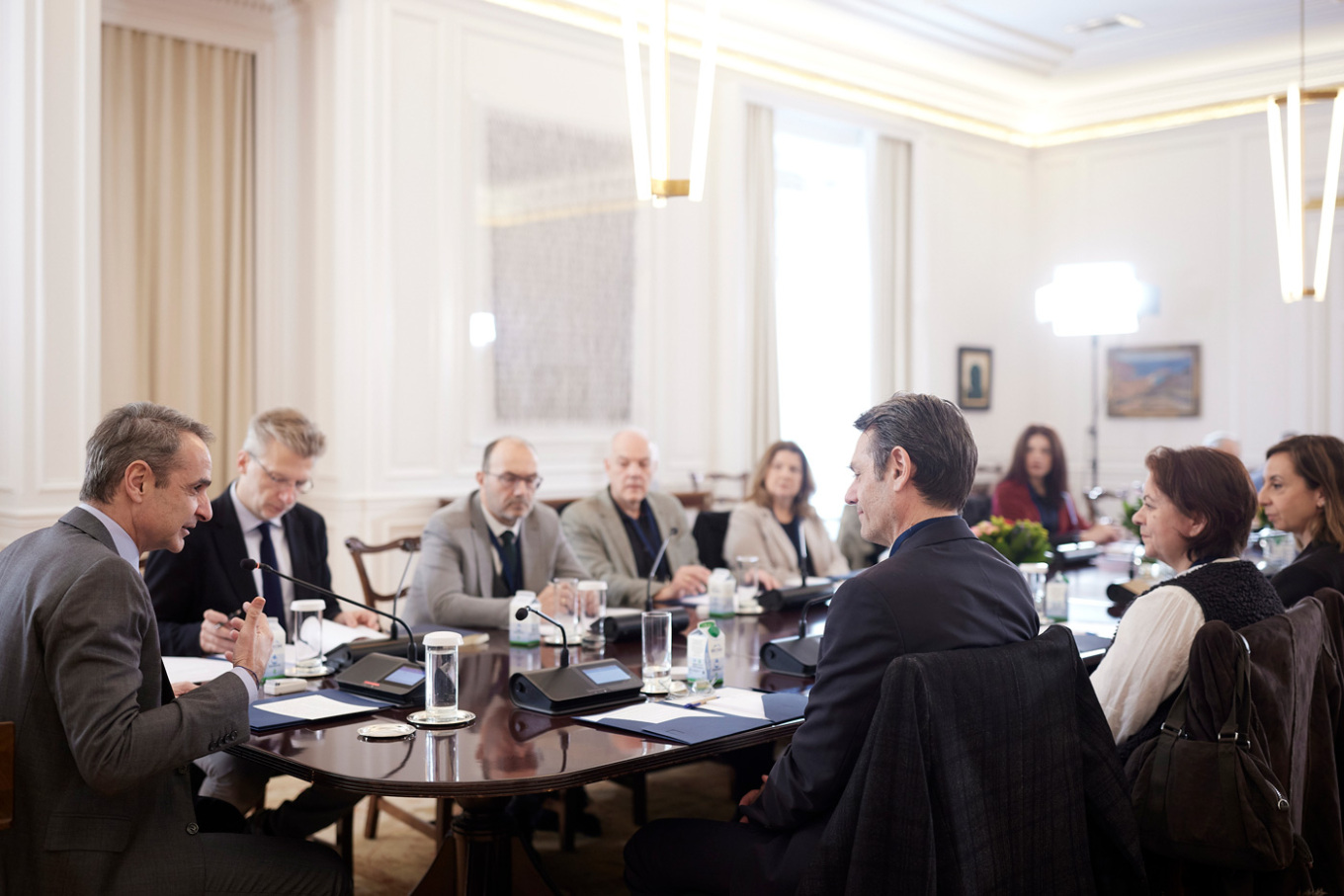
For adulthood, it was stressed that high-level vocational training is essential for inclusion and equal participation in society. It was also noted that Greece already has strong programs for acquiring professional skills.
In this context, the possibility of establishing official certification for young people completing training programs was discussed. Methods to improve connections with the job market were also examined, whether through Public Employment Service (DYPA) programs or specialized career counselors acting as “guides” during the early stages of professional life.
The importance of early diagnosis was also highlighted, with discussions on the potential introduction of a standardized screening test at a young age to identify children at high risk of developing symptoms later on.
Kyriakos Mitsotakis’ Opening Speech
At the start of the meeting, the Prime Minister made the following statement:
*”Thank you for being here and for participating in this committee that we have established.
I have very strong memories of the meeting we had—when was it, about a year ago? Yes, a year and a bit ago—it was very revealing for me and an opportunity to become much more familiar with the issues surrounding autism and the major challenges faced by both the children and their families. And, of course, the lack of coordinated public policies to address this issue.
As you know, we have been actively engaged in disability-related matters. I believe we made significant interventions during our first term. And by essentially transferring this responsibility to the Prime Minister’s Office, we now have the opportunity to coordinate complex cross-sectoral committees more effectively.
I believe the purpose of this committee is to provide us with a set of policies that will come from the experts—the people who are most familiar with the issue—and, of course, from parents, who kindly share their personal experiences in this collective effort.
We are looking forward to your proposals. Akis Skertsos is fully committed to this effort, and just as we have made progress in other areas of social policy, I believe we will be able to do the same for autism-related issues.
I know that amid the whirlwind of developments and a news agenda that sometimes moves beyond our control, living with such a challenge on a daily basis is extraordinarily difficult and complex.
I have always admired those who dedicate their lives—whether out of duty as parents or by choice—to supporting children and fellow citizens dealing with autism. We are here to listen, implement, and follow through on the policies that you recommend.
So, once again, a big thank you for being here. I will now hand the floor to Akis Skertsos, who will elaborate on some of the initial measures I saw in the briefing folder and found particularly interesting. Then we can have an open discussion to hear your thoughts and ideas.”*
What Akis Skertsos Said
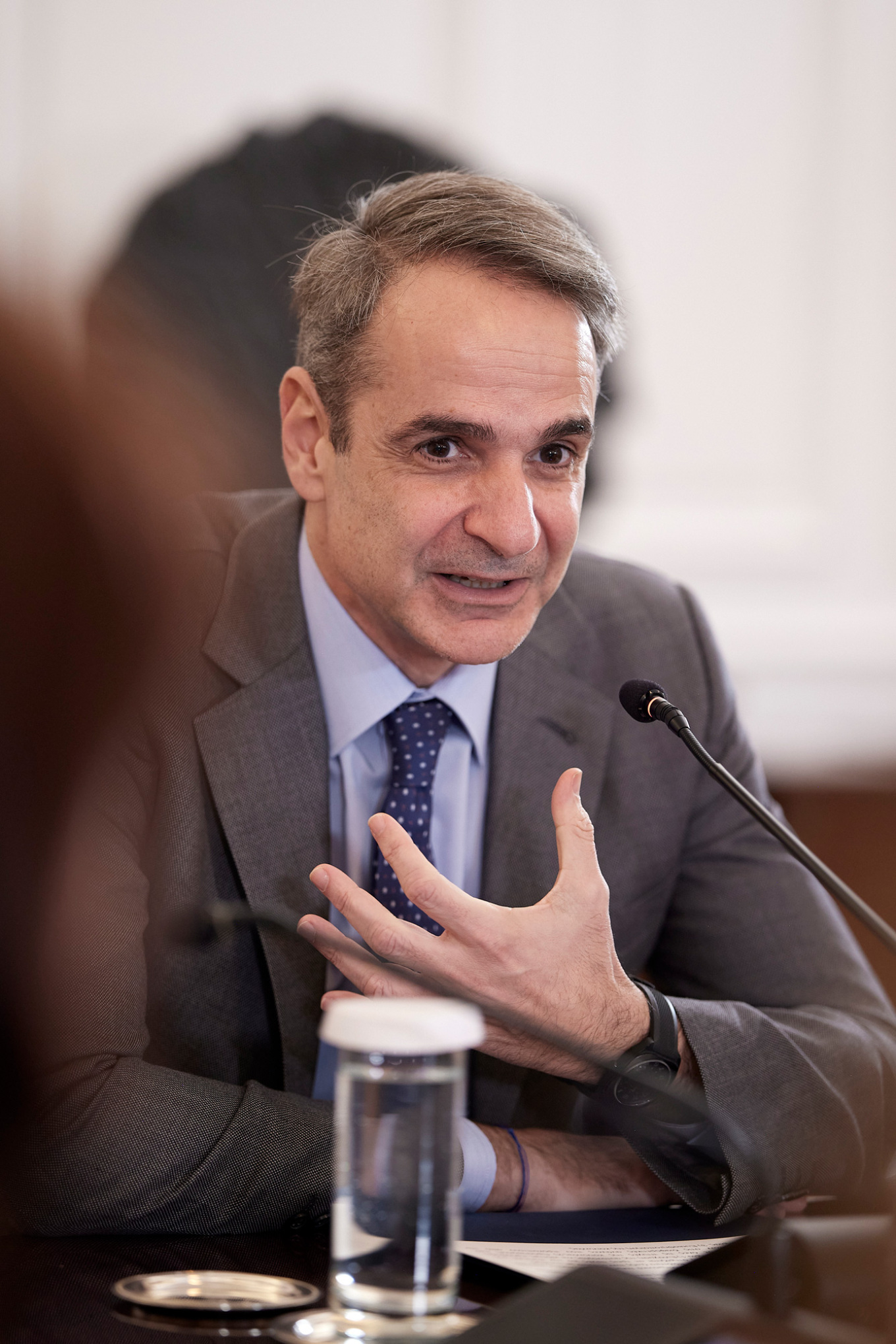
Minister of State Akis Skertsos stated:
*”Thank you very much, Mr. Prime Minister. Good morning, everyone. Before I say a few words, I’d like to mention the committee members by name because we truly have a ‘dream team,’ Mr. Prime Minister. I believe this is recognized by everyone working in the field of disability and especially autism.
Unfortunately, we don’t have with us the committee’s president, Mr. Karantanos, who is recovering from a hospital stay. We hope he will be back with us soon. He is a highly experienced and respected child psychiatrist-psychiatrist.
We also have Dr. Katerina Papanikolaou, a child psychiatrist; Dr. Manos Tsalamaniotis, a child psychiatrist; Dr. Giannis Vogiindroukas, a speech therapist; Ms. Nektaria Sifaki, an occupational therapist; Ms. Kaiti Katsouda, President of the Greek Association for Supported Employment; Ms. Eleni Padiatelli, a psychologist-psychotherapist; Ms. Antigoni Mertika, a psychologist; Ms. Katiggo Chatzipatera-Giannouli, a psychologist; and two parents, Ms. Marina Moschovou and Mr. Ilias Skotiniotis.
We sincerely thank you for your presence and your contribution to this initiative.
The Prime Minister’s plan and vision are about building a Greece that includes everyone, where no one is left behind or invisible. And in the case of autism, we are dealing with a largely invisible disability. It is not as immediately apparent as other forms of disability.
For us, therefore, the first and foremost priority is to highlight the fact that children, individuals, and families living with autism—who experience this disability or condition on the spectrum—are visible and among our priorities.
With your help, we want to better understand the challenges they face daily, in their private lives, in public life, at school, at work, in healthcare, in transportation—everywhere. We want to develop policies that help individuals on the autism spectrum feel and be recognized as full members of society, with the same rights as all other citizens.
We have compiled an agenda of issues based on our research and previous discussions with the Prime Minister and with our team working on disability matters. These are indicative topics that we believe concern individuals, families, and professionals involved with autism.
Our goal, along with this committee, is to make a visible improvement in the lives and daily experiences of our fellow citizens on the autism spectrum. We aim to achieve this through interventions in mainstream and special education, counseling services provided by experts, opportunities for labor market inclusion, and legal representation.”
Ask me anything
Explore related questions




