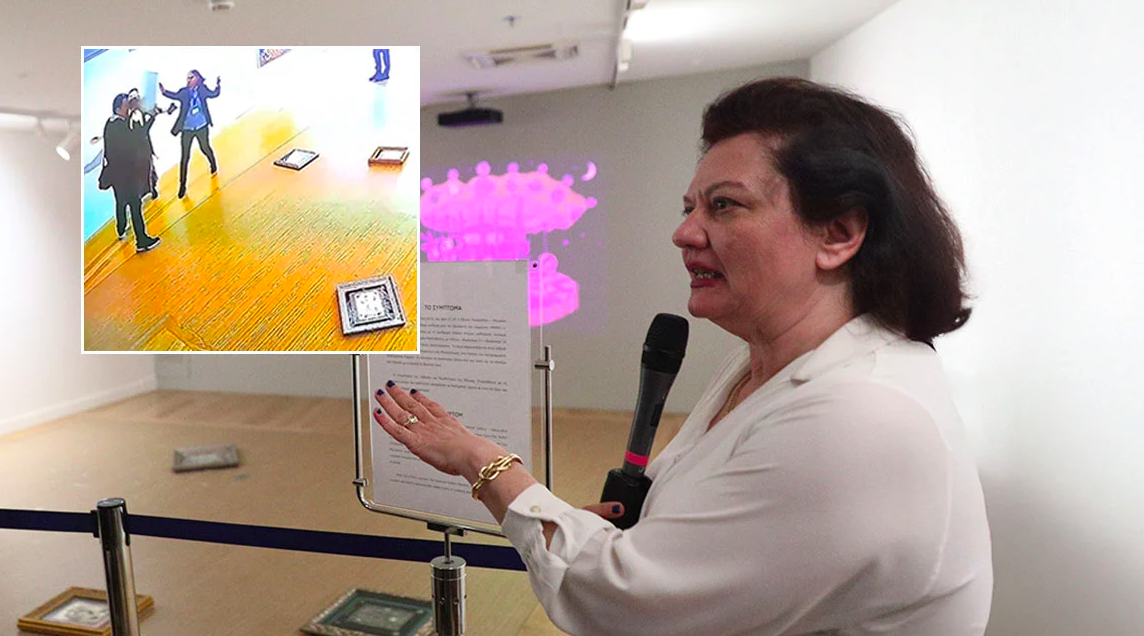
The director of the National Gallery, Syrago Tsiara, denounced an orchestrated attack against the institution, calling it a condemnable act of violence accompanied by a flood of distorted facts and threats. This statement comes just days after MP Nikos Papadopoulos from the “Niki” party vandalized artworks in the exhibition “The Allure of the Uncanny”. Tsiara reassured that there was no intent to offend religious sentiment.
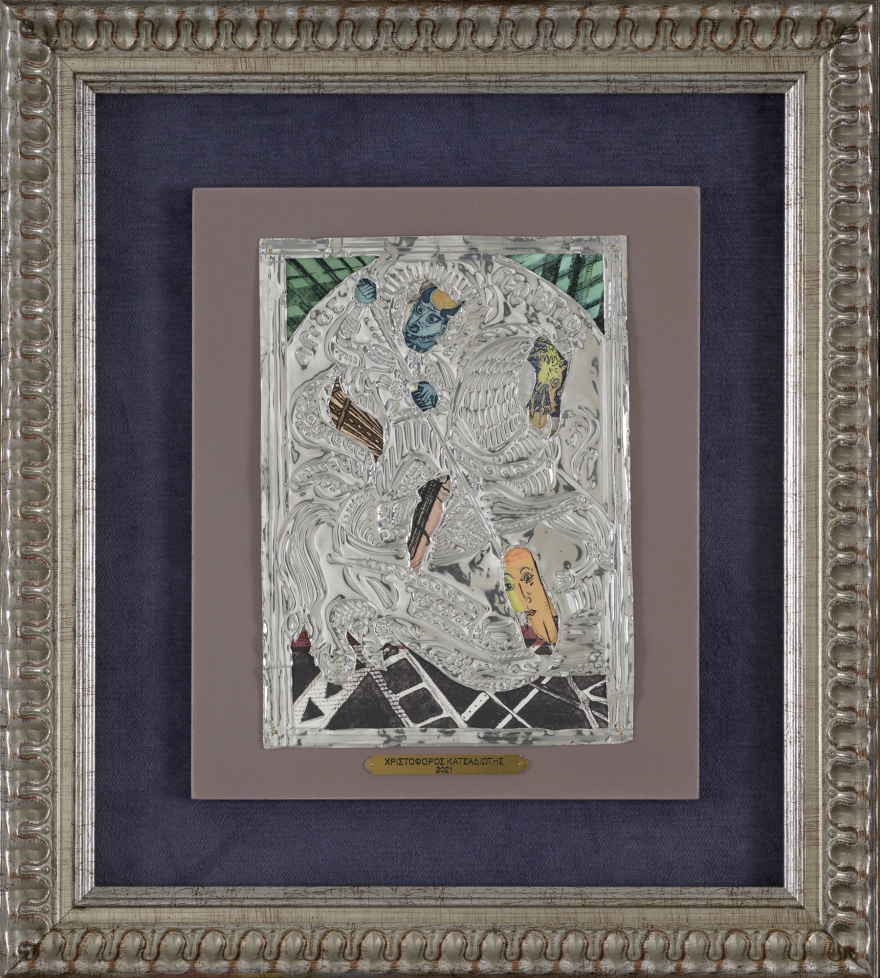
Standing before the now-fenced-off exhibition space on level -1, where the four damaged works by Christoforos Katsadiotis lay broken on the floor exactly as they were left by the furious MP, the exhibition—originally designed as an artistic dialogue with Goya’s major print exhibition—has taken on a completely different role. It now starkly presents the effects of fanaticism, violence, and artistic censorship.
“What happened on Monday is an act of violence and vandalism, which, with the artist’s agreement, I felt should be recorded in the public sphere as an event that must be condemned by all of us,” explained Tsiara. She emphasized, “Never in my life have I intended to insult people’s religious beliefs, the Church, or the feelings of visitors. I would never deliberately provoke religious individuals or offend their sensitivities.”
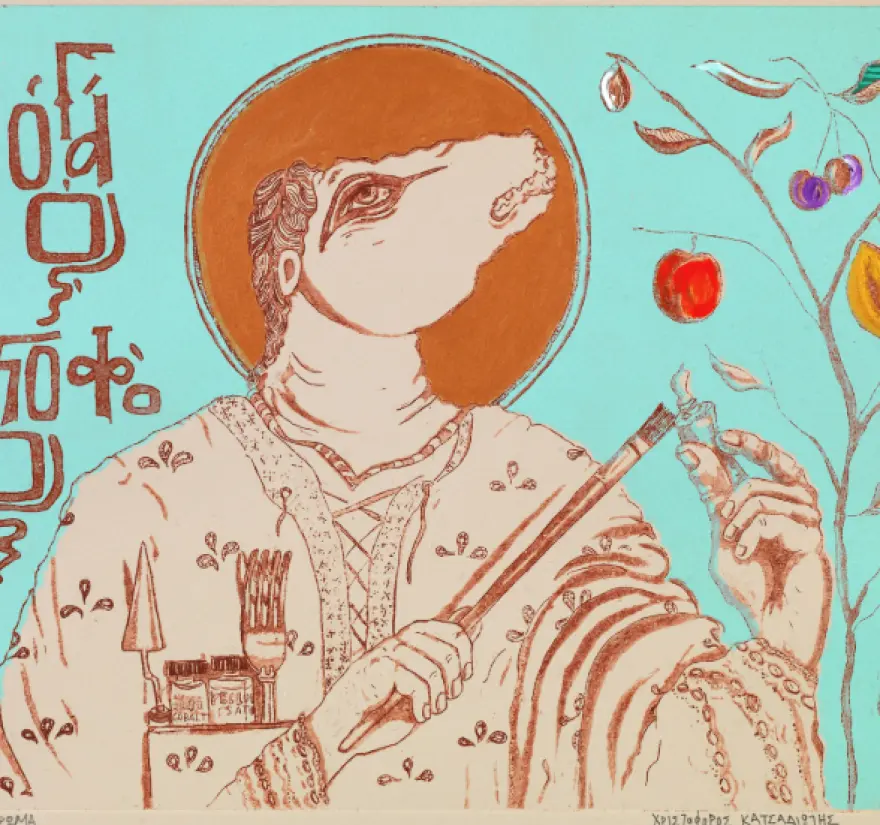
Tsiara revealed that the attacks had begun even before the vandalism, on March 4, when Papadopoulos submitted a parliamentary question referring to an artwork that was not even part of the exhibition. According to her, this was just one of many misrepresented pieces circulating in the media, none of which were ever displayed at the National Gallery. This led her to conclude that the attack was orchestrated and escalated in the following days. “After the parliamentary question was submitted, threats, insults, and curses started. They intensified after the vandalism and are still ongoing.”
Following the MP’s parliamentary question, Tsiara sent a 16-page report explaining the exhibition’s concept—its parallel with Goya’s prints, which explore hybridity, the grotesque, and the absurd, as well as the historical analysis of this artistic genre.
Art Asks Questions, It Doesn’t Give Answers
“For over 150 years, artists have not only depicted beauty or calm, pleasant emotions. They explore the ugly, the dark aspects of the human psyche. This is the power of art—to reveal things that are not immediately visible and to provoke research. Art asks questions; it doesn’t provide answers. Artists often appropriate past aesthetic codes and iconographic models to bring them into the present and convey new messages,” Tsiara explained.
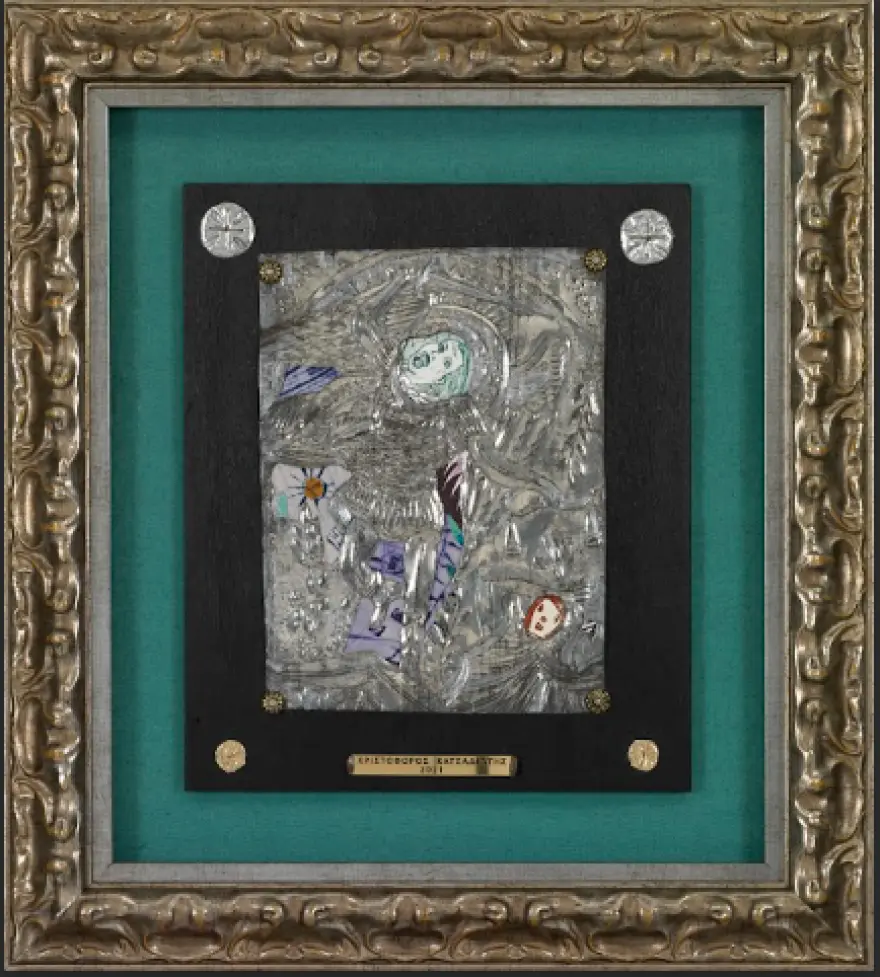
“Christoforos Katsadiotis, using this iconographic tradition and the form of the religious icon, engages in appropriation—a well-established international artistic practice—to create sharp psychological portraits. He is not making devotional icons; he is not painting the Virgin Mary. He is an artist speaking about the darker sides of our psyche, the uncanny, and the grotesque—elements that exist within all of us. Artists bring these aspects to the forefront, creating images that may reveal parts of the ‘monster’ we all potentially harbor within. And perhaps that unsettles some people.”
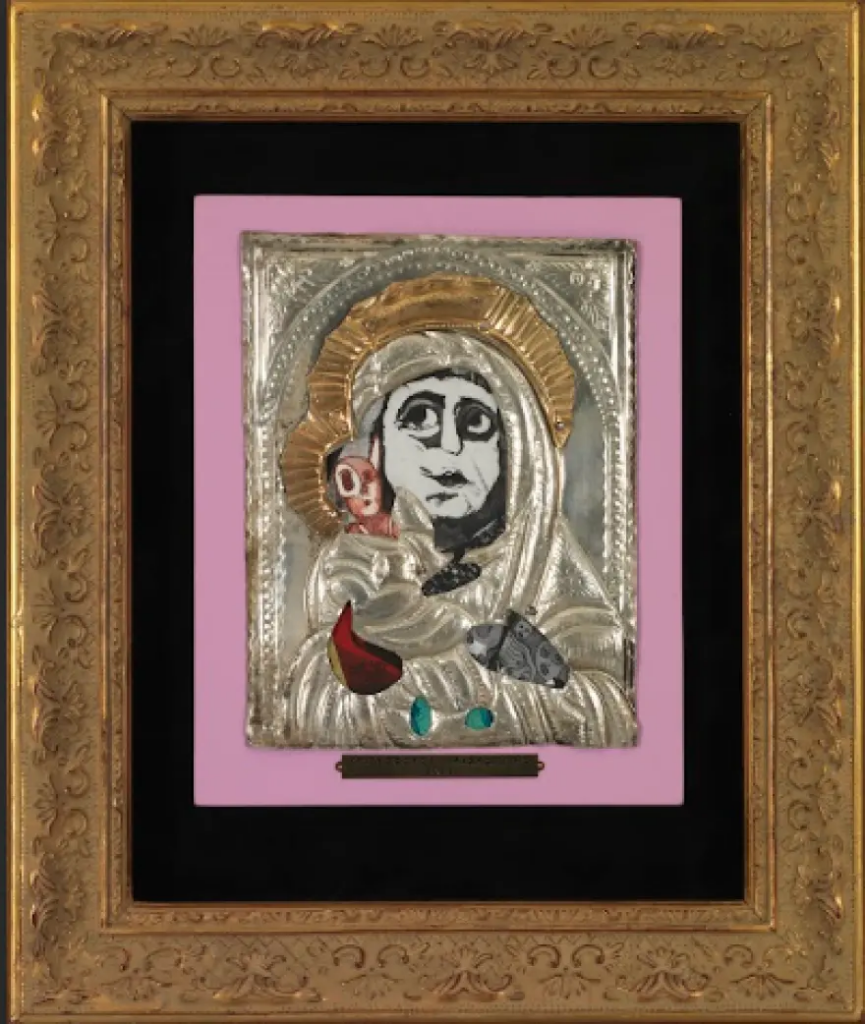
Tsiara also highlighted that distortion has always been present in religious art. Many icons of the Virgin Mary in churches contain elements of distortion, and Saint Christopher—who appears in one of Katsadiotis’ controversial works with an animal head—has historically been depicted as a cynocephalus (dog-headed). “Orthodox iconography, which is highly tolerant, democratic, and inclusive, incorporated this element long before I highlighted it in this exhibition. That’s why I decided to include Katsadiotis’ works,” she stressed.
Ask me anything
Explore related questions