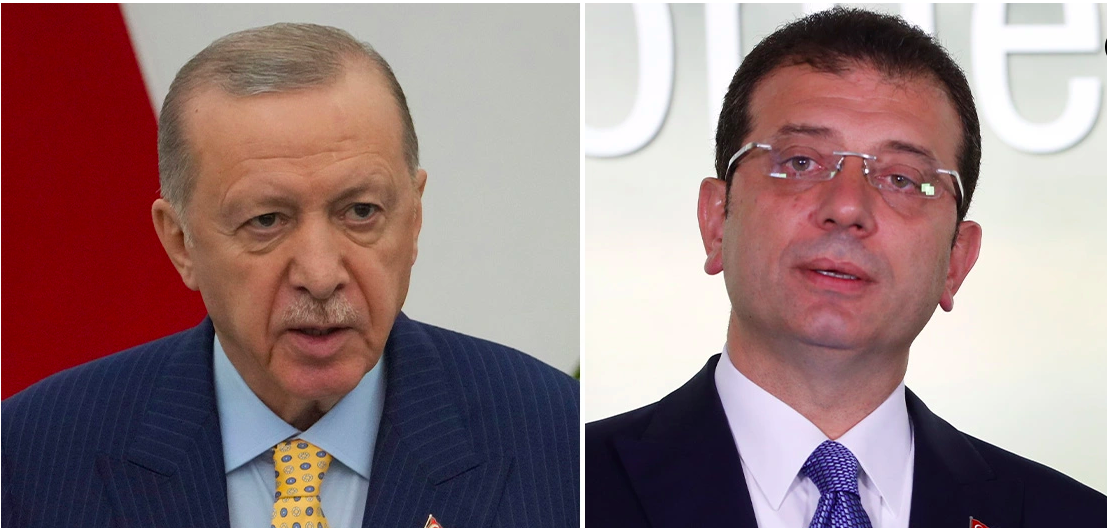
The arrest of Ekrem İmamoğlu seems to have surprised only those west of the Sea of Marmara and the Bosphorus. İmamoğlu, while being the mayor of Turkey’s largest city, is not the only one arrested—especially in recent months.
The mayor of Beşiktaş, Rıza Akpolat, the mayor of Esenyurt, Ahmet Özer, and the mayor of Ovacık, Mustafa Sarıgül, have all been handcuffed in recent months, facing charges similar to those now levied against their Istanbul counterpart—corruption, ties to terrorism, and forming a criminal organization being the most serious among them.
İmamoğlu himself was fully aware that the noose was tightening around him and the Republican People’s Party (CHP). With composure, he straightened his tie before Istanbul law enforcement entered his home. With the same calm hand, he wrote a personal note reaffirming his faith in God and the people. The unfolding scene, which for many in Turkey was set in motion long ago, gave clear indications of what was to come, making it a pivotal moment in the country’s political landscape.
The Real Question: Why Now?
The key question today is not “Why İmamoğlu?”—it is clear that the Istanbul mayor is by far the most significant and powerful political rival to Recep Tayyip Erdoğan. İmamoğlu has twice defeated the Turkish president’s party, first in the 2019 elections and again in 2024. His broad public support poses a major threat to Erdoğan’s future plans—likely immediate ones. The question is: why now?
İmamoğlu’s popularity has been steadily rising, and this coming Sunday, it was almost certain that his party would officially nominate him as its candidate for the 2028 presidential elections. While those elections seem far away, and Erdoğan is currently ineligible to run under the existing constitution, İmamoğlu’s nomination alone could disrupt the Turkish president’s hidden plans.
Since mid-2024, leaks from Erdoğan’s ruling AKP party have suggested that a scenario involving constitutional amendments and early elections is not out of the question. Such a move could allow the 71-year-old Turkish leader to cement his place not only in political history but in the very foundation of Turkish national identity.
Trump’s Return: A Golden Opportunity for Erdoğan
Donald Trump’s second term has radically changed global geopolitics, influencing both domestic and international affairs. Erdoğan now has a golden opportunity to expand his power on multiple levels.
Turkey is a key player in every major global crisis—whether the war in Ukraine, the evolving situation in Syria, or its longstanding strategic relations with Trump. The return of Trump to the White House, alongside the shifting dynamics in Europe, provides Erdoğan with the flexibility to pursue his own agenda unchecked.
For Erdoğan, who began his political rise as mayor of Istanbul in 1994, became prime minister in 2003, and has been president since 2014, eliminating any serious political rivals while pushing for early elections and securing another comfortable victory would be the crowning achievement of a lifetime in politics.
With Trump in the Oval Office, Erdoğan can be confident that the White House will not concern itself with his “methods,” while Europe, preoccupied with its own crises, may criticize but remains dependent on Turkey for key geopolitical and security issues—especially if the U.S. withdraws its longstanding support for European defense. The timing is extraordinarily favorable for Erdoğan to seize the moment.
The Kurdish Factor and the Risk of Unrest
Turkey’s judiciary accuses İmamoğlu of ties to terrorist groups, as the PKK is still officially designated as such. However, it was Erdoğan’s own coalition partner, Devlet Bahçeli, who initially reached out to PKK leader Abdullah Öcalan. Last month, this outreach even led to a message from Öcalan suggesting the disarmament of the PKK’s armed wing.
Though Öcalan remains imprisoned and no official green light has been given for a PKK disarmament congress, Erdoğan has been strategically courting Turkey’s Kurdish population—a significant voting bloc. While he may not win them over entirely, his tactics aim to divide them enough to neutralize their threat.
On the other hand, İmamoğlu’s arrest could trigger massive unrest. The CHP controls not only Istanbul but also Ankara, the capital. Despite government-imposed restrictions, large-scale protests—especially by students—are expected, with tensions likely to escalate.
İmamoğlu’s arrest, and the legal decisions that follow, will undoubtedly boost his popularity. While Erdoğan has stripped him of the right to run for office by annulling his university degree—a prerequisite for candidacy in Turkey—this does not mean that the opposition won’t leverage the moment to its advantage.
For Erdoğan, this may be a “calculated risk,” but social unrest is unpredictable. The reaction of the Turkish people could reshape the country’s political landscape in ways even he cannot foresee.
Ask me anything
Explore related questions