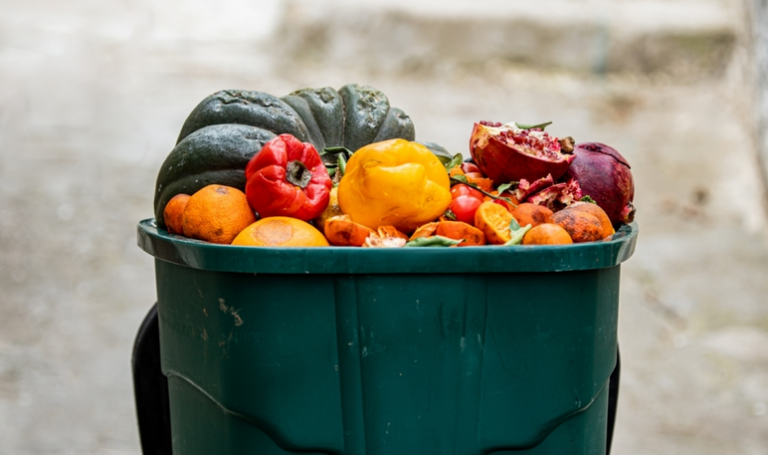
In 2022, the average European threw away approximately 72 kilograms of food, while the total food waste per capita along the entire food supply chain reached 132 kilograms. Overall, in the European Union (EU), food waste amounted to 59.2 million tons, with 54% of it coming from households. This wasn’t just bones or peels, but actual food, while 33 million people in Europe couldn’t secure a full meal for half the days of the month.
Zooming in on Greece reveals a disappointing reality: each year, the average household throws away over 460 servings of food and “loses” between 800 and 1,000 euros (2022 prices). The data for the country comes from a study by Professor Prokopis Theodoridis, a Marketing Professor and Dean of the School of Social Sciences at the Hellenic Open University (HOU), and Dr. Theofanis Zacharatos, a Postdoctoral Researcher at HOU and the Sustainable Development Unit of the “ATHENA” Research Center, who spoke to protothema about food waste in Greece.
Greeks ranked third in food waste
“Food waste is a global problem that our country is also called to tackle. Despite the increasing awareness efforts and the growing number of studies, Greece remains in third place in the European Union for total food waste, according to the latest Eurostat data. This is a reality with multiple consequences—environmental, economic, and social,” he notes.
The EU estimates the annual cost of food waste at 132 billion euros. “It wastes critical natural resources, such as water—just think that cultivating a tomato requires about 13 liters of water—energy, and arable land,” explains Dr. Zacharatos, discussing a problem that goes beyond the economy.
“According to available data from the Food and Agriculture Organization (FAO), food waste accounts for about 10% of global greenhouse gas emissions. On a social level, it is almost ethically provocative to throw away huge amounts of food when a significant part of the population faces food insecurity— even in developed countries like Greece.”
Consumer behavior and food waste
In their latest article, published in Encyclopedia, Dr. Zacharatos and Mr. Theodoridis provide an extensive review of the research on Greek consumer behavior towards food waste from 2012-2024, as well as the main trends, behavioral patterns, and factors influencing food waste in Greece.
Key points from the 12-year analysis, according to Dr. Zacharatos, include:
- Economic impacts: The economic crisis had influenced the reduction of food waste as consumers became more cautious with their purchases.
- Rising awareness: There has been a continuous increase in consumer awareness (in 2014, 40% responded positively, acknowledging the issue of food waste, and today, the percentage exceeds 85-90%).
- Consumer categorization: Research has identified different groups of consumers based on their behavior towards food waste, highlighting the need for targeted interventions.
“This study provides valuable insights into understanding the evolution of Greek consumer behavior concerning food waste and can serve as a basis for shaping policies aimed at reducing this phenomenon,” comments Dr. Zacharatos, who has studied the issue for over 10 years.
“Our effort began in 2014 with the preparation of my first master’s thesis in Greece, which explored the problem and its causes, including quantitative research on Greek consumers’ attitudes. Since then, the systematic study of the issue has continued with publications—after peer review—in reputable scientific journals, as well as with the completion of my doctoral thesis on this topic.
“As a research team with Mr. Theodoridis, we were among the first to study consumer behavior in relation to the problem of food waste during different periods. I must say that we have also published the only research addressing this specific issue during the COVID-19 pandemic and the lockdowns.”
Three Types of Consumers
Although the analysis reveals a broad range of categories, Dr. Zacharatos focuses on the following main ones:
- The indifferent: Consumers who do not recognize waste as a problem and show no willingness to change habits (usually younger people).
- The “potentially aware”: Individuals who understand the problem but lack sufficient information and do not consciously develop behaviors to prevent the issue.
- The conscious: Those who already implement food waste reduction practices, such as reusing leftovers, proper storage, and using shopping lists, among others (usually older people).
Barriers to Change
Today, we rank among the most wasteful in Europe, and as Dr. Zacharatos explains, the reasons are complex:
- There is still a lack of meaningful environmental education. “In a study we conducted in collaboration with the NGO Boreoume and funded by the Green Fund in 2022, it was found that 1 in 2 consumers are unaware of the environmental impacts of food waste.”
- There is overconsumption due to cultural standards of abundance.
- There is a lack of trust in food labeling. “Many consumers throw away food simply because it has passed its ‘best before’ date, without evaluating whether it is still safe to consume.”
“The research also shows that we often overestimate our needs when shopping, resulting in filling up refrigerators and cupboards with products that ultimately go unused,” he adds, while noting that “we still have a significant road ahead, despite the signs of improved awareness regarding food waste. Greece continues to rank among the top in the EU for food waste, reminding us that change does not come automatically.”
Policies for Improving the Situation
We asked Dr. Zacharatos what policies could reduce food waste. He answers through his research:
- Campaigns to change social norms: “If food waste begins to be viewed as socially unacceptable, citizens are more likely to change their behavior.”
- Strengthening education to create a culture of responsibility from a young age. “As has been proven in research—and was the subject of my doctoral thesis—enhancing knowledge about environmental problems and specifically food waste leads to the development of more conscientious consumer behavior regarding food waste.”
- Legal and economic incentives for businesses to encourage more frequent food donations instead of throwing food away.
- Transparency and better labeling of expiration dates, so consumers can better understand them.
- Support for innovations such as apps that help consumers manage their food.
Dr. Zacharatos emphasizes that, beyond moral and environmental obligations, reducing food waste is also a crucial pillar in achieving the UN’s Sustainable Development Goal 12, related to responsible consumption and production.
“Practically, this means we must rethink the way we buy, cook, and store our food, both as consumers and as a society,” he explains, concluding emphatically that:
“Every tomato that ends up in the trash is not just a single incident, but a symptom of a system that needs rethinking. Addressing food waste requires policy initiatives, educational tools, collective participation, and a change in mindset.
“Only then can we genuinely talk about sustainable development—not as a slogan but as action.”
Ask me anything
Explore related questions