





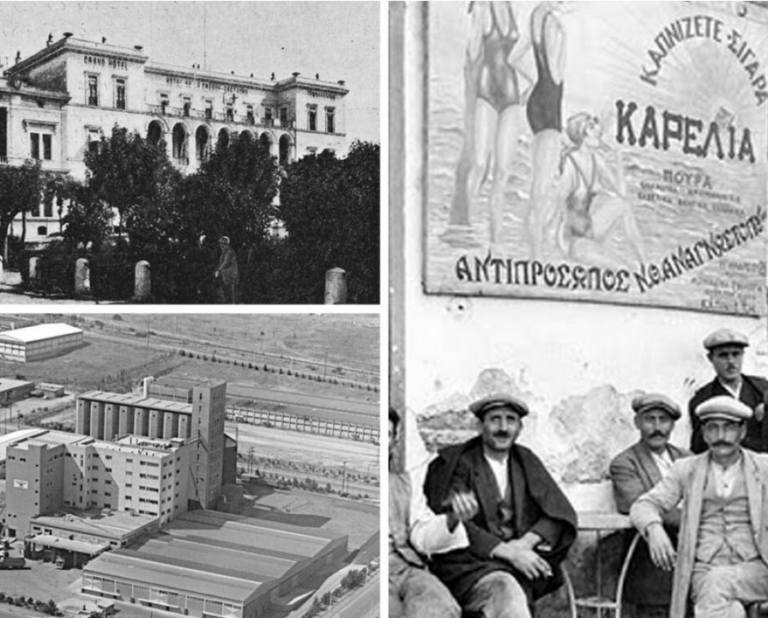
What could one of the most popular Greek chocolates, one of the world’s most sought-after brandies, Athens’ most iconic hotel, Greece’s first flour milling company, and a leading European digital services group possibly have in common?
It’s the same trait they share with a historic tobacco company, a major soap and liquid cosmetics manufacturer, one of the country’s largest food corporations, and three more distilleries excelling in exports. In total, we’re talking about 11 companies, most of them household names in Greece—and some abroad as well.
Their stories span across three centuries. These businesses began at a time when Greece’s borders barely reached Thessaly and did not yet include the Aegean Islands, Crete, or the Dodecanese—regions from which some of these very companies originated, even before they were liberated from Ottoman rule. And that’s not all…
There’s even a unique case: that of a renowned flour milling company that traces its roots back to the distant year 1782. Its history stretches across four centuries, and today, it is in the hands of the seventh generation of the founding family.
These are companies with names as weighty as their histories, that stood the test of time and are now writing new chapters of success in their long and eventful journeys. To survive, they had to weather storms—two Balkan Wars, two World Wars, and several intense and prolonged economic crises: the official bankruptcies of 1893 (under Charilaos Trikoupis) and 1932 (under Eleftherios Venizelos), and the more recent, unofficial yet very real financial collapse of the past decade.
Many of these businesses suffered. Some came close to shutting down. But ultimately, they survived. Some changed ownership, others reinvented themselves in new sectors to meet modern competition. What matters is that they made it—they stayed standing through the tough times and continue to thrive today, leading the domestic market and, in some cases, flourishing globally with strong export footprints.
Loulis Mills
The story of Loulis Mills began in the very distant 1782, when Zois Loulis built a stone mill in Aetorachi, Ioannina. His son, Ioannis, went on to found one of the region’s largest banks, also based in Ioannina.
The third generation of the Loulis family migrated to Volos at the end of the 19th century. Brothers Christos, Konstantinos, and Nikos Loulis initially worked in local mills, and in 1909, by renting the Xydis steam mill in Upper Volos, they began their own entrepreneurial venture. They founded a major factory—the largest of its time—and a company named Kyliindromylos Adelfon Loulis – N. Chatzinikou & Co., based in Thessaly.
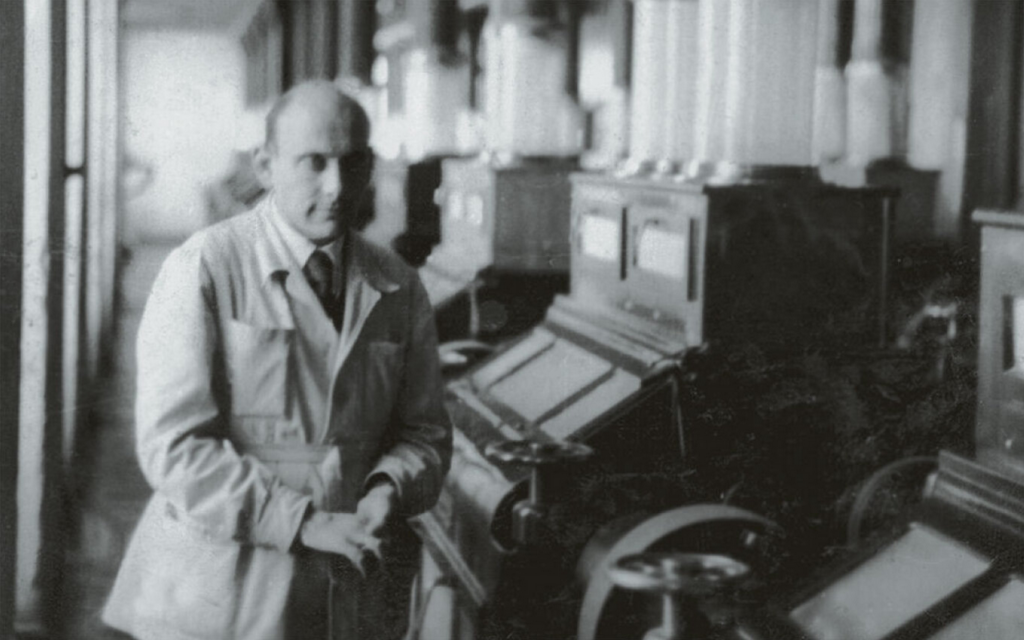
In 1924, the mill came under the full ownership of the Loulis brothers, who also acquired 25% of the Allatini Mills in Thessaloniki—though they held that stake for only five years.
After the German occupation of WWII, the family resumed operations in 1945, and on October 24, 1951, the company was listed on the Athens Stock Exchange. Over the following years, the business expanded rapidly, establishing a branch in Attica. Under Konstantinos Loulis’ leadership, a new mill was delivered in 1978 in the industrial zone of Volos, and the company began strong exports to Asia and Africa. By 1988, Loulis Mills had climbed to become the second-largest milling company in Greece.
In 1993, the company established its Macedonia branch in Kalochori, Thessaloniki. In 1997, it acquired the Stella pasta company, and in 1999, it made a major move by acquiring 52% of competitor Agios Georgios Mills through the Athens Exchange, placing it at the top of the domestic market. It also expanded abroad, to Tirana, Sofia, and Bucharest, and rebranded under the unified name Loulis Mills.
By 2007, high debt levels forced the group to seek a strategic investor, leading to a partnership with Austrian group Leipnik-Lundenburger Invest. In 2010, leadership passed to the 7th generation, Nikos K. Loulis, and the company launched the first organic mill in the Balkans, located in Sourpi. Despite the economic crisis, Loulis Mills inaugurated a new unit in Keratsini with a capacity of 300 tons per day.
Today, the company operates three state-of-the-art flour production facilities in Sourpi, Keratsini, and Bulgaria, along with a baking and pastry ingredient production unit, Kenfood, located in Thebes (Thiva). Now known as Loulis Food Ingredients, 20% of the company belongs to Al Dahra Agriculture Spain S.L., the Spanish subsidiary of the namesake UAE-based agribusiness group.
Karelia – Tobacco Legacy
Karelia cigarettes have been smoked by generations of Greek smokers. Beyond the classic Karelia Filter, available in standard packs and small 10-packs, and loose cigarettes sold by the gram, older smokers will recall other vintage brands like Rekór, Rex, Karelia Agriniou, and Sertika Lamias—perhaps the strongest cigarette of the past century—as well as more recent releases like Karelia Lights.
The Karelia Tobacco Company began operations in Kalamata in 1888, founded by Georgios and Efstathios Karelias. At the time, tobacco arrived in Messinia by small sailing boats. In 1916, Andreas, one of Georgios Karelias’ sons, introduced the first cigarette-making machine. That moment marked the beginning of the family business’s long and remarkable journey. The first brand they launched was Petrobeis – Cigarettes Karelia Bros.
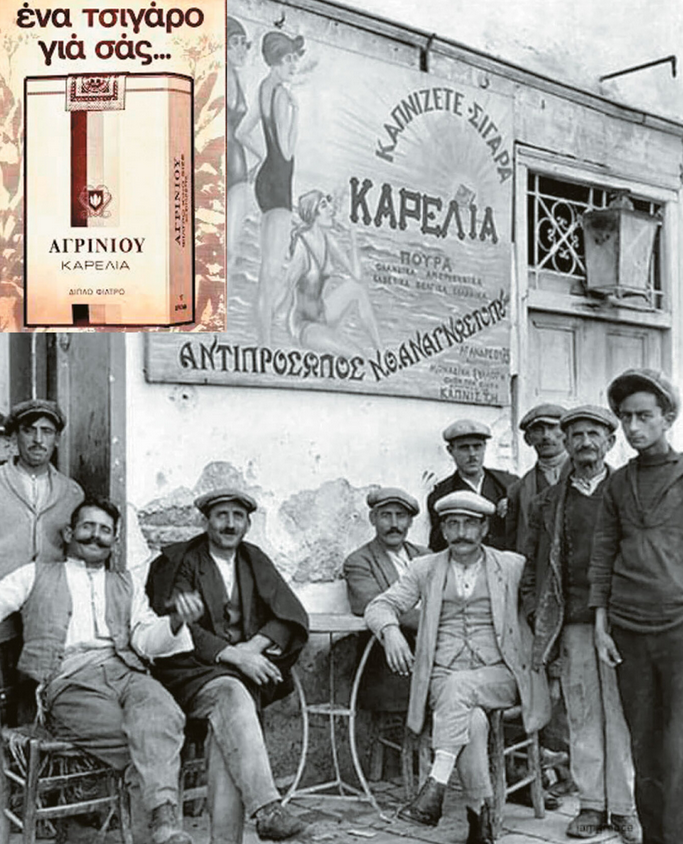
After World War II, the company took off, establishing itself as one of Greece’s top tobacco producers. Its success relied on the popularity of working-class and mid-tier cigarette brands. In 1973, it was listed on the Athens Stock Exchange.
Today, Karelia is the second-largest tobacco company in the Greek market, but the only one still in Greek hands. The company is led by Chairwoman Margarita-Victoria G. Karelia and CEO Andreas G. Karelias. It produces 45 million cigarettes daily (that’s about 16,000 per minute) and exports to 50 countries, holding 0.32% of global cigarette consumption.
The company has received numerous awards, but what truly sets it apart in the minds of many Greeks—especially in recent years—is its generous employee benefits policy, both ongoing and special one-off bonuses. In 2024, Karelia provided €6 million in extraordinary bonuses to its staff and also supported various institutions and organizations across Greece.
Pavlidis Chocolate Company
Spyridon Pavlidis is credited with bringing chocolate to Greece—a fact that earns him eternal gratitude. In 1841, he opened a small confectionery shop at the corner of Aiolou and Vyssis streets in the center of Athens. Named “Pavlidis’ Sweet Shop,” it sold popular treats of the time like baklava, Turkish delight, and sugared almonds.
The shop quickly became a local landmark, beloved not only by Athenians but also by foreign military officers and diplomats.
From 1843, Spyridon Pavlidis traveled across European cities to deepen his knowledge of confectionery. That’s where he discovered chocolate—and seized the opportunity. By 1852, he was producing the first Greek-made chocolate as a beverage in his pastry shop.
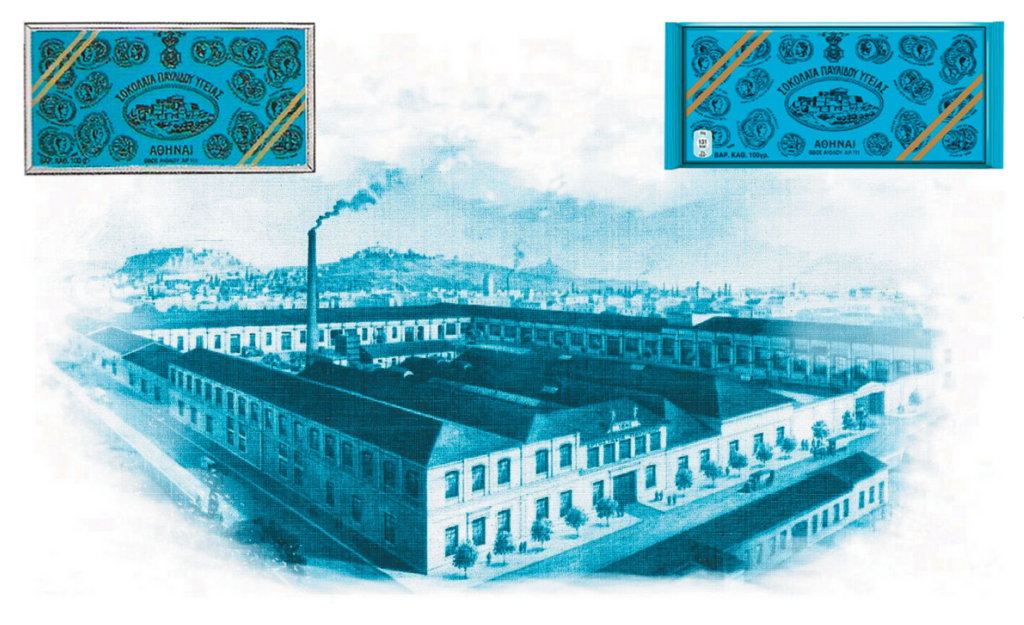
Later, during another visit to Paris, he returned with a hand-operated chocolate-making machine and, in 1860, created the first “Pavlidis Health Chocolate”, which immediately won the bronze medal at the Panhellenic Exhibition of Agricultural and Industrial Products, organized by Evangelos Zappas. Over the years, the company earned 18 more prestigious international awards.
In 1871, Pavlidis introduced Greece’s first steam-powered chocolate production machine. According to his descendant Dimitrios Pavlidis, “the event was seen as monumental, and Athenians queued endlessly outside the workshop—some to admire it, others even out of fear of the steam engine!”
On May 1st, 1876, the business moved to its own building at 135 Piraeus Street, where the chocolate factory still stands today. This marked the birth of the Pavlidis Chocolate Industry.
Since Spyridon had no children, he handed over the business and his fortune to five nephews, who proved worthy successors. Pavlidis remained a dominant name for decades, and in 1986, the company was acquired by Jacobs Suchard, a global leader in chocolate and coffee, with Aspasia and Georgios Pavlidis successively leading the business. In 1991, it was sold again—this time to Kraft General Foods, which later renovated the historic factory on Piraeus Street.
Papoutsanis
From building the first steam-powered olive oil and soap factory on Lesvos, established by Dimitrios Papoutsanis, to becoming a leading manufacturer of soaps and liquid cosmetics, the Papoutsanis company has traveled a 155-year-long journey. It was founded in 1870 and relocated to Piraeus in 1913, where it began producing green laundry soap and Marseille-style soap bars for mass use.
In 1936, it launched lilac-scented soap—a novelty at the time—sold in gelatin packaging. In the early 1950s, it introduced the iconic Karavaki (Little Boat) soap. The company moved its soap-making operations to Kato Kifisia in 1967, where it produced its first glycerin soap. In 1972, Papoutsanis went public and was listed on the Athens Stock Exchange.
Marking the dawn of its third century, in February 2001, Papoutsanis inaugurated a state-of-the-art production plant in Ritsona, one of Europe’s largest and most modern soap and hotel amenities factories. The plant now produces 100 million products annually, exporting to 25 countries.
Under the leadership of Menelaos Tasopoulos and Georgios Gkatzaros, the company is targeting double-digit revenue growth this year—last year’s revenue reached €66.2 million—along with further improvement in profitability.
The key to its success? Aside from quality ingredients and innovation, it has shown agile responsiveness to new market demands. A prime example was in spring 2020, when the outbreak of the COVID-19 pandemic sparked a sudden surge in demand for sanitizing products. Papoutsanis swiftly adapted, launching the Natura hand sanitizer line, which was named Product of the Year in 2021.
“Grande Bretagne” Hotel
A timeless symbol of prestige and luxury hospitality, the Hotel Grande Bretagne, part of The Luxury Collection, is now in its 151st year of operation in the heart of Athens.
It all began in 1874, when Savvas Kentros moved his small hotel into what would become the city’s most iconic building—the Dimitriou Mansion, located on Syntagma Square. From there, it grew into a historic landmark of European elegance, hosting royalty, celebrities, politicians, and dignitaries for over a century.
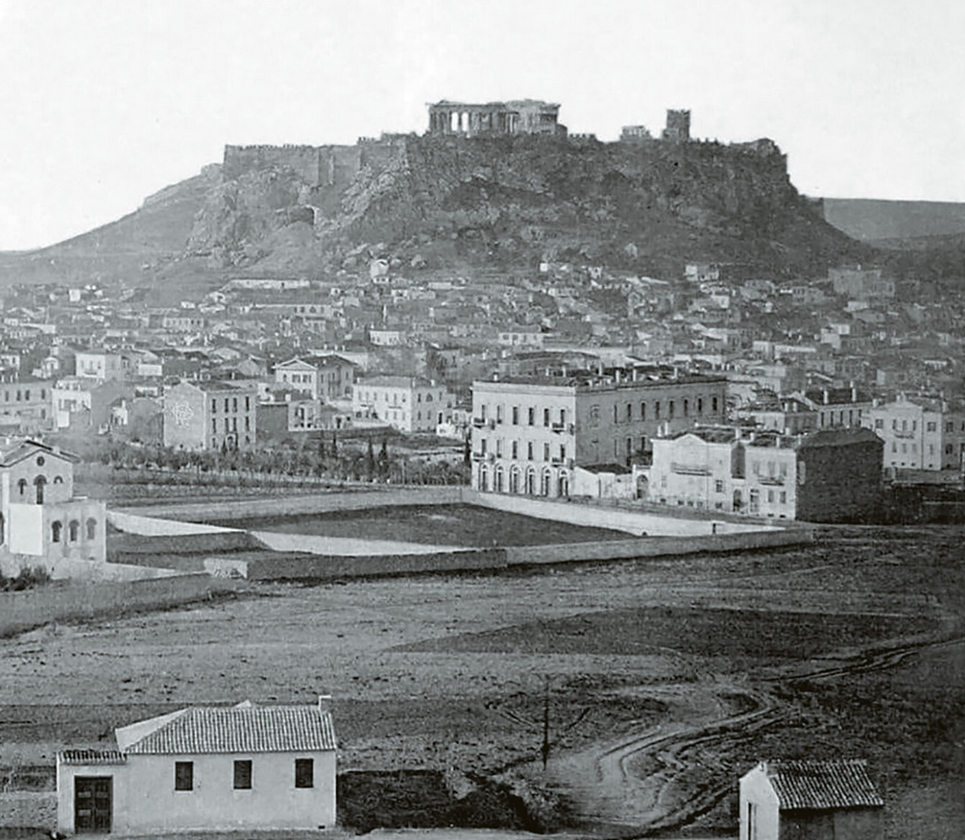
In 1878, a pivotal partnership was formed with Efstathios Lampsas, a hospitality expert educated in Paris at the expense of the Royal Court. That marked the beginning of a long era of Lampsas and luxury. The “Grande Bretagne” was significantly expanded, adding imposing foyers and formal dining rooms. One of the secrets to its growing prestige was the influence of Palmyra Palfroy, later Mrs. Lampsas, who made decisive and tasteful interventions in the hotel’s design and operations.
In 1899, the hotel was officially renamed “Hotel de la Grande Bretagne” and quickly became a favorite among international dignitaries and personalities. Over the decades, it welcomed heads of state, monarchs, cultural icons, and more.
The hotel has served as a silent witness to many of modern Greece’s historic moments—from hosting the first session of the International Olympic Committee in 1896, to the announcement of the Greco-Italian War on October 28, 1940, and from the first Greek beauty pageants to the signing of Greece’s entry into the European Economic Community (EEC) in the spring of 1980.
Its halls and suites have been the setting for high-level political meetings, international diplomacy, and influential decisions that shaped not just Greece, but global history. At the same time, the hotel remained a stage for glamorous social events, fashion shows, and celebrity arrivals, defining its sophisticated modern character.
When Konstantinos Karamanlis returned from exile in July 1974, he stayed on the 5th floor, marking the symbolic start of Greece’s Metapolitefsi (political transition).
Guests of the Grande Bretagne have included Winston Churchill, Aristotle Onassis, Maria Callas, Elizabeth Taylor, Jacques Chirac, and many more world-renowned figures.
Today, the hotel is operated by Marriott International, Inc., and owned by the Lampsa Hellenic Hotels Company S.A., part of the Laskaridis Group, listed on the Athens Stock Exchange since 1946. Besides the Grande Bretagne, Lampsa also owns the adjacent King George Hotel, the leased and fully renovated Athens Capital–MGallery, and abroad, the Hyatt Regency and historic Mercure Excelsior in Belgrade.
Inform Lykos – Austriacard Group
From its humble origins in 1897 as an artistic print shop founded by 29-year-old Panagiotis Lykos, Inform Lykos evolved into a cutting-edge digital services company, playing a key role in Greece’s technological transformation. Its most significant growth came in the last 60 years, beginning in 1966 with the production of computer paper through a joint venture called Typomichanografiki Ltd, serving banks and public authorities.
In 1982, it ventured into IT services, and by 1994, it was listed on the Athens Stock Exchange, enabling major investments in infrastructure and acquisitions in Northern Greece and beyond. The company expanded into personal and transaction card manufacturing, positioning itself in a new tech-forward direction.
By 2000, Inform Lykos had expanded into Romania, and in 2007, it acquired Austriacard, a move that opened the door to further growth. During the Greek financial crisis, the company relocated its headquarters to Vienna, restructured its international operations, and established the Austriacard Group (formerly Lykos AG), with a focus on two main sectors: all types of cards and secure data printing.
A pivotal moment came in 2023 with a cross-border merger and the rebranding of the company to Austriacard Holdings, followed by dual listing on the Athens and Vienna Stock Exchanges. In just a short span, it transformed into a global digital services provider, especially in the financial sector, becoming a key supplier and partner to challenger banks like Revolut.
Today, the group operates production or personalization centers in nine countries and has sales offices in 50 countries, maintaining a leadership role in Greece and a dominant presence across Central and Eastern Europe in printing, card services, and information management. The group, including its card division and Austrian operations, employs around 860 people.
Minerva
Founded in 1887 by Dimos Karakostas and Evangelos Giannakos, Minerva began as a small local company dealing in edible and colonial goods. Over time, it evolved into one of Greece’s leading food companies.
The turning point came in 1904, when the two partners decided to focus on olive oil, launching the brands Minerva and Regina, which soon became household names across the country.
After the 1930s, Minerva evolved into a fully integrated company specializing in the industrial production, standardization, and distribution of olive oil. It was the first Greek company to introduce standardized bottling of olive oil in glass containers, using the slogan:
“Minerva: The finest natural olive oil in sealed bottles and cans.”
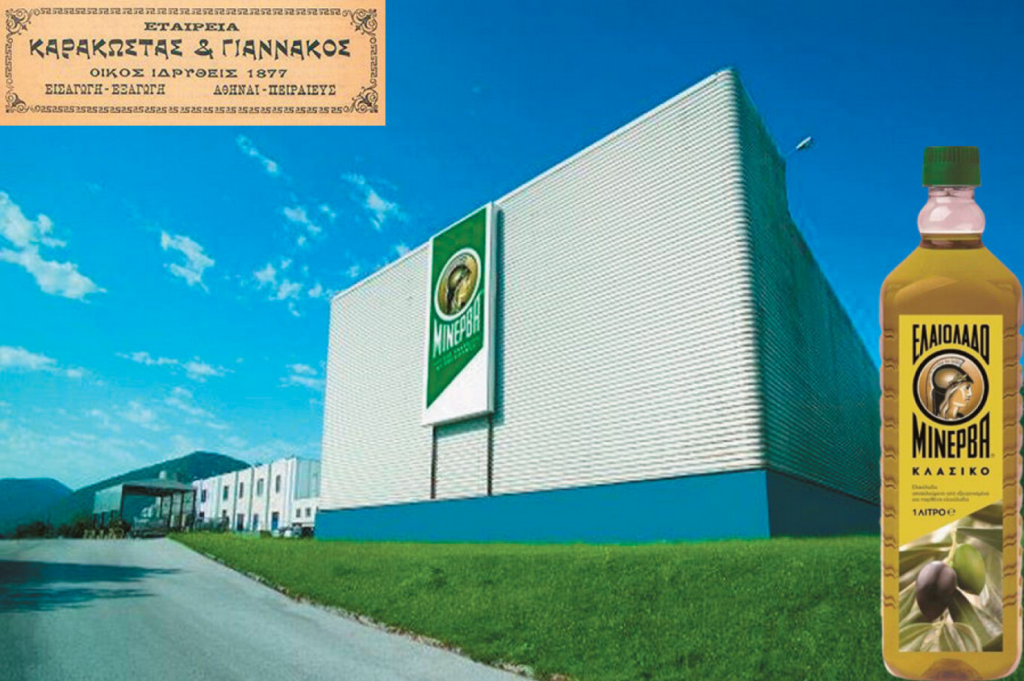
Through strategic partnerships, investments, and acquisitions, the company enriched its product portfolio. In addition to olive oil, Minerva developed and marketed a series of iconic brand names across key food categories, including tomato products, margarine, vinegar, condiments, dairy, and butter, often holding significant market shares in each.
In 1977, Minerva was acquired by the multinational company Paterson-Zochonis (PZ), a commercial enterprise originally from Sierra Leone with Greek roots, thanks to co-owner George Zochonis. Under PZ’s stewardship from its London headquarters, Minerva was significantly strengthened and launched a number of important acquisitions.
At the end of 2019, Minerva changed ownership once again. It was acquired by Elaia Zeus S.A., a company controlled by the investment fund Diorama Investments Sicar S.A., led by Dimitris Daskalopoulos, with the participation of Elikonos 2 SCA Sicar. The new management further consolidated Minerva’s leading position in the Greek food industry and bolstered its export capabilities, through the acquisitions of Pummaro and Mediterranean Foods.
Today, Minerva operates two production plants—one in Schimatari, Boeotia, and another in Gastouni, Ilia—and employs approximately 200 people.
Metaxa
“Between us…Metaxa.” The world-famous “flying brandy”, created by Piraeus-born merchant Spyros Metaxas in 1888, quickly became a trademark of both Greek heritage and global prestige. The historic Metaxa Distillery and Cognac House began exporting almost immediately, with early markets including Egypt and Turkey.
With the dawn of the 20th century, the company expanded into the lucrative U.S. market, sending 36,000 cases of Metaxa across the Atlantic in 1916 alone. Its reputation and distribution steadily grew, and today Metaxa is exported to 40 countries, remaining a symbol of refined Greek craftsmanship.
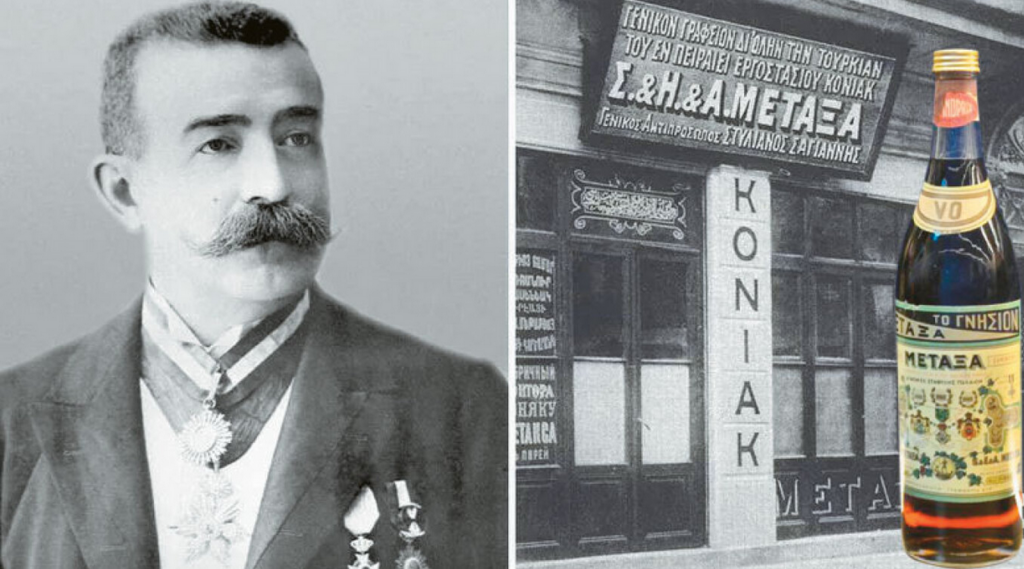
Metaxa owes its unique character to a distinct production method, which includes aged distillates over 30 years old, making it one of the most sophisticated spirits in the world.
The emblem of the company, the “Salaminomachos” (Warrior of Salamis), was inspired by an ancient coin discovered during the foundation works of the distillery at 7 Aristeidou Street. Spyros Metaxas saw it as a good omen and adopted it as the symbol of his spirit house.
One of the key secrets of Metaxa’s unique taste lies in the sweet Muscat wine from the renowned vineyards of Samos. These vineyards are cultivated in small, garden-sized plots and protected by traditional terraced stone walls, which retain and drain the soil. The precious grapes are harvested exclusively by hand, following time-honored traditions.
After Spyros Metaxas’ death, the business was skillfully continued by his wife Despoina and their three sons, who successfully navigated a series of historic challenges: wars, the U.S. Prohibition era of the 1920s, and even the Asia Minor Catastrophe.
The Metaxa brand is surrounded by countless legendary stories. Among its most devoted fans and unofficial ambassadors were Fidel Castro and Aristotle Onassis. In 1968, the current distillery in Kifisia was established. The Metaxas family sold the company in 1989 to the British group IDV, and since 2000, Metaxa has been part of the prestigious Rémy Cointreau Group, which has continued to elevate the brand’s global presence.
At the heart of the company is always the Metaxa Master—the guardian of the production’s sacred secrets. Today, that role is held by Constantinos Kalapothsidis, the 6th Metaxa Master, ensuring the legacy lives on.
Barbayannis
With six generations of family tradition and a history spanning over 165 years, the Barbayannis Distillery remains one of Greece’s most iconic names in ouzo production. The story began in 1860, when Efstratios Barbayannis left Odessa and settled in Plomari, Lesvos. He brought with him the art of distillation, along with the first copper still, laying the foundation for what would become a lasting family enterprise.
His grandson, also named Efstratios Barbayannis, opened the door to exports, initially to Beirut and Alexandria, starting with barrels and later introducing bottling for the now-classic Blue Barbayannis Ouzo, made with the same traditional recipe and its distinctive blue label.
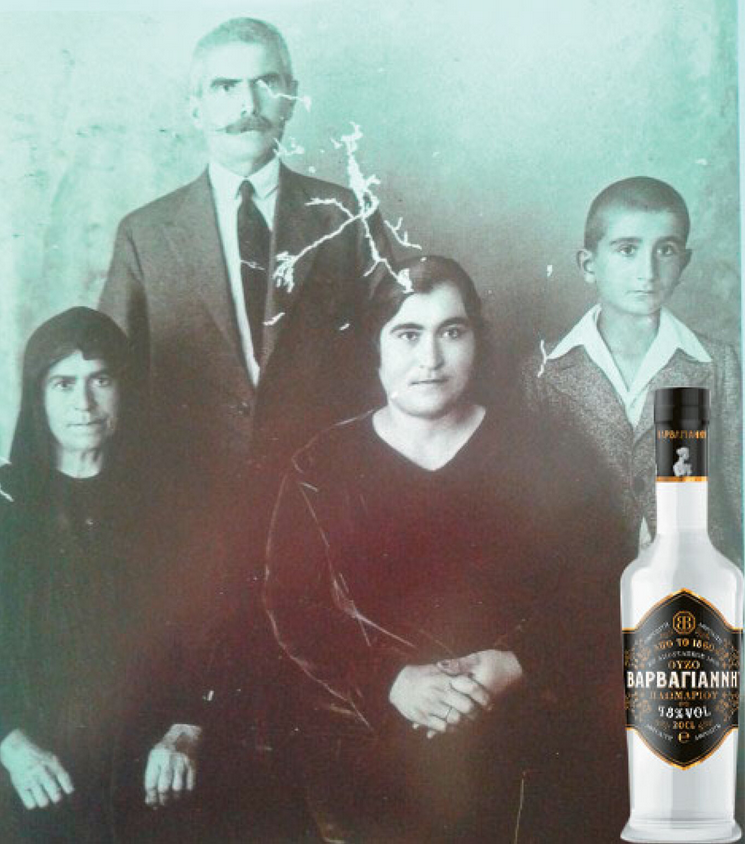
After the German Occupation of Greece, his only son, Ioannis Barbayannis, breathed new life into the distillery. He installed new machinery, including a semi-automatic bottling system, and introduced two new varieties: Ouzo Evzonas and Ouzo Aphrodite. He also expanded the company’s exports. Ioannis remained at the helm until 1987.
For 127 years and four generations, the distillery followed the principle of single-person leadership. This changed when the three children of Ioannis Barbayannis introduced a more collaborative management structure. Today, the sixth generation is actively involved, with seven family members running the company.
The distillery now produces approximately 60,000 nine-liter cases annually, with consistently growing momentum and exports to 26 countries. Though it has been approached for acquisition several times, the Barbayannis family has no intention to sell. At the Barbayannis Ouzo Museum in Plomari, visitors can even see handwritten orders from George Papandreou during his time as governor of Lesvos.
Malamatina
The Malamatina Winery began its journey on the island of Tenedos, enduring numerous trials along the way but ultimately prevailing and re-emerging as a success story in recent years following a change in ownership. The company was founded in 1860 by Efstratios Malamatinas, who began producing wine from the local “Tsaousia” grape—known for its fine quality and distinct aroma.
His son, Konstantinos Malamatinas, went on to establish a winery in Alexandroupolis, marking the beginning of retsina production, the iconic Greek resinated wine.
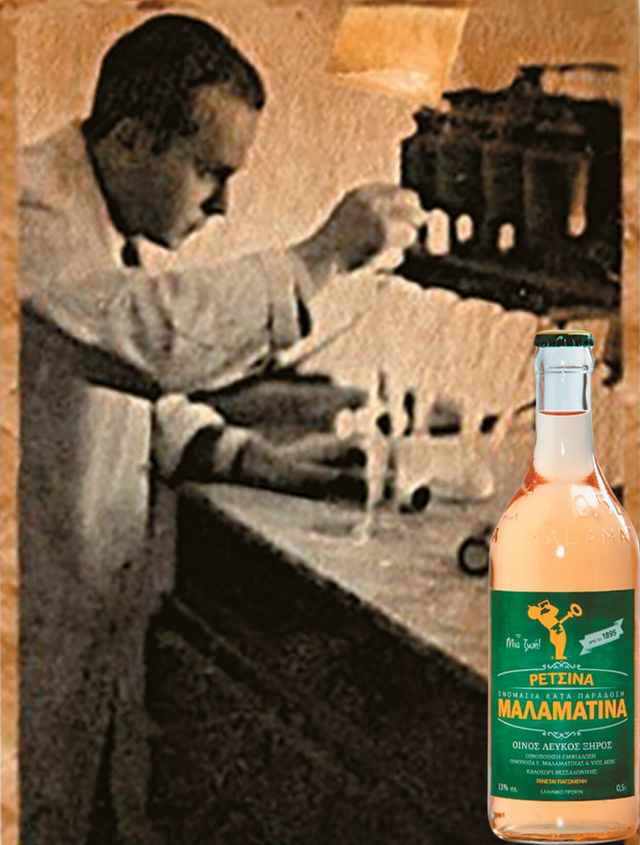
Following the Treaty of Lausanne, the Malamatinas family lost all their property in Tenedos. Undeterred, Konstantinos Malamatinas restarted production of the “Wine of Greece” at a new winery in Avlida. Later, his son Evangelos revolutionized the brand by bottling the wine in the iconic “bubble” bottle in 1957.
In the 1960s, the legendary logo featuring the little man with the key was introduced. According to popular urban legend, the idea came from the beloved Greek actor Nikos Stavridis, a close friend of Evangelos and the star of one of Malamatina’s most famous ad campaigns.
The company expanded its winemaking facilities in Faro and Ritsona, and later built one of the most technologically advanced wineries in Europe, located in Asopia, Boeotia. These facilities collectively process and store 28,000 tons of wine per year. The bottling plant in Kalochori, Thessaloniki, has the capacity to bottle up to 50 million bottles annually.
With exports to 37 countries, Malamatina holds a global leadership position in retsina sales, with over 13 million bottles sold every year.
And all of this was achieved despite a near collapse. In 2019, the company began negotiations with creditor banks over a €43.8 million debt restructuring. At the eleventh hour, five investor groups expressed interest. The winning bid came from the Mantis Group, led by entrepreneurs Alexandros and Charalampos Krommydas, who agreed to cover €13 million in obligations, provided interim funding to keep operations running, and committed to investing €12 million over the next decade.
Under the new management, Malamatina has been recording positive results since March 2022.
Kalikounis
Kalikounis Distillery, the oldest operating alcoholic beverage company in Greece, was founded in 1850 in Kalamata by Georgios Kalikounis, using a steam-powered alcohol still. The distillery produced liqueurs, mastiha, raki, and brandy, and very quickly found success in both domestic and international markets.
A milestone in its early journey was participation in the Exposition Universelle in Paris in 1900, where Kalikounis was awarded the gold medal for its liqueurs and brandy. This international recognition opened doors to elite establishments like the famous Café Anglais, a popular gathering place for artists and intellectuals in Paris.
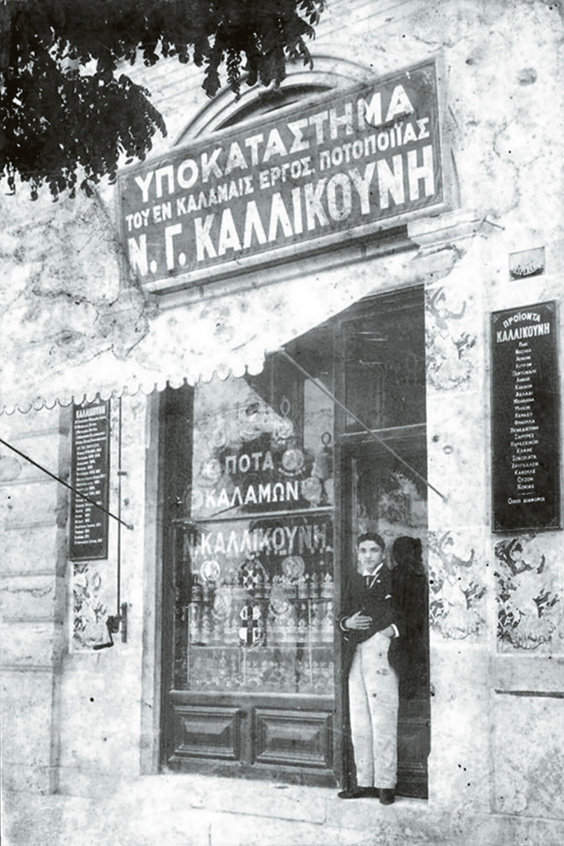
Later, in 1905, King George I of Greece awarded Nikolaos Kalikounis the Silver Cross of the Order of the Knights, recognizing his contributions to Greek industry.
After World War II, the Kalikounis distillery underwent a full reorganization, while remaining faithful to its original recipes and traditional production methods. In 1960, the company was honored with the title of Official Supplier to the Royal Court of Greece, along with the right to bear the royal emblem on all its products—a rare distinction that only Metaxa and Kalikounis have achieved.
Today, the distillery is located in the Kalamata Industrial Zone (VI.PE.) and is managed by the fifth generation of the Kalikounis family. Its signature product is the Alexander brandy, aged in oak barrels, a source of great pride for the company. Other popular offerings include Status vodka, Despotikon rakomelo, and Kalikounis mastiha.
The distillery produces around 50 product codes, with raw materials imported from Belgium, and 30% of its sales coming from exports. Its ouzo leads in volume, with significant exports to Israel, Canada, Germany, and the United States.
Ask me anything
Explore related questions




