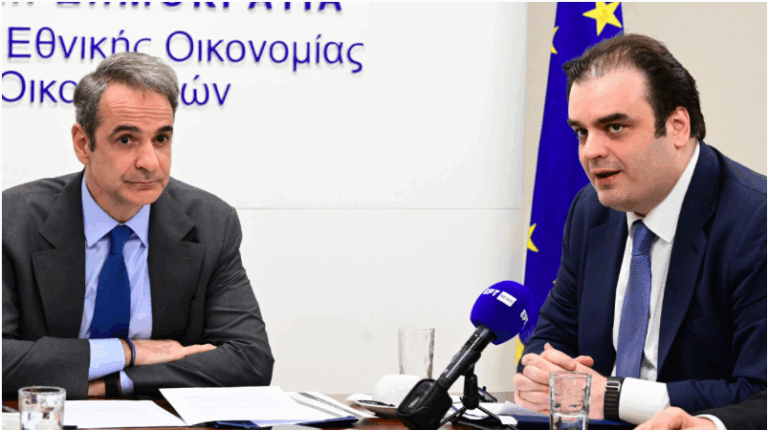
Greece recorded a primary surplus of 4.8% of GDP for 2024, combined with the implementation of new European rules that are being applied for the first time this year, unlocking new benefits of €1.1 billion for 2025. The difference is that these specific benefits are being established on a permanent basis and not as “one-time” support measures.
“The dynamic growth, along with the fight against tax evasion and a series of other structural measures, brought additional revenues above the targets we had set,” stated Prime Minister Kyriakos Mitsotakis, “and therefore, despite the strict European fiscal rules, a significant part of these can now be returned to the citizens.”
A Reserve for New Benefits
But how can the government proceed with new benefits, given that the stringent European fiscal rules set annual limits on increases in state spending?
According to the Minister of National Economy and Finance Kyriakos Pierrakakis, the answer lies in the flexibility offered by these new rules, combined with Greece’s remarkable fiscal performance in 2024. This combination has created the necessary fiscal space, fueling government announcements for new support measures for 2025 and 2026, or for any potential emergencies that may arise in the country!
Specifically, while the annual European limit for spending increases in 2025 for our country is 3.7%, the new benefits announced after the approval of the new budget raise the estimated increase to 4.5%!
In total, these exceed €1.3 billion, including what was announced today (€1.1 billion) as well as other benefits announced throughout 2025 (after the approval of the current budget), such as the hazard pay for uniformed personnel, the exemption from pharmaceutical expenses for low-pensioners, and increases in public sector salaries due to a rise in the minimum wage, etc.
The main reason why this exceeding of the annual limit is permissible and compatible with European rules, avoiding the risk of a “yellow card” from the European Commission, is the “smart” negotiation Athens conducted in 2024.
Specifically:
- For last year, the limit for spending increases was 2.6%.
- The government negotiated and succeeded in having benefits amounting to €2 billion for 2024 not counted as an increase in spending, arguing that these were “offset” by revenue of €2 billion from permanent tax evasion countermeasures.
- Additionally, the new rules allow for any country to transfer part of any surplus increase margin from one year to the next.
- In this way, Greece retained a “reserve” for spending increases this year and for 2026, beyond the annual limit applicable in each respective year!
In other words, with this flexibility in calculating the spending limit, the government managed to record almost zero change in the net spending index for 2024, despite the tax reliefs and benefits announced that year!
Of course, this maneuvering ability would not exist without the impressive “buffer” resulting from a staggering primary surplus of 4.8% of GDP in 2024 – a performance that dramatically contradicted forecasts (which ranged from 2.5% to 3.5%).
Where the Money for the Surprise Surplus Came From
But how did we reach this overperformance? The leadership of the Ministry of National Economy and Finance provides the answer, revealing the factors that “inflated” the surplus:
- Record Tax Revenues: An excess of €1 billion (from October 2024 to February 2025) from the fight against tax evasion and increased compensations: €519 million from income taxes of legal entities and individuals and €497 million from indirect taxes, in addition to what was expected based on growth, high inflation, or the presumptive income measure for self-employed professionals.
- “Savings” from Social Security Contributions: An excess of €862 million above forecasts, thanks to faster wage growth (7.4% instead of 5.2%), a faster decline in unemployment (now at 8.6%), and the implementation of the labor card that reveals undeclared work.
- Better Management and Performance of State Expenditures and Assets, which was not previously taken for granted.
Specifically, decisive contributions to the surplus came from:
- “Overperformance” from the utilization of the assets of social security funds: +€430 million
- Cost savings in central administration: +€542 million
- Better results from public legal entities: +€748 million
- Various other revenues (savings from interest, refunds, etc.): +€270 million
- Improved outcome in the Public Investment Program: +€100 million.
Ask me anything
Explore related questions