

Pope Francis Enters Eternity, His Successors Ready for Battle
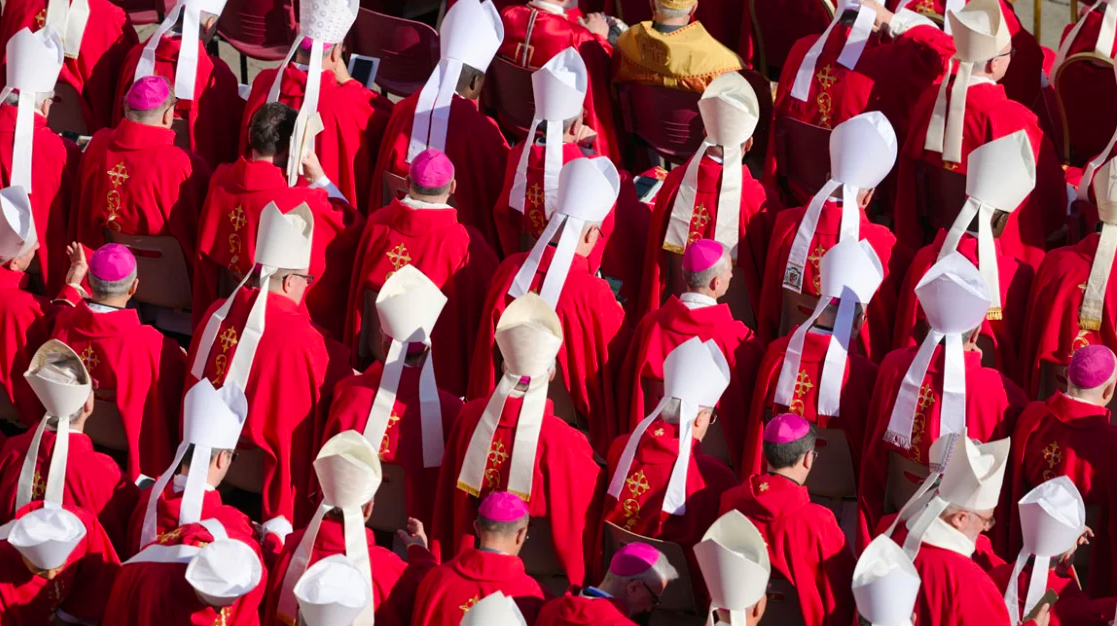
In the presence of approximately 200,000 faithful, a multitude of heads of state, senior clergy, and politicians from around the globe, as well as various personalities, the funeral of Pope Francis was held yesterday in St. Peter’s Square in Vatican City, followed by his burial at Santa Maria Maggiore in Rome.
Amidst a somber atmosphere, the ceremony was attended by Prime Minister Kyriakos Mitsotakis and his wife Mareva Grabowski, Ecumenical Patriarch Bartholomew, former U.S. President Donald Trump and his wife Melania Trump, French President Emmanuel Macron and his wife Brigitte Macron, German President Frank-Walter Steinmeier, outgoing German Chancellor Olaf Scholz, European Commission President Ursula von der Leyen, Brazilian President Luiz Inácio Lula da Silva, and Argentine President Javier Milei, despite his strong criticism of many positions and statements made by the Roman Catholic Pope.
Next Steps
The completion of the papal burial marks the beginning of a nine-day mourning period leading up to the election of Pope Francis’s successor by the conclave. According to tradition, the conclave must begin 15-20 days after the death or resignation of the pope. Given that Pope Francis passed away on Monday, April 21, theoretically, the conclave could start between May 6 and May 11. However, its proceedings may begin earlier if the cardinals agree.
In Eternity: Pope Francis Passes, His Successors Ready for Battle
Every baptized Catholic man has the right to be elected, although only cardinals have been elected popes since 1378. The new pope is elected by the winner of the conclave’s voting, requiring two-thirds of the votes from cardinals under 80 years old. Currently, there are 252 cardinals worldwide in the Catholic Church. Among them, 135 are “cardinal electors,” gathering in Vatican City to select the new pope.
Potential Successors
While it is impossible to predict Pope Francis’s successor today, estimates suggest that 13 cardinals currently hold an advantage in the race for succession:
Cardinal Reinhard Marx
The archbishop of Munich and Freising, Cardinal Marx, 71, was appointed by Pope Francis as a key advisor in 2013, overseeing the Vatican’s financial reforms.
- Cardinal Peter Erdo
The archbishop of Budapest and primate of Hungary, 72, Cardinal Erdo has twice been elected chair of the Council of European Bishops’ Conferences, in 2005 and 2011. He is known for his support of the Pope’s approach towards Orthodox Christians and has expressed a balanced view on immigration, recognizing both the right to migrate and the importance of ensuring political stability.
- Cardinal Marc Ouellet
This Canadian cardinal has led the Vatican’s office for bishops for over a decade, having been retained by Pope Francis despite being appointed by Pope Benedict XVI.
- Cardinal Pietro Parolin
The 70-year-old Vatican Secretary of State has held significant influence since 2014 and is seen as a moderate who could mend divisions within the Church.
- Cardinal Anders Arborelius
Born and raised Lutheran, Cardinal Arborelius, 75, is the first cardinal from Scandinavia, known for his traditional stance on church teachings.
- Cardinal Robert Prevost
The 69-year-old cardinal has extensive experience in Peru as an archbishop and is responsible for overseeing bishop nominations globally.
- Cardinal Robert Sarah
The former head of the Vatican’s liturgical office, 79, Cardinal Sarah is seen as a strong candidate for an African pope, representing a return to traditional papacy.
- Cardinal Christoph Schönborn
The archbishop of Vienna, 80, is linked to significant developments during Pope Francis’s tenure and has defended the Pope’s approach towards divorced and remarried Catholics.
- Cardinal Luis Tagle
The 67-year-old archbishop of Manila, often referred to as the “Asian Francis,” is known for his emphasis on poverty and inclusion.
- Cardinal Matteo Zuppi
The archbishop of Bologna, 69, is associated with the Sant’Egidio community and is known for advocating a more responsive Church.
- Cardinal Fridolin Ambongo
President of the Symposium of Episcopal Conferences of Africa and Madagascar, 65, he advocates for social justice and is an outspoken critic of the Congolese government.
- Cardinal Mario Grech
At 68, Grech is a lawyer with significant influence over synodal operations in the Church.
- Cardinal Pierbattista Pizzaballa
The 60-year-old has called for social justice amid ongoing conflicts and advocates for interfaith dialogue and concern for migrants.
Ask me anything
Explore related questions