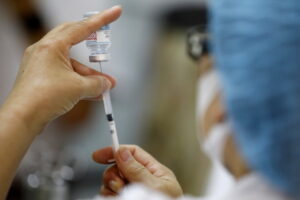
The Association of Greek Pharmaceutical Companies (SFEE) refers to the invaluable value of vaccines on the occasion of the European Vaccination Week (24-30 April 2025). At the same time, it sounds the alarm, stressing that the vaccine fatigue observed after the pandemic has led to a significant lag in vaccination coverage, which carries a significant risk of the reappearance of “forgotten” diseases.
He refers to the recent outbreaks of measles and pertussis in many European countries and in Greece, noting that the major challenges facing humanity, such as climate change, migration, and wars, suggest the need for cooperation at the international and European levels in terms of epidemiological surveillance.
“Vaccination, evidence-based, protects health, well-being, and productivity when applied consistently and coherently,” stresses the SFEI.
According to the World Health Organization (WHO), since 1974 to date, vaccinations have saved at least 154 million lives. Specifically, 6 lives a minute, every day, for five decades. In addition, they offer significant savings to health systems, returning many times the initial investment.
In Greece, a recent study shows that the proper implementation of a child-adolescent vaccination programme can prevent, on an annual basis, nearly 289,000 cases, 266 deaths, and the loss of 7,470 years of life. In addition, its implementation has been associated with annual savings of almost €213 million. In particular, for every €1 invested in paediatric EIA, €3.11 is saved in terms of direct costs and €8.67 in terms of total costs.
Vaccination of adults also shows significant benefits. According to data from the UK Office of Health Economics report, vaccination against influenza, pneumococcal, shingles, and RSV can return society up to nineteen times (x19) its initial investment. This equates to a savings of up to $4,637 following full vaccination of an adult. Vaccinations also offer invaluable protection against antimicrobial resistance, in which Greece ranks among the countries with the most acute problem.
“The development of the vaccine sector creates new milestones, as vaccines, in addition to strengthening the immune system and the consequent prevention of life-threatening diseases, acquire a therapeutic character through the individualized combined approach of treatment and vaccination in serious diseases such as cancer,” stresses SFEI. It adds that vaccination is a key pillar of health policy and healthy living, as it is a companion throughout our lives. The development, implementation, and sustainability of vaccination programmes are an investment in people and society. Greece has one of the most modern vaccination programmes, which addresses the entire age range of the population.
However, according to SFEE, collective efforts and long-term alliances are needed to:
* the establishment of official vaccination targets by disease, which will reflect the State’s own faith and commitment to the value of vaccination programmes, while inspiring confidence in its citizens and acting as guidance for health professionals who are called upon to implement the recommendations
* to continuously inform and raise awareness of the population about the value of vaccination
* to provide guidance to the public and to serve as a guide for the recommendations of the guidelines.
* the consistent recording of vaccinations through child, adolescent, and adult vaccination registries
* the establishment of an adequate budget for vaccines, updated in line with the health needs of the population and technological developments.
Ask me anything
Explore related questions