





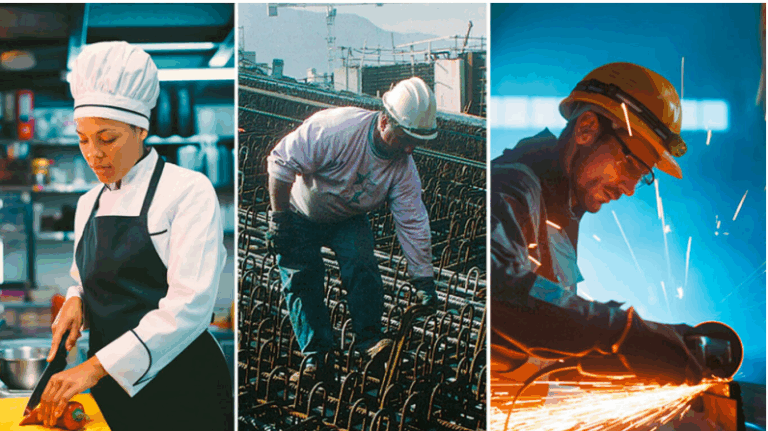
Currently, there are 300,000 job vacancies, with 6 out of 10 foreign workers in Greece leaving… at night for Italy and Germany. The tourist season kicks off with 85,000 job openings, over 100,000 workers missing from construction, more than 70,000 in agriculture, and over 50,000 in the industry. This translates to approximately 300,000 job vacancies this year, intensifying the despair of Greek entrepreneurs.
The situation and numbers remain largely the same as during the pandemic, with the only change being that workers arriving from third countries are now staying very briefly in Greece before leaving… under cover of night and illegally for Italy, Germany, Spain, and other European countries, in search of better wages and benefits.
Specifics in Construction
Construction firms that have taken on projects worth €20 billion are seeking an additional 55,000 workers over the years 2024-2025 and a total of 250,000 employees, with a focus on skilled engineers and technicians to meet project demands without delays. There is a significant shortage of welders, plumbers, carpenters, and heavy machinery operators.
In Tourism
The industry is lacking warehouse workers, packers, forklift operators, and in tourism and hospitality, there is a demand for housekeepers, chefs, spa therapists, and front office staff, while technology companies are aggressively hunting for programmers and other highly qualified specialists.
The fundamental question regarding why seasonal Greek workers in tourism refuse to staff businesses has been answered many times in recent years. “Applications for staff re-hiring are down by 10% from last year, and this is an early indication that we will face serious staff shortages again this year. The main reason for the shortages is the exhausting hours and poorly paid positions,” emphasizes George Hotzoglou, president of the Hellenic Federation of Tourism and Hospitality. “Seasonal workers work without breaks for 15 hours a day. Housekeepers are hard to find, often leaving at night because hotel owners demand that they clean 25 rooms during their work hours due to staff shortages. Admittedly, the implementation of the digital work card, which has officially begun, will create a framework of protection regarding work hours. The same will happen with the regulation for reducing contributions for extra work on weekends, holidays, and nights. We might suddenly see, under the threat of fines, many more overtime hours being reported that are currently hidden. However, despite these positive measures, workers still refuse to work. They prefer to take jobs as delivery drivers or supermarket employees. They want better conditions and pay,” he adds.
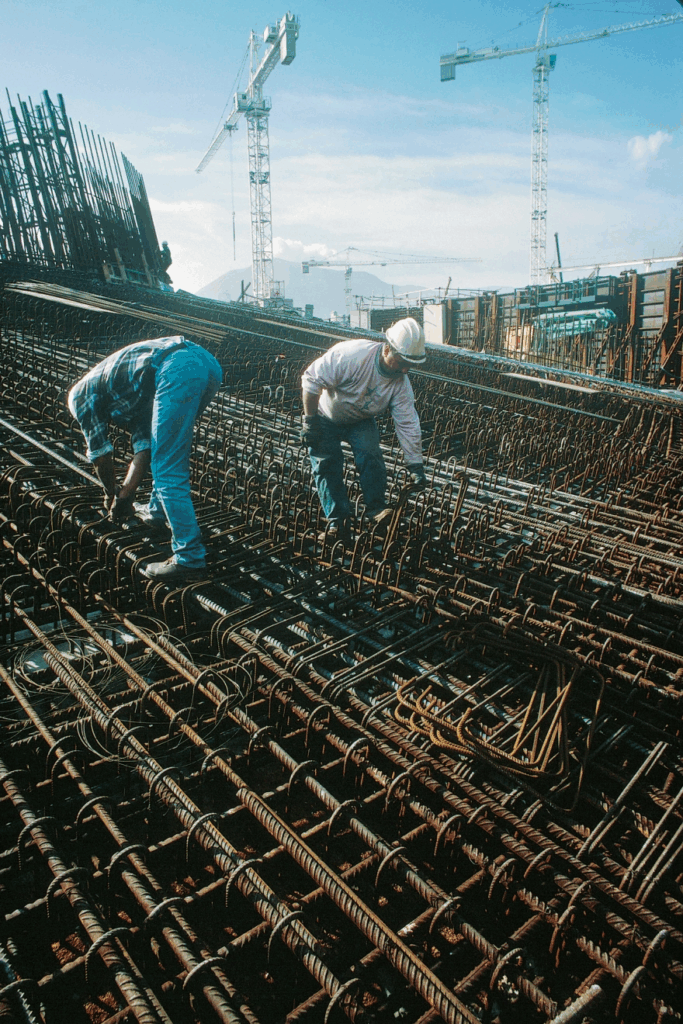
85,000 Vacancies in Tourism
Worker migration from third countries approved by the government this year stands at 89,000, which business owners consider to be a drop in the ocean. Workers who come through legal channels usually hail from India, the Philippines, Bangladesh, Vietnam, Nepal, and Egypt. However, many still enter illegally, as large construction sites are filled with workers from Africa, emphasizing the need for projects to proceed.
The paradox is that while approvals for tourism have plateaued at around 6,000-7,000 positions for the sector, potential workers remain elusive, caught up in the bureaucracy of the application process. By the time they are ready to work in Greece, often in August or September, it’s too late as the tourist season is nearly over.
A tourism entrepreneur in Crete notes that he received approval for 15 positions requiring certified knowledge from chef and bartender schools, but only two have started work. “The issue isn’t how many get the green light, but how many actually manage to come to Greece. Of the 90,000 approved migrations, it’s questionable whether even 20,000 will arrive,” he points out.
Long Delays
The entire process—from requests recorded on the unified list for migrations to the embassies and consulates issuing visas—often takes six months. Additionally, another month is needed for a Tax Identification Number (AFM) and the Social Security Number (AMKA) to be issued so that a foreign worker can start working. As a result of this bureaucratic delay, workers often become available for employment in August, just as the tourist season is winding down.
“This year is a lost cause once again. We should be preparing lists for migrant workers for 2026, not searching for workers for this summer. However, a first step has been made with the unified list of needs for migrations across the country, replacing the lists in decentralized services, which were very time-consuming. Yet, there needs to be a platform operational by October 2025 that lists personnel needs. Moreover, embassies and consulates should be staffed adequately to expedite visa approvals and more bilateral agreements should be signed. As the Hellenic Hotel Association, we organized ‘Career Days’ in collaboration with the NGO Metadrasi to recruit political refugees in hotels. We trained them to acquire skills. However, the lingering problem of what these individuals will do after October remains. Where will they work? While in the facility, they have a bed and a meal. Another issue is that many from third countries, lacking skills and experience, while earning up to €1,200 a month, have high salary expectations, perpetuating the cycle of departures and the new search for workers at the peak of the season,” emphasizes Grigoris Tasiou, president of the Hellenic Hotel Association.
Increased Emigration
However, this year there has been an increase in the phenomenon of workers from third countries leaving just days after arriving in Greece, seeking better opportunities through networks, primarily from their own countries, in other European countries.
A Series of Problems
The basic reason is that a significant portion of Greek employers—though certainly not all—do not provide the basic provisions for housing and food. These foreign workers have often paid around $15,000 to labor agencies to come to Greece. Their funding sources are threefold: a) the entire village gathers funds to send one person abroad to send money back, b) they take a bank loan, and c) they turn to loan sharks.

Upon arriving here, they hope to gradually save some money. However, if they have to pay for housing and food from their salary of €880, they are left with about €500. This is not an ideal situation, as even at home they can secure a salary of €250. This is why 5 to 6 out of 10 leave illegally from Greece.
But even good employers who take care of foreign workers face myriad problems. “We find them housing, feed them, and try to help them integrate into local communities,” notes an executive of a construction company operating in local projects. “We often encounter unprecedented issues—not just falsified documents or other irregularities. For example, while the position of driver is required, workers from Vietnam, for instance, cannot obtain the necessary certification, meaning that while they come to Greece, they cannot work in the role for which they were invited,” he adds.
Government Initiatives
Circles within the Ministry of Migration and Asylum highlight that a legislative initiative is soon to be promoted to: a) simplify and digitize the processes for issuing AFM and AMKA for foreigners and b) in collaboration with the Ministry of Foreign Affairs, bolster embassies with staff to relieve their workload.
50,000 Vacancies in Industries
The obstacles to worker recruitment continue. Evangelos Kanellopoulos, CEO of WorkInGreece.io—a platform that helps bridge the gap between workers from third countries and businesses—lists the three biggest barriers in the migration process:
- Time Lag: The migration process still takes 4 to 6 months. This waiting time is a significant disadvantage for Greek businesses, especially when other European countries—like Croatia—complete similar processes in 1.5 to 2 months.
- High Rejection Rates at Embassies: Even fully qualified candidates with certifications and experience are rejected by Greek embassies at rates ranging from 40% to 80%, creating insecurity and frustration among candidates and Greek businesses.
- Lack of Provisions and Illegal Departures: Many workers arriving in Greece end up leaving illegally for other EU countries, violating their visas. A primary reason is the living and travel expenses (e.g., airfare, accommodation, food, and even visa costs), which in many cases are borne by the workers themselves, resulting in a net income of about €500/month—significantly lower than that of other European countries.
“Greece can become a model,” adds Kanellopoulos. “Structural reform and cooperation among all stakeholders—government, employers, social partners—are required for this system to function effectively. Our country has the potential to evolve into an international model for sustainable and fair management of labor migration. However, this will only happen if we move decisively, targeted, and in coordination.”
Ask me anything
Explore related questions




