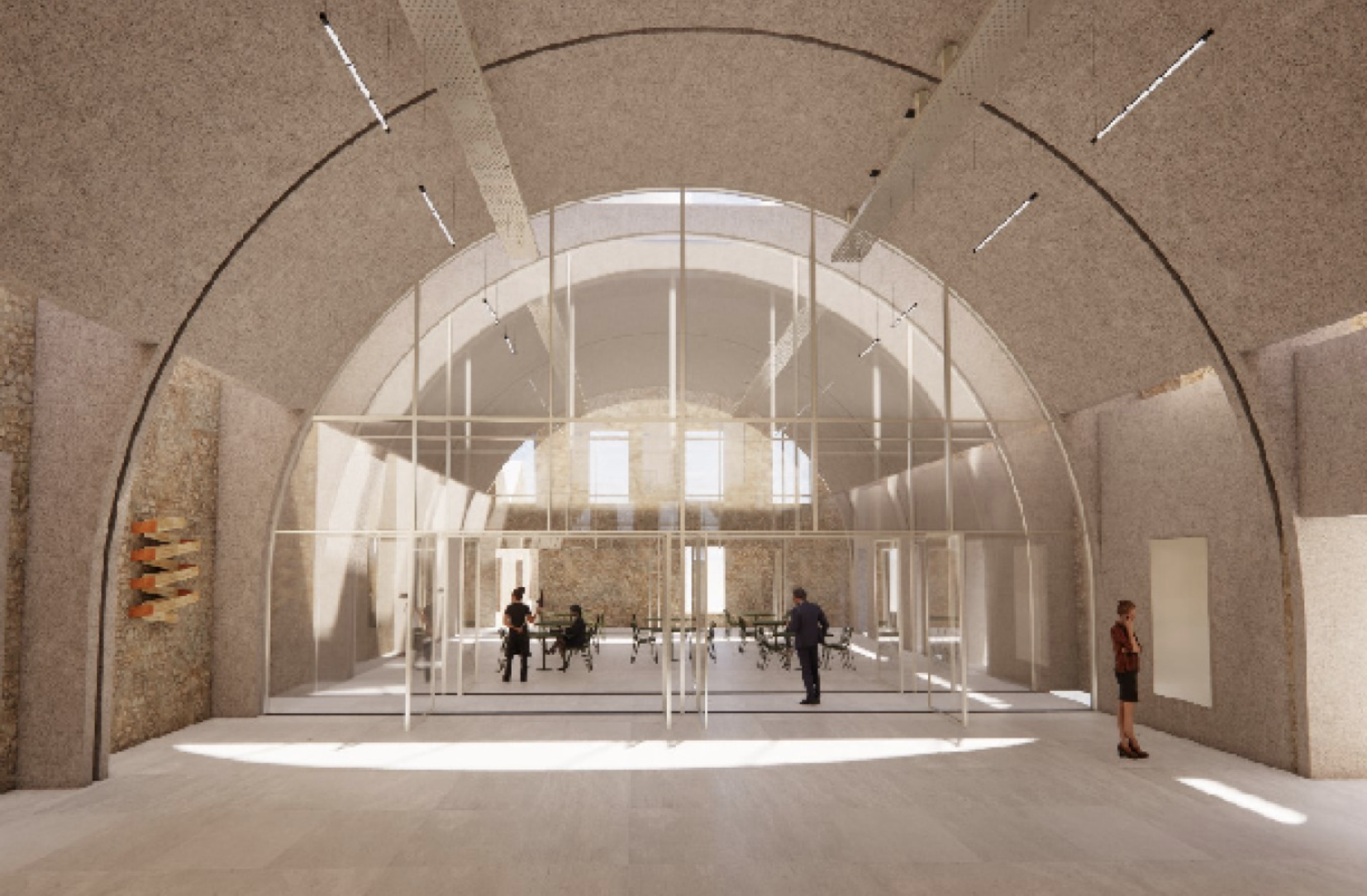
The significant project to transform the Old Oil Mill of Elefsina into a state-of-the-art Diachronic Museum is moving into the implementation phase. The museum will house the numerous findings unearthed from excavations at the Sanctuary of Demeter and Kore—today’s Elefsina archaeological site—as well as from the ongoing rescue excavations throughout the city.
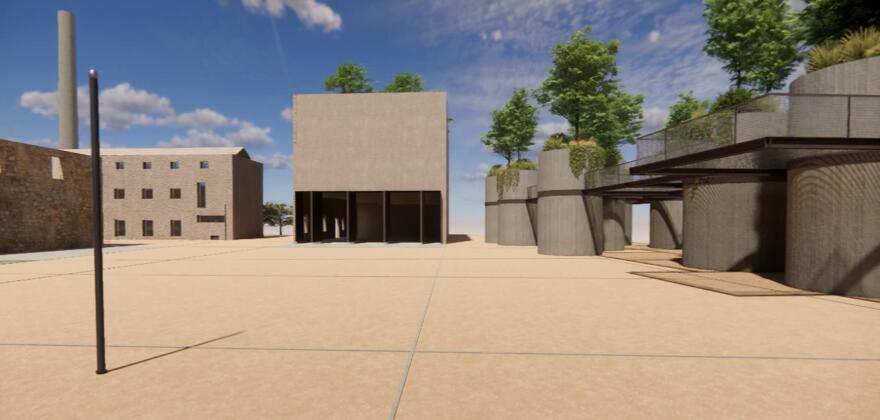
The museum will be located in the complex of the old industrial facilities “BOTRYS–ELAIOURGEIO,” situated south of the organized archaeological site. These facilities were previously home to the Harilaou Soap Factory, the first factory founded in Elefsina in 1875, which operated until 1960. The property had come under the ownership of the National Bank of Greece, from which it was acquired by the Ministry of Culture in 2022 for €5,000,000, with the aim of housing the new museum.
“With the completion and advisory approval of the architectural study by the Central Archaeological Council, a visionary project for the city of Elefsina is entering the final design and implementation phase. The building complex of the Old Oil Mill reflects and encompasses the industrial, economic, and cultural history of Elefsina. Since 1995, the Old Oil Mill has hosted the city’s unique cultural festival, Aeschylia, and in 2023, it hosted many events as part of the European Capital of Culture ‘Eleusis 2023,’” stated Minister of Culture Lina Mendoni. She meaningfully added:
“Elefsina deserves a Diachronic Museum worthy of its history and vast archaeological wealth. The creation of this museum, combined with the large-scale archaeological projects carried out by the Ministry of Culture—budgeted at over €8,000,000—at the archaeological site of Elefsina, constitutes a cultural entity that spans the city’s history from antiquity to the present. The archaeological site is unified with the new museum and with the city’s coastal front. Elefsina gains a new museum and cultural infrastructure that is vital to its identity, and simultaneously a developmental asset which, combined with the infrastructure developed for the Capital of Culture, generates added value with enormous potential. I especially want to thank the Pavlos and Alexandra Kanellopoulos Foundation and its President, Nellos Kanellopoulos, for their generous sponsorship of the entire set of necessary studies.”
The soap and oil factory “ELAIOURGEIO,” located between the shoreline and the hill of the archaeological site, produced various types of oils and Marseille-style soaps. In 1892, due to a change in management, it was renamed “Charilaos – Kanellopoulos S.A.” and became known as “ELAIOURGEIO,” ceasing operations by the late 1960s.
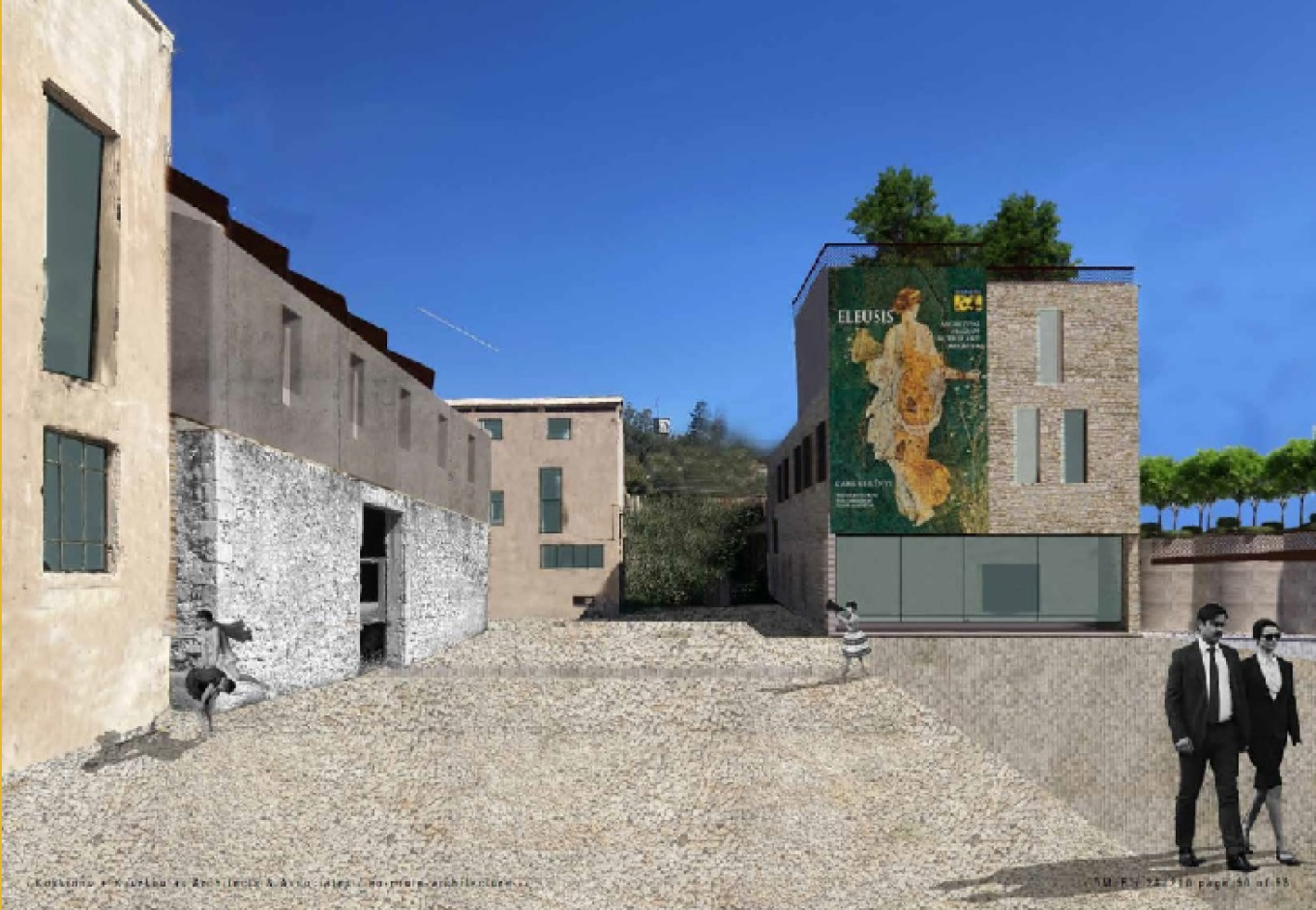
The new museum will be situated south of the “BOTRYS” factory and along the coastal front. The need to establish a museum showcasing Elefsina’s long history was identified as early as 1989. In 2020, the approved city plan of the “BOTRYS–ELAIOURGEIO” area was revised, defining new land uses. In 2023, a section of the Old Oil Mill was temporarily granted by the Ministry of Culture to the municipal company “2023 ELEUSIS” for hosting events during the 2023 European Capital of Culture program. In 2024, approval was given for the development of a study to convert the Old Oil Mill building into the Diachronic Museum of Elefsina, funded by the Pavlos and Alexandra Kanellopoulos Foundation as a donation to the Ministry of Culture.
The “ELAIOURGEIO” complex is largely intact in terms of area and building structures, retaining nearly the same form as when it ceased operations in 1960. Its mechanical equipment was removed or destroyed at an unknown time. The site covers 26,000 square meters. Within the complex, 23 factory buildings survive, with a total built-up area of approximately 11,700 square meters. Some are fully preserved, while others—mainly in the central zone—are in ruins. The buildings of the Old Oil Mill show diversity in materials and construction methods and reflect various operational phases dating back to the late 19th century, with the main structures dating from the interwar and postwar decades of the 1950s and 1960s.
The complex is arranged in a double “Γ” shape. The southeastern wings, which were ground-level sheds, served as storage areas, while the northwestern spaces, with two and three floors, housed the production processes. Near the main entrance toward the beach lies the administrative building, located in the area used for the Aeschylia festival. It is a three-story building with a semi-basement and two upper floors. None of the factory’s mechanical equipment survives, except for a row of 28 cylindrical tanks in the partition wall with the “BOTRYS” factory. The winery–distillery area forms an architectural unit with the neighboring “ELAIOURGEIO” factory. The “BOTRYS” factory, covering 17.5 acres, was established in 1898 as the “Winemaking and Distilling Company Charilaos & Co.” It became one of the largest companies in its field. In 1974, it was acquired by the Bodossakis Group and ceased operations. Inside, 23 factory buildings survive with a built-up area of approximately 12,800 square meters. In 2008, two buildings from the “BOTRYS” complex—the electrical workshop and the distillery with associated equipment—as well as two chimneys, were declared industrial heritage monuments.
In drafting the preliminary architectural study, the following were considered:
a) the typology of old industrial complexes, with distinct volumes and numerous additions,
b) the intention to create an outdoor gathering space/plaza for cultural events, surrounded by restored facades of historic industrial buildings,
c) the large scale of certain industrial buildings allowing for spacious interiors and natural light,
d) the intention to preserve/highlight the texture of the walls to enhance the visitor’s immersive experience,
e) the role of the new museum as a hub of cultural activity,
f) the goal to connect the museum with the seafront, nearby areas, and the city.
The study proposes usable space of 3,800 square meters and incorporates the architectural requirements set by the Ministry of Culture. Four entrance points to the museum complex are planned: two from Kanellopoulou coastal road, one from Peisistratou Street, and one from the direction of the archaeological site. In terms of the building program, the study includes the demolition of some buildings, the construction of two new ones, the restoration/reconstruction of eight existing structures, and the preservation/restoration of facades in three buildings. The two new buildings will be the entrance building and the antiquities storage facility. The museum installations will host exhibitions on the city’s history from antiquity to 1830, forming a unified whole, separate from that of modern and contemporary history.
Ask me anything
Explore related questions