





John Kyriakou never forgot the day his replacement in Athens asked if he had ever felt he was being watched. He mentioned that a red Toyota car was almost always parked near his house. That was when Kiriakou recalled a family photo taken at the entrance of his Athens residence where a red Toyota with a man inside could be seen in the background.
“17N photographed me in front of my house,” are the first words of the Greek-American former CIA officer who returned to Athens as the keynote speaker at the Intelligence & Security Forum. This was something Kyriakou never got over.
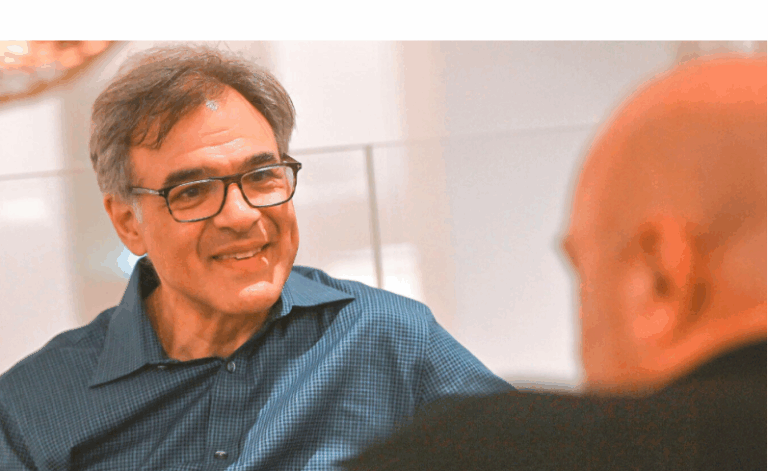
In the interview he gave to “Proto Thema,” he spoke about his time in Athens, the 17N terrorist group, the names known to the Americans at the time, and how he became a target of the organization after the murder of British Brigadier Stephen Saunders.
He also refers to members of the group who were never apprehended, incidents involving bombings in Ambelokipi and Thessaloniki, and previously unknown details of his collaboration with William Basil, who orchestrated the phone-tapping scandal.
Finally, he discusses former CIA director George Tenet and his mistakes, the “Greek Mafia” at Langley, Virginia, and the dramatic capture of Zubaydah in Faisalabad during coordinated raids on 13 homes.
The Hunt for 17N
Before that operation, John Kyriakou experienced the feeling of being publicly identified by the 17N terrorists in one of their proclamations after the murder of Stephen Saunders: “I was really angry with myself because, given my position, I was always extremely careful about security and was convinced I was ‘clean.'”
Asked how he thinks 17N identified him, Kyriakou is clear: “I believe it happened by accident when they were looking for Saunders. Our homes were very close, and they likely saw the armored car with diplomatic plates and said, ‘This must be CIA.’ That’s probably when they photographed me outside my house.”
The Saunders Assassination
On June 8, 2000, on Kifisias Avenue, two 17N members on a motorcycle approached Stephen Saunders’s car and shot him four times. In his confession, Savvas Xiros claimed he was the driver, with Dimitris Koufontinas as the passenger.
When Kyriakou arrived in Greece as a field agent, he joined the ongoing effort to capture the group that had assassinated CIA station chief Richard Welch in 1974. “We got close to 17N two or three times because we had names like Giotopoulos and ‘Sheriff,’ but the operations I was involved in were limited to surveillance.”
At the time, the CIA station in Athens reportedly tried various tactics to provoke the terrorist group into making mistakes that would lead to arrests.
But action brings reaction. On Sunday, May 16, 1999, 17N launched a rocket attack on the home of the German ambassador in Halandri.
The Woman of 17N
During that attack, Savvas Xiros was slightly injured—his brother Christodoulos and Dimitris Koufontinas also took part. For the first time in 25 years, anti-terror police recovered DNA from a member of the group. “That attack troubled us deeply, but we were shocked a few months later when they executed Stephen Saunders. I remember a long team meeting afterward. Then came the proclamation that included my photo, and I had to leave Athens immediately. Until then, I felt I was doing important work and cooperating excellently with Greek security, but they killed Saunders simply because he was an easy target—and that scared me.”
When asked if he believes there are still members of 17N at large, Kiriakou smiles enigmatically and responds: “When I served in Athens, the suspect list had over 1,200 names. That number was exaggerated, as many were there just because they belonged to far-left groups. I personally believe that 4 or 5 members of 17N remain free—mostly men, and at least one woman, the one involved in Welch’s murder. If she’s alive, she must be around 75 now.”
Recent Bombings
He also comments on two recent incidents: the explosion that destroyed an apartment in Ambelokipi and a bomb in Thessaloniki that killed a 38-year-old woman carrying it. “I believe these are small cells lacking the experience of their predecessors—amateurs. But if I were Greek police, I’d be investigating groups that oppose Israel and the war in Gaza.”
Why the Americans Were Eavesdropping
Kyriakou left Greece before the fall of 17N and the infamous phone-tapping scandal involving another Greek-American agent he worked with—William Basil.
When asked what he would do if ordered to spy on the Greek Prime Minister, ministers, EYP (Greek intelligence) chief, and military leaders, he is unequivocal: “I would never do it, and I’m 100% certain of that. The CIA turned my life upside down in ways I never expected, but I would never participate in such an operation—just as I refused to participate in torture. They offered, and I said no.”
He explains why the U.S. installed illegal software to spy on Karamanlis, Voulgarakis, and many others: “The wiretapping of Greece’s political and military leadership had the same logic as the surveillance of former German Chancellor Angela Merkel. You eavesdrop to learn about trade negotiations, defense spending, Greece’s relationship with Turkey, and ties with Russia. They could have just asked—but instead, they chose wiretaps, which backfired and damaged bilateral relations.”
William Basil: “He Fooled Us All”
He is cautious when speaking about William Basil, also known as “Bill from Karpathos.” “He was probably the kindest person I ever worked with at the CIA. I know it sounds odd, but that was Bill. He loved the job, his family, and Greece. When stationed here, he was happier than ever. I remember he used to bring boxes of chocolates to the office, and people would drop in a few drachmas to take one. Most forgot to pay, but he kept bringing chocolates, joking that he was the only ‘kiosk owner’ in Greece losing money!”
But Basil didn’t miss his target elsewhere. Officially, he was the Second Secretary for Regional Affairs at the U.S. Embassy in Athens.
A Sharpshooter
“I remember one day we went to a shooting range with anti-terror police. Bill was so accurate he could’ve competed in the Olympics. One Greek challenged him to shoot over his shoulder, without looking, at a piece of chewing gum we had stuck to a wall. Bill accepted, fired blindly, and hit the gum.”
“There were about ten of us, each betting 1,000 drachmas he’d miss—but Bill proved us all wrong. I couldn’t believe it. The Greeks were yelling in shock. When I told him I’d never seen such precision, he said he’d loved shooting since childhood and had practiced all his life.”
Ukraine and Syria
The conversation shifts to the war in Ukraine. Kiriakou is firm: “When this conflict ends, Ukraine will lose Donetsk, Luhansk, and Crimea. It will never join NATO.”
But what truly unsettles him is the situation in Syria: “I’m very worried about what’s happening in Syria, mainly because the U.S. allied with Al-Qaeda. With Al-Qaeda! The group that killed 3,000 Americans in a single day. And we made its leader the president of Syria. You may disagree with Bashar al-Assad and his policies, but he was the only one standing between Christians and death. We ousted him with the Turks and Israelis and installed the Al-Qaeda leader and ISIS deputy to govern Syria. Instead of blowing him up, we made him president!”
The Operation in Pakistan
Kyriakou has a lot to say about Al-Qaeda, having captured Abu Zubaydah—No. 3 in the organization—during a mission that involved 13 simultaneous raids: “It was March 28, 2002, when Zubaydah was captured in a house in Faisalabad. He was so seriously injured that I couldn’t take a retinal scan, so they asked me to send a photo of his ear. I did—and a few minutes later, they confirmed it was him.”
The capture was the highlight of his career—but also the reason the U.S. punished him after he resigned and revealed that the CIA waterboarded the terrorist.
“I want to say that I’m the only former CIA officer who called for Zubaydah’s release—and I still do.”
Ask me anything
Explore related questions




