Gold, silver, precious stones, rich colors: luxury in Byzantium was evident in every aspect of life—from art and architecture to clothing. The grandeur of the empire was reflected in the use of fabrics that revealed its brilliance and power, such as silk, with garments often adorned with jewelry and intricate embroidery crafted by talented artisans.
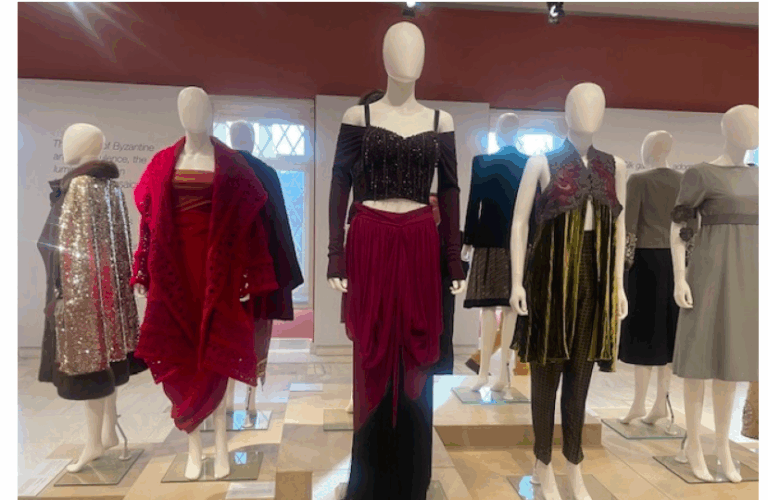
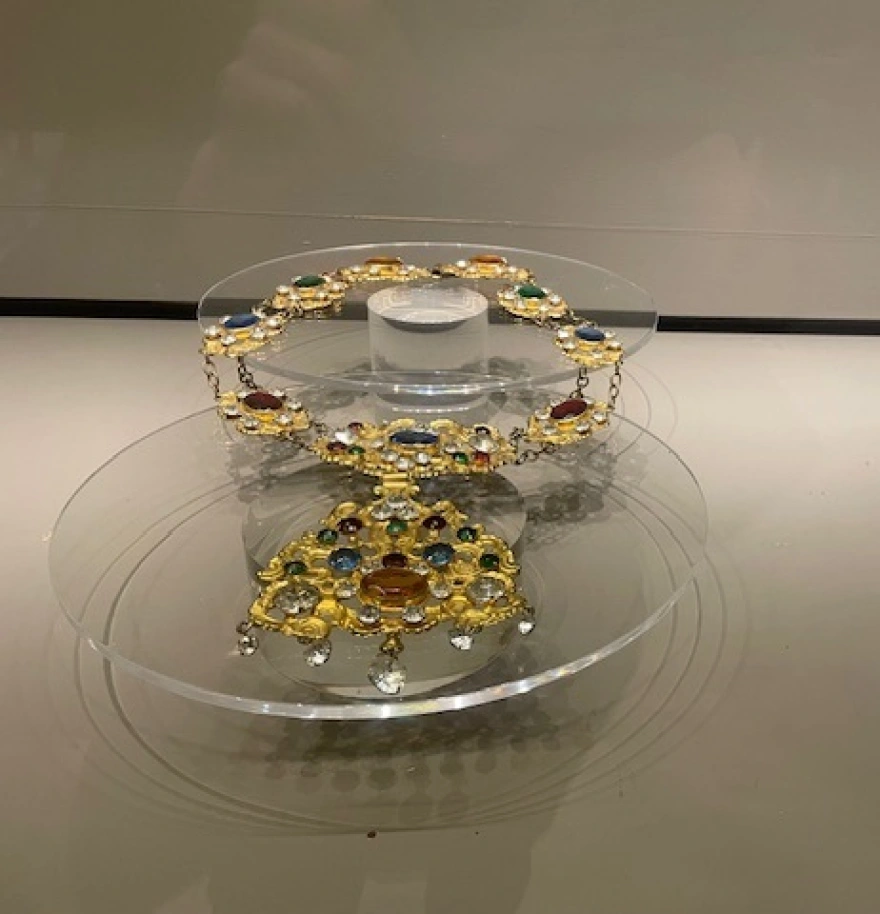
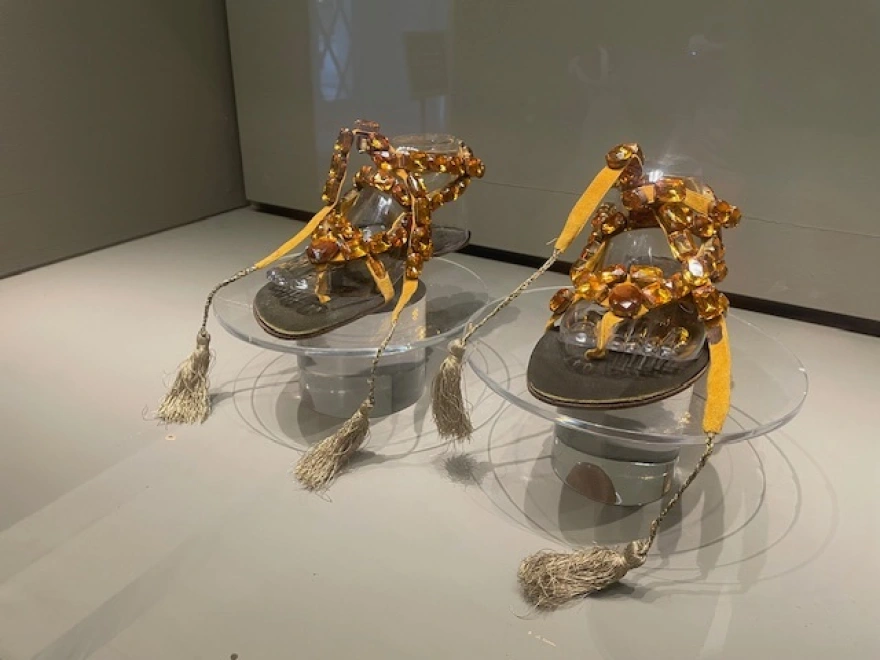
Amid the sparkle of Ravenna’s famous mosaics—Italy’s Byzantine capital—and the allure of gold-embroidered garments, the splendor of the empire is revived through the collections of Italian designers. Deep purple gowns, gold-encrusted capes, masterful designs, multicolored gems, jewel-like sandals… Italian fashion not only embraces Byzantine opulence but transforms it into a contemporary language, creating a dialogue between spirituality and grandeur.
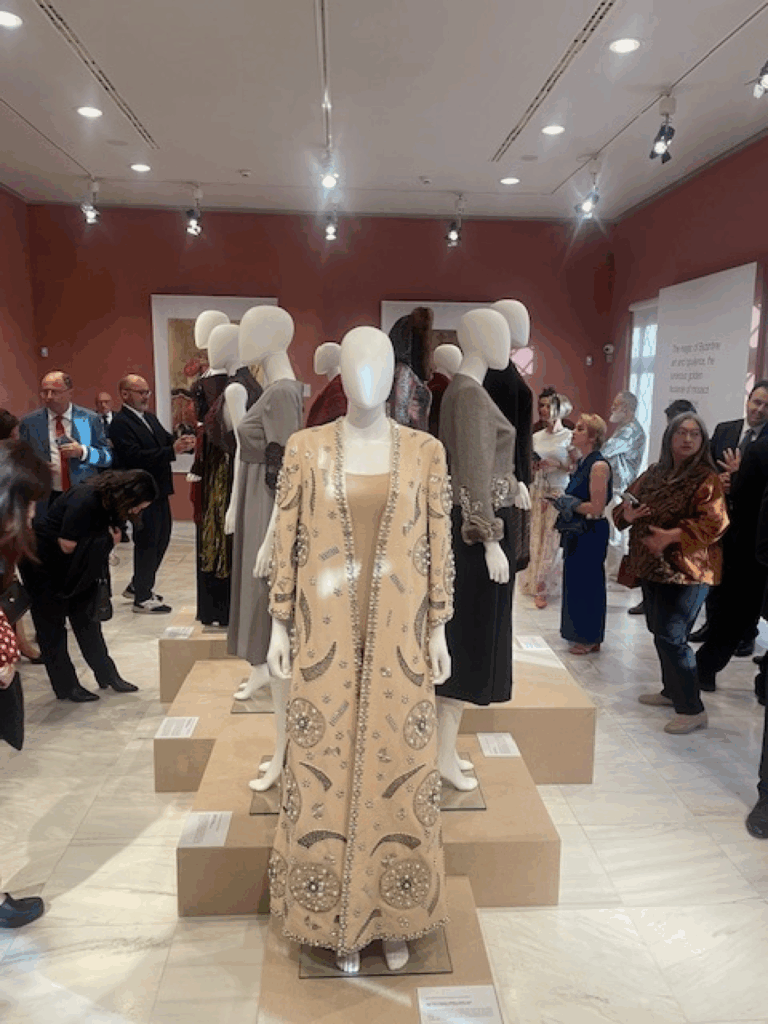
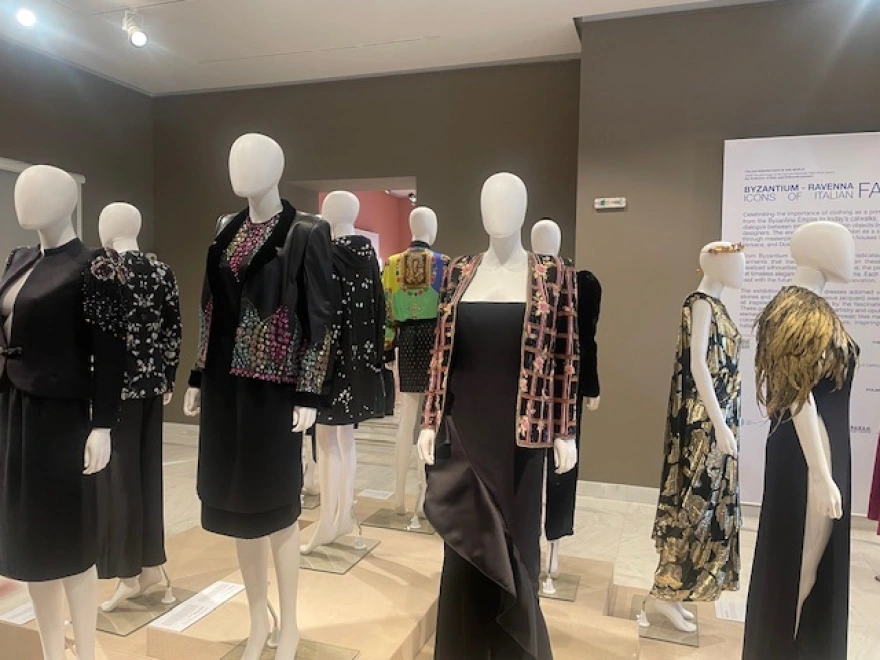
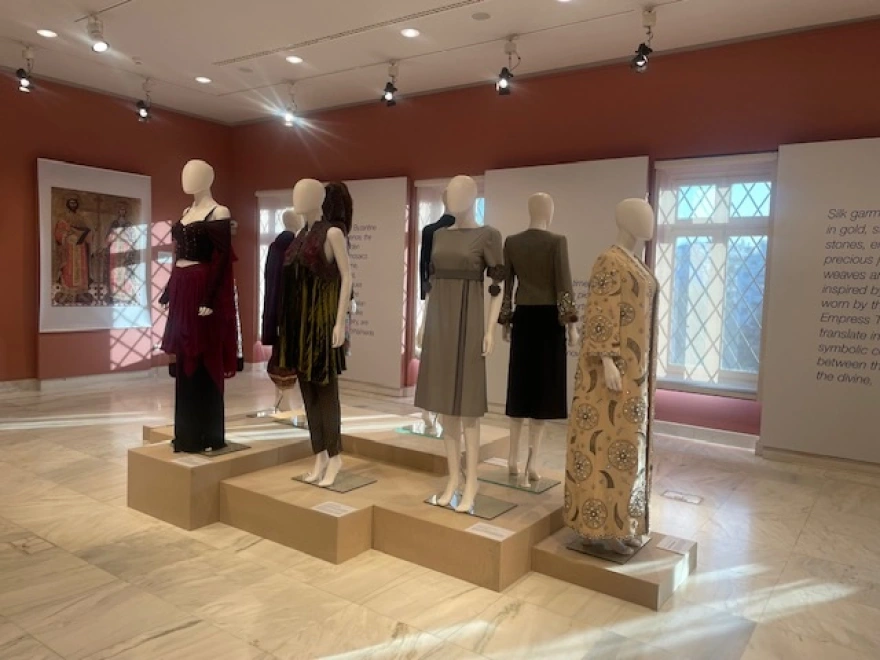
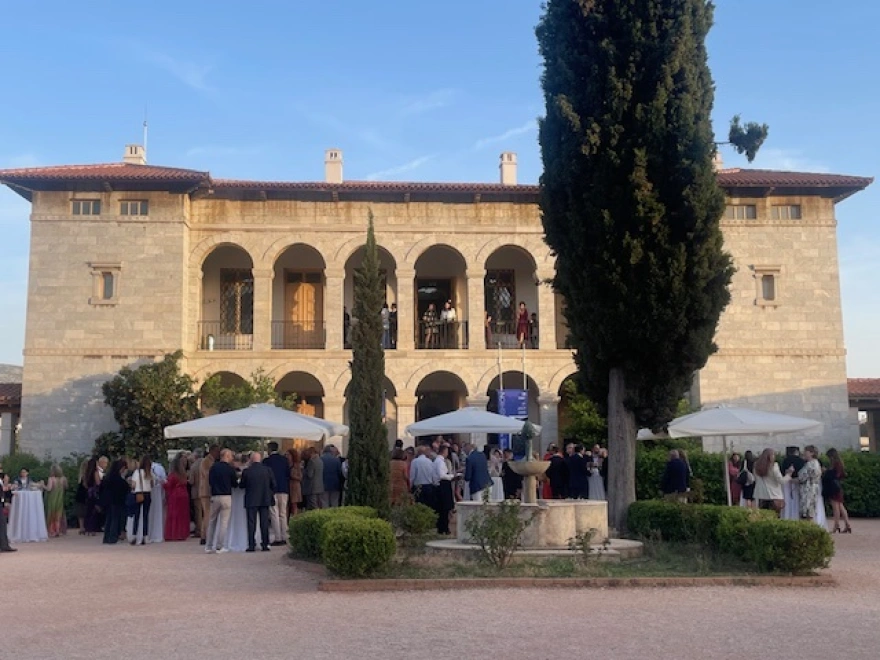
In this spirit, the exhibition “Byzantium – Ravenna: Icons of Italian Fashion” was inaugurated in Athens, organized by the Italian Embassy and the renowned fashion institute Polimoda, as part of the first “Italian Fashion Days in the World” tribute. It will run until July 21 at the Byzantine and Christian Museum of Athens.
The Italian Ambassador to Athens, Mr. Paolo Cuculi, opened the exhibition with a special mention of the passion and talent of Massimiliano Giornetti, fashion designer and director of the prestigious Polimoda Institute, who envisioned and curated the exhibition.
“Byzantium – Ravenna: Icons of Italian Fashion” at the Byzantine and Christian Museum of Athens – See Photos Paolo Cuculi (left) and Massimiliano Giornetti (right) at the exhibition opening.
As Mr. Cuculi stated, Byzantine art—from Constantinople to Ravenna—influenced the creations of some of the most famous Italian designers, who have defined and continue to define elegance and style worldwide.
The exhibition documents how over the past six decades, Byzantine art has influenced Italian fashion, highlighting the radiant light that shines through materials, colors, and clothing designs. This aesthetic also reflects the social life and habits of various social classes.
Mr. Cuculi emphasized that fashion is more than clothing—it is an expression of beauty as well as a powerful driver of economic, professional, and personal development and empowerment:
“The exhibition acts as a cultural bridge connecting the Adriatic and the Aegean.”
Referring to the Byzantine Museum of Athens, he described it as:
“The ideal setting for telling a story that culminates in Ravenna, the Italian Byzantine capital. Fashion is not only an expression of elegance and beauty but also a driving force for economic and social development in both countries.”
He noted:
“In Italy, the fashion industry generates an annual turnover of nearly €100 billion, with over €80 billion in exports, more than 60,000 companies, and nearly 600,000 employees.” He expressed hope that the exhibition would strengthen cooperation between Greek and Italian institutions and companies in the fashion sector.
He also addressed the critical issue of the environmental impact of textile production, underlining the importance of research into ethical fashion and sustainable, recyclable materials, as sustainability is a priority for the Italian fashion industry.
For his part, Mr. Giornetti, who collaborated with one of the most important international fashion collectors, Angelo Caroli, spoke about the magic of Byzantine art—where glimmering gold mosaics, colorful stones, and imperial purple are transformed by Italian designers into wearable jewels intended to adorn the body.
On the museum’s first floor, 20 striking ensembles welcomed 250 guests, including Digital Governance Minister Mr. Dimitris Papastergiou, diplomats, and figures from the cultural scene.
With exquisite aesthetics, dresses, shoes, and jewelry created between the 1960s and 2020 by major Italian designers such as Armani, Ferré, Prada, Valentino, Versace, Capucci, Dolce & Gabbana, Krizia, Gucci, and Romeo Gigli captivated visitors through their unique blend of timeless luxury and history.
As Mr. Cuculi remarked, this original dialogue between fashion and cultural heritage helps renew centuries-old ties and the friendship between Italy and Greece.