





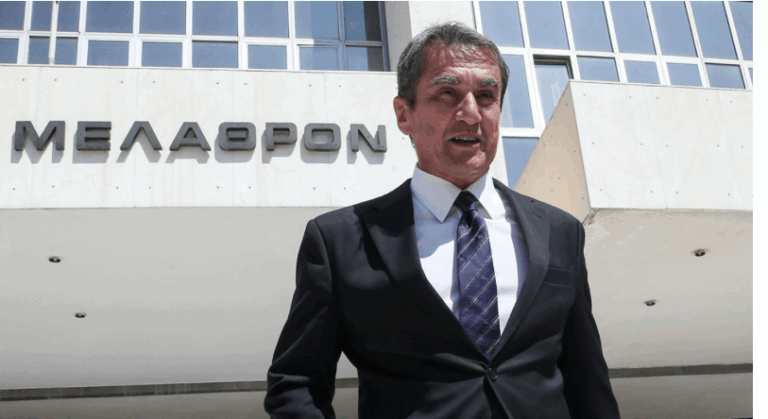
“I had decided to beat up Tsipras in Parliament, but my aides convinced me not to do it because it would be my political destruction,” said Loverdos during his testimony at the trial of former protected Novartis witnesses Filistoras Destempasidis and Maria Marangeli.
In the court proceedings, Mr. Loverdos once again alleged that the protected witnesses gave false testimony for financial gain from U.S. authorities.
He clarified that he learned this information from another former protected witness, Nikos Maniadakis. Specifically, Loverdos stated:
“I learned it from Mr. Maniadakis. They told him, ‘Give us [Antonis] Samaras and Loverdos, and you can travel with your family.’”
He also mentioned receiving a call from then-Minister of Justice Stavros Kontonis, which he chose not to answer at the time as he wanted to complete his testimony first.
At that point, the prosecutor commented on the mention of Kontonis:
“You mentioned that Mr. Kontonis called you. He has spoken some truths that could shed light on aspects of this case. I will request that Mr. Kontonis be summoned, as he has made statements that have shaken public opinion.”
When asked why he only targeted the witnesses and not Konstantinos Frouzis, the former powerful executive of Novartis Hellas, Loverdos replied:
“I sued the protected witnesses because they were the ones who made the allegations. Frouzis didn’t say any of that. I had no reason to go after him.”
At another point in his testimony, Loverdos said:
“My first reaction was a strong urge to strike the prime minister, to hit him. I felt hatred. But I realized that was wrong—that this emotional outburst was not right. Hatred is not a good feeling; it helps no one.”
Visibly tense, Loverdos reiterated:
“I had decided to confront Tsipras violently in Parliament, but my aides convinced me not to because it would have been my political destruction. He was the one I should have sued, but I’m a politician! I never go after politicians, journalists, or judges.”
When asked whether there is corruption in the Ministry of Health, Loverdos responded:
“In that sector, corruption reigns. At that time, we had to manage a bankrupt Greece. If someone accused Pikrammenos, Samaras, or Venizelos, I would say it’s a lie. Even if they accused others, I’d say they’re lying—because pharmaceutical spending was dropping. The accusations made by those false witnesses during that period were unimaginable. Before I introduced electronic prescriptions, it was chaos. I once tried to get a prescription filled and was told, ‘Don’t pay—use your father-in-law’s health book.’”
The testimony of Andreas Loverdos at the Novartis witness trial reveals a blend of political outrage, personal frustration, and serious accusations about judicial manipulation and corruption, deepening the complexity of the long-standing pharmaceutical scandal.
Ask me anything
Explore related questions




