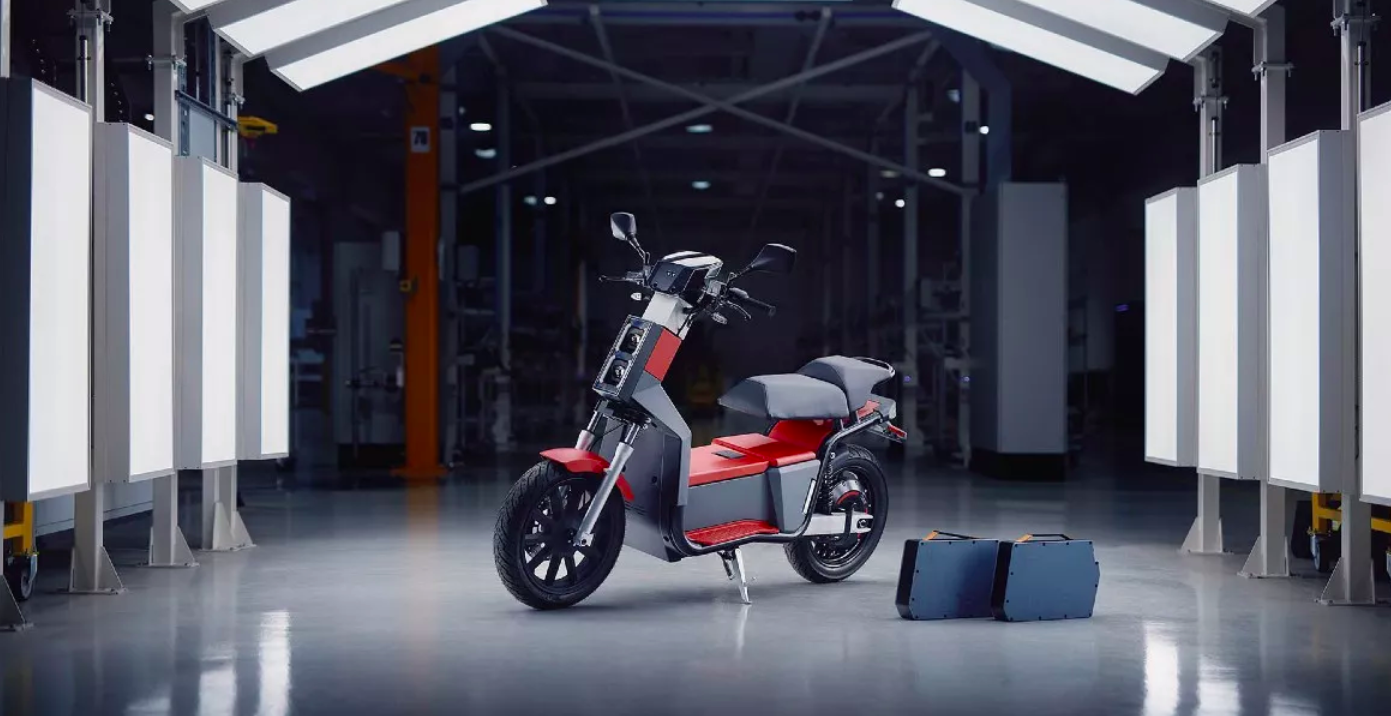
In recent decades, Greece’s industrial and manufacturing sector has largely stagnated, relying heavily on traditional sectors like tourism, food production, public infrastructure, and shipping. The mobility sector, however, has long been overlooked—a missed opportunity to position Greece among the world’s leading nations in vehicle manufacturing.

Now, the Ecoshift project by the Petros Petropoulos Group aims to change that narrative. Initiated about two years ago, the company has focused on developing high-quality micro-mobility solutions, specifically electric scooters, with a vision to showcase Greek technological and manufacturing capabilities.
High-Standard Production Line and Parallel Initiatives
The team of engineers at Ecoshift has worked tirelessly to establish a state-of-the-art production facility in Metamorfosi, equipped with robotic automation and highly trained technical staff. This facility can produce up to 5,000 electric scooters annually, providing employment for 12 workers on the assembly line.
In parallel, Ecoshift is developing energy storage solutions, including the BES 1.0 system—comprising one or two 5 kWh batteries with an inverter, capable of connecting to domestic power grids and renewable sources. This initiative aims to address Greece’s future energy needs with innovative storage solutions.
Furthermore, a larger energy storage unit is planned, utilizing second-life electric vehicle batteries—recycling used batteries to extend their lifespan before eventual recycling. This comprehensive approach aligns with sustainability goals and positions Greece as a potential hub for EV battery recycling and second-life applications.

The Noos Electric Scooter: Features and Variants
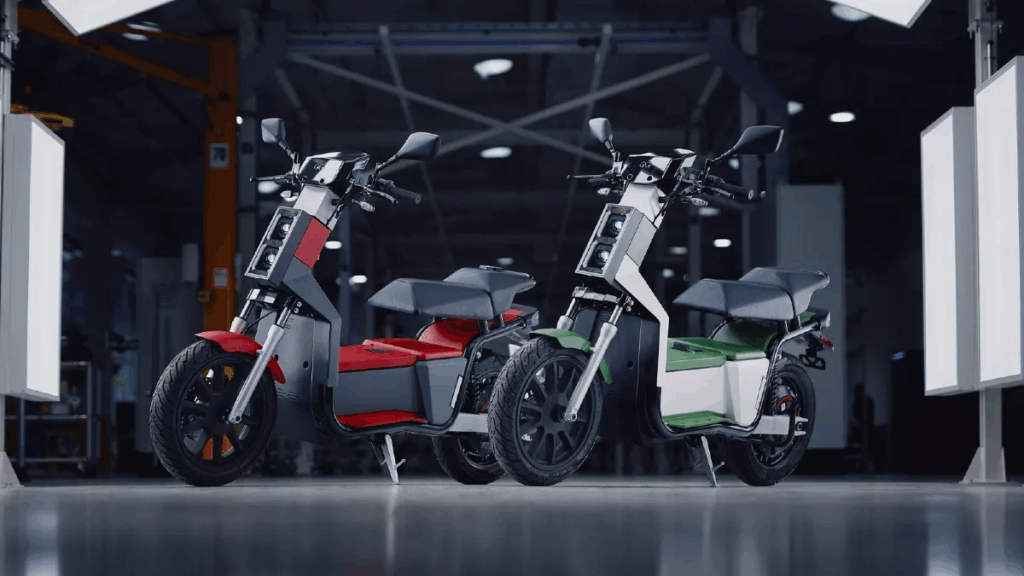
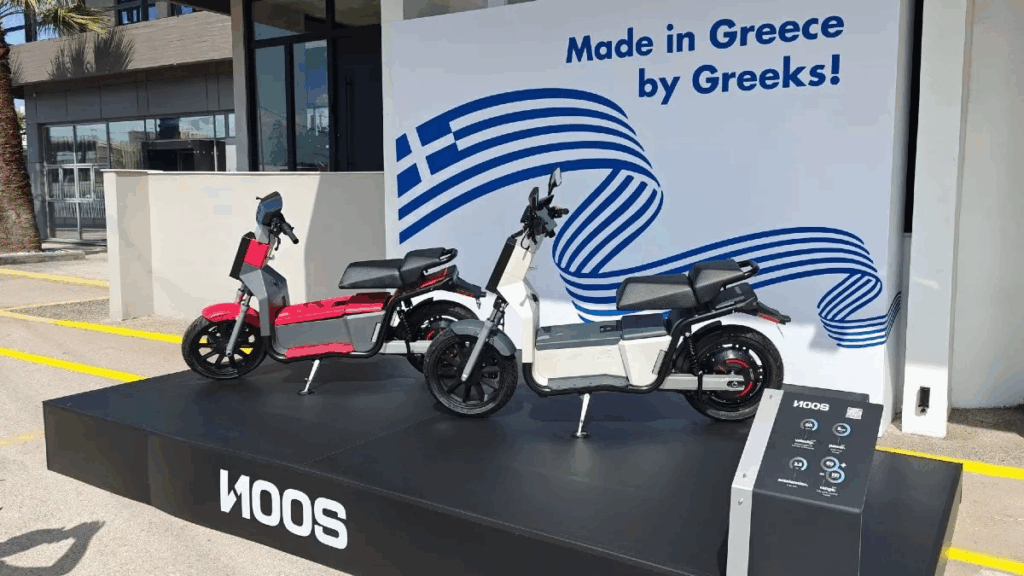
Turning to the scooter itself, the electric Noos is a modern, versatile vehicle designed for urban mobility, available in four configurations:
- City version with one battery
- City version with two batteries
- Cargo version with one battery
- Cargo version with two batteries
According to Mr. Nasiopoulos, head of the Noos project, 95% of the scooter was designed in Greece. The components ordered from external manufacturers adhere to Ecoshift’s strict standards. Notably, Bosch supplied the hub motor—after sending a dedicated technical team to Greece to discuss specifications, ensuring the motor meets the company’s requirements.

Performance and Technical Specs
The Noos uses a 5 kW (6.8 hp) hub motor integrated into the rear wheel. It offers three riding modes plus reverse, features regenerative braking, and can reach a top speed of 80 km/h. Acceleration from 0-50 km/h takes approximately 3.5 seconds. Classified as an L3 vehicle (similar to a 125cc motorcycle), it can be legally operated with a car driver’s license under certain conditions.
Battery and Range
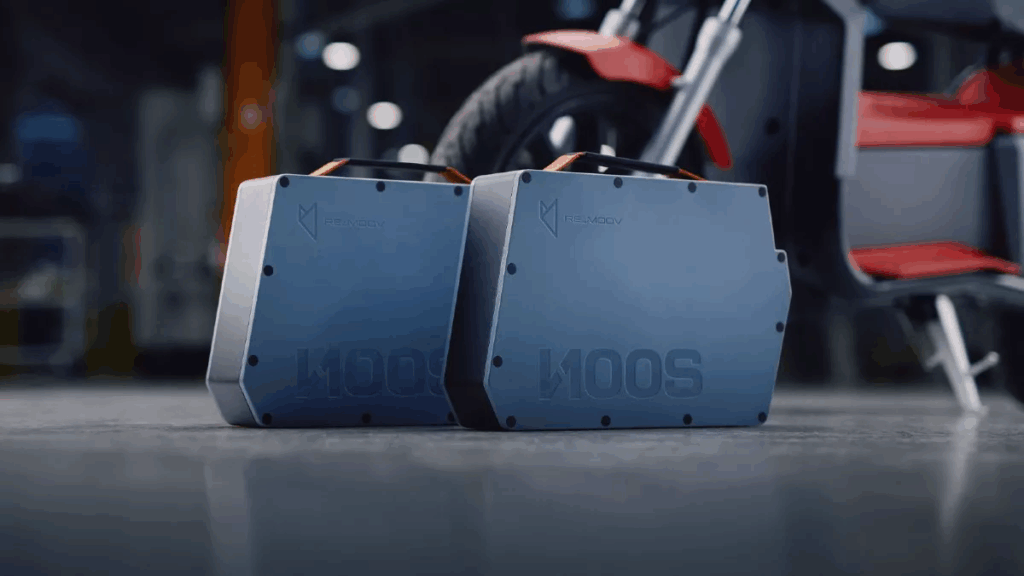
The scooter’s batteries are removable, with either one or two units, each with a capacity of 2.2 kWh. The range per battery is approximately 62 km, totaling up to 131 km with two batteries, depending on riding conditions. Charging is facilitated by a 500W charger supplied with the scooter, taking roughly five hours to fully recharge each battery via a standard household socket. Each battery weighs about 12.5 kg.
Design and Features
The Noos features a robust steel tubular frame, with a telescopic front fork and two rear shock absorbers, adjustable for rider comfort. Its 14-inch wheels are equipped with disc brakes on both ends, combined with CBS (Combined Brake System) for enhanced safety. The scooter’s weight with one battery is just 108 kg.
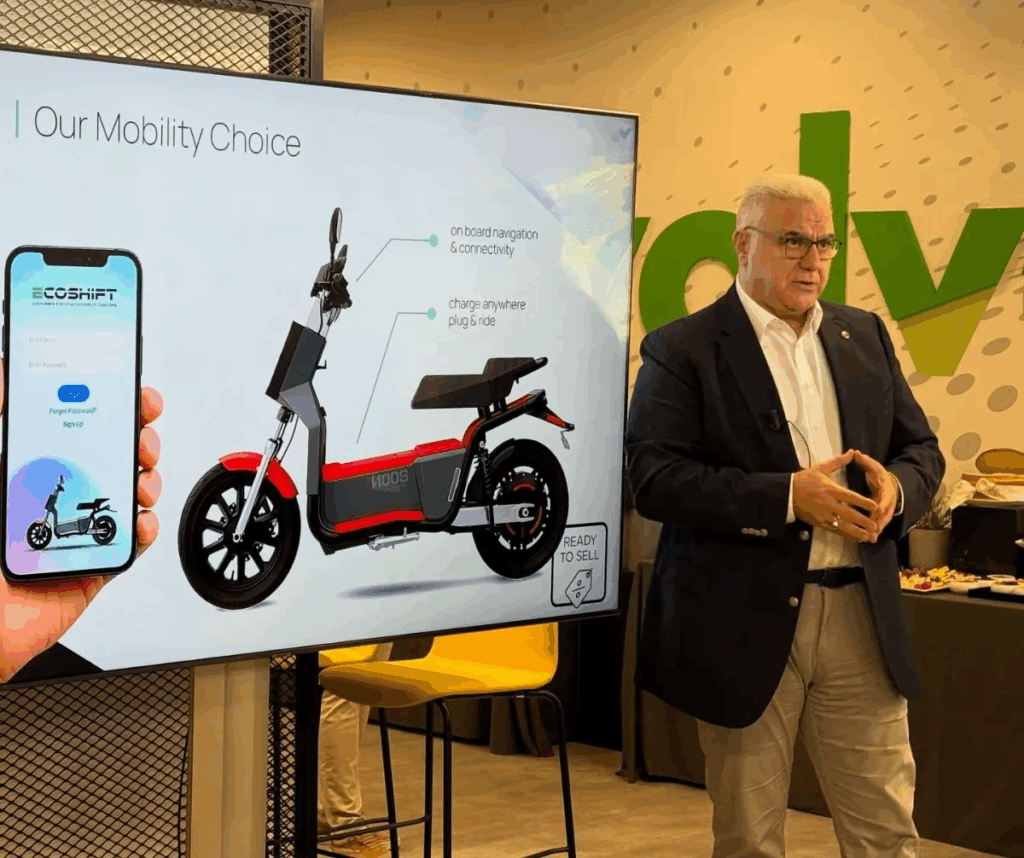
Technologically, it boasts an 8-inch digital display with Bluetooth connectivity, cloud updates via 4G and Wi-Fi, keyless start, a dedicated smartphone app with key sharing, automatic shut-off, dual USB charging ports, and LED lighting—making it a highly modern urban mobility solution.
Target Market: Professional and B2B Segments
Mr. Michalis Oikonomakis, CEO of the Petros Petropoulos Group, emphasized that Noos is primarily aimed at fleet operators and B2B markets for professional use. The goal is to penetrate corporate fleets, offering businesses a reliable, connected, and sustainable mobility option.

The scooter’s advanced connectivity allows fleet managers to monitor vehicle locations and optimize operational efficiency—adding a significant value proposition. The backing of a reputable Greek company also ensures reliability and prompt service.
Availability and Pricing
Interested buyers can see the Noos at Ecoshift’s facilities in Metamorfosi, with plans for future sales points in Athens. The retail price for the City version with one battery is €5,642 including VAT, and the Cargo version with one battery is €5,617. Prices exclude the government subsidy “Move Electrically 3,” which may further reduce costs.
Ask me anything
Explore related questions