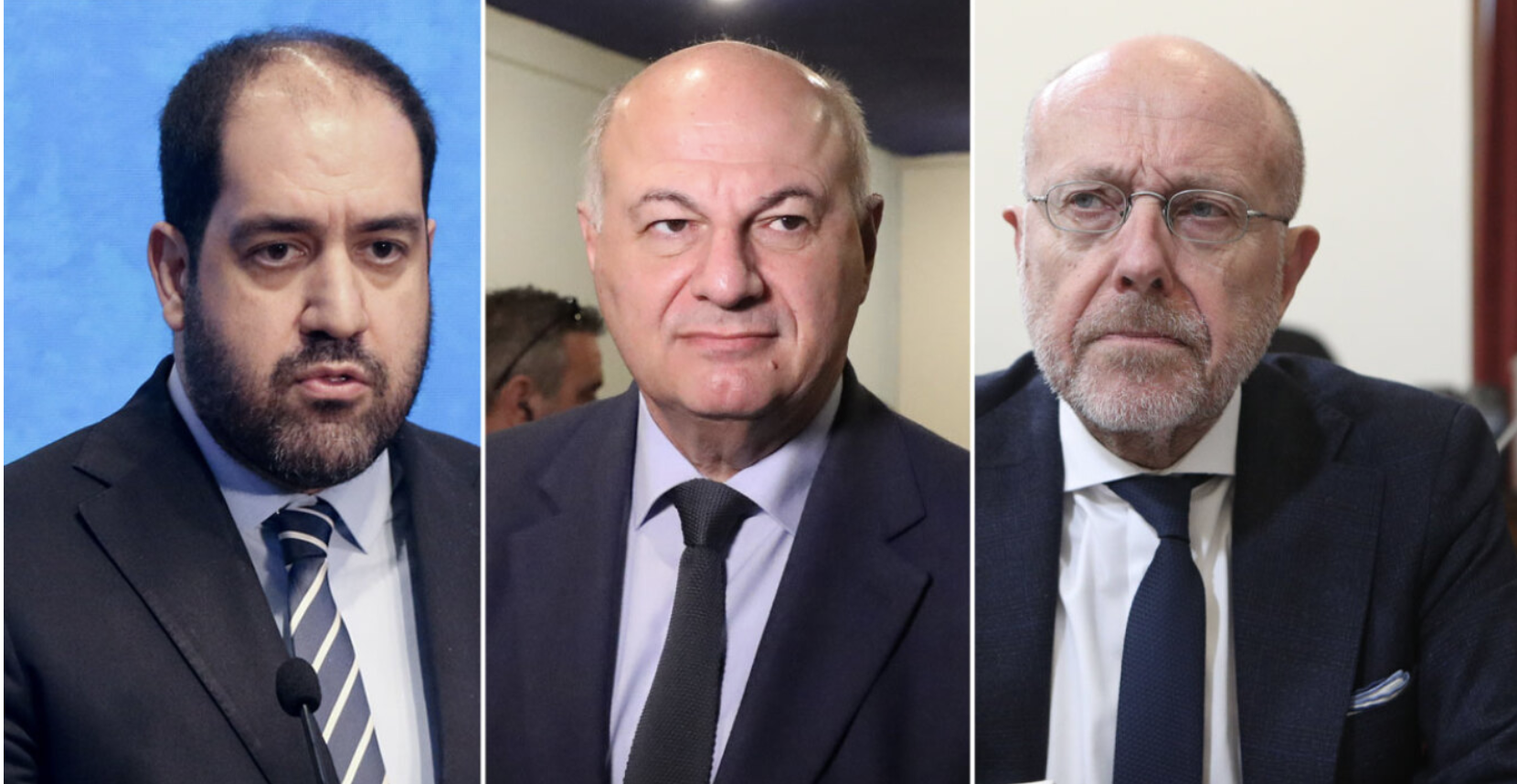


Prominent by parliamentary standards, rearrangements in the functioning of the Parliament are caused by the decision of the Electoral Court to remove from parliamentary office 3 members of the Spartans political party.
The Presidency of the Parliament is awaiting the official text of the Supreme Special Court to implement the relevant decisions that bring, for the first time in post-coup history, another operation of the Plenum with 297 instead of 300 deputies.
Conflicting views on reducing the number of deputies
At the same time, however, completely contradictory views are being circulated behind the scenes by experienced legal and constitutional experts on whether the reduction in the total number of MPs also entails the limits on the majorities required to table motions, pass bills, and revise the Constitution.
For now, the prevailing view among parliamentary officials is that the total relevant limits should be adjusted downwards. For example, the majority of 151 should be adjusted to 149.
The opposing view invokes Rule 74 of the House Rules, which distinguishes votes into those that require percentage majorities (e.g., 3/5ths of MPs) and those that set limits based on the number of seats rather than the number of MPs running.
Specifically, paragraph 1 of Rule 74 of the Rules of the House of Representatives (RO) provides that:
“1. Wherever the Constitution or the Constitution prescribes several Members of Parliament, whether to submit a motion or proposal or for making a decision or for any other purpose, that percentage shall be calculated based on the total number of Members of the Plenary Assembly or of the section of the House that adjourns, the fraction being omitted, notwithstanding any provision of the Constitution or of the Rules of Procedure to the contrary.
This category includes, inter alia:
– The proposal of no-confidence against the government, where the threshold for filing it drops to 49 MPs from the current 50.
– The establishment of a commission of inquiry where the threshold of 1/5 out of 297 MPs drops to 59 instead of the current 60 (ed. for filing a motion for a preliminary inquiry the Constitution and the Rules of Procedure require the signature of 30 MPs)
According to some constitutionalists, the 2nd paragraph of Article 74 defines certain votes where the majority threshold is “inelastic” and perfectly related to the number of plenary seats, even if they are not filled in full.
Specifically, the CtB states:
Specifically,
“2. Where the Constitution or the Constitution requires an absolute majority of the total number of Members of Parliament to make a decision, this majority shall be calculated based on the total number of seats in the Council.”
If the view of these constitutionalists prevails, the threshold e.g.:
– The approval of proposals to set up a preliminary investigation commission, referring ministers to the Judicial Council
– Bills to change territory boundaries
It remains at 151 even if the Parliament is functioning with 297 deputies.
The paradox with the Constitutional Review
However, this view leads to some paradoxes that Parliament will face in the upcoming Constitutional Review. Under this approach, the lower threshold of 151 remains unaffected, but the upper threshold of 180 drops to 178.
Spartian dissolution and 8-party parliament
However, the disqualification of B. Stigas, P. Dimitriadis, and A.. Zervea will result in the dissolution of the Spartans CO as it will not have the necessary number of MPs, and the Parliament will operate with 8 parties.
Ask me anything
Explore related questions