





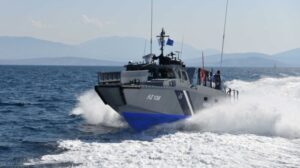
Scenes reminiscent of a malfunctioning mechanism were recorded by a team of the Panhellenic Federation of Associations of Hellenic Coast Guard Personnel, which visited the port authorities of Crete and observed the dysfunctional situation surrounding the management of the migration phenomenon on the island.
Crete has become a new epicenter of migratory flows, with the members of the Coast Guard – Greek Coast Guard fighting a daily exhausting battle with few resources, without sufficient support and in conditions that often border on dangerous – both for themselves and for the migrants.
Despite repeated warnings and the accumulated experience of previous years, Crete remains without a Reception and Identification Center (RTC), with the result that the coastguards have to shoulder not only the responsibility of rescue and transport, but also the guarding and escorting of migrants to mainland Greece.
Even this temporary custody has turned into a prolonged one and is carried out under conditions that do not meet basic standards. In Heraklion, migrants are being held in a space without air conditioning, inadequately ventilated and without a bathroom, with health and humanitarian risks now evident.
Exhausted and Invisible
“Crews are being asked to travel for two consecutive 24-hour periods to transport migrants, with no provision for accommodation, rest or even a cabin on the ferries. And when they return, a new incident awaits them. Exhaustion has become a daily routine, while the risk of error or accident is increasing dangerously,” said a statement from the Federation:
“With the Ministry of Immigration and Asylum having the responsibility of national planning, what prevails in practice is an abdication of responsibility. The port officials of Crete are assuming responsibilities beyond the scope of their duties, in an environment without coordination and without the necessary institutional and logistical support.”
The port officials call for immediate solutions:
The Staff Associations of Eastern and Western Crete sound the alarm and demand immediate interventions:
– Staff reinforcement to relieve local authorities.
– Upgrading of organic posts and creation of double crews in the waterborne assets.
– Financial and health benefits for those serving in Gavdos and other border areas.
– Extension of night work allowance.
– Immediate creation of infrastructure for accommodation and management of migrants in Crete.
It closes with the warning that the illegal immigration issue is not a transient phenomenon for Crete – it is now a daily reality. Its management, however, cannot continue without organization, without a plan, without responsibilities. The system looks like a mechanism out of control – and with each passing day, the consequences fall more heavily on the wrong people.
Ask me anything
Explore related questions




