





Giorgos Bartzokas to Danikas: “Olympiacos is an idea — but I’m always ready to leave.”
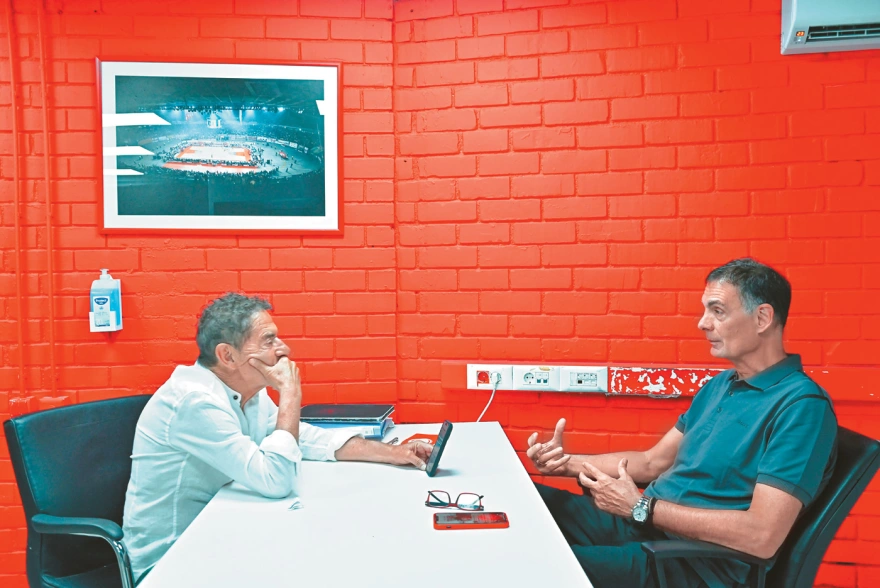
DIMITRIS DANIKAS: What a presence. What a past. What relationships, sensitivities, and stories. Sitting across from Giorgos Bartzokas at his office in SEF, I felt a deep realization running through me — there might not be more than four people like him in the entire basketball world. He’s that rare. Being around him, I felt small. “How tall are you?” I asked.
GIORGOS BARTZOKAS: “I’ve shrunk a bit — now I’m 2 meters. I used to be 2.01.”
D.D.: And your father?
G.B.: He was also tall for his time. Andreas Bartzokas — a legendary figure. He led the great escape of 27 political prisoners from Vourla Prison on July 17, 1955.
D.D.: That’s the escape that supposedly inspired The Great Escape, the 1963 film with Steve McQueen?
G.B.: That’s what they say. Paul Brickhill, James Clavell, and W. R. Burnett were reportedly inspired by the Vourla breakout. Why not? It’s a hell of a story. They dug a tunnel beneath my father’s bed — using spoons and penknives.
D.D.: Incredible.
G.B.: You’d think it was fiction. Every day they’d move soil slowly, hiding it in flowerpots and basins. After the escape, most were caught quickly. My father was found after 2–3 days. There was a bounty, and people turned them in.
Scene 1: The Great Escape — with spoons and penknives
D.D.: Let’s start from the beginning — your roots.
G.B.: My father came from a small village in Arta called Kentriko — it used to be called Nisista. At age 12, he left for Athens to study at the Athens University of Economics and Business. Life was tough. He had six younger siblings. One by one, they also came to Athens to study — law, engineering. He became their father figure.
To make ends meet, he worked as an errand boy for a family — the three Efkleidou sisters, who owned the newspaper Vradyni.
D.D.: What year was this?
G.B.: He was born in 1926, so this would be just before WWII. He was too young for the war, but later he was deeply involved in the resistance and leftist politics. In total, he spent 12 years in prison and exile — Aegina, Corfu, Leros, Gyaros, and of course Vourla.
D.D.: During the dictatorship?
G.B.: Yes. In 1967, he tried to flee to Paris but was arrested on the airplane steps.
Scene 2: “As a baby, I thought the secret police were my uncles.”
D.D.: When were you born?
G.B.: In 1965.
D.D.: Do you have siblings?
G.B.: One sister, two years older.
D.D.: First memory of your father?
G.B.: I was four. We visited him in Leros with my mother. Saw him for one day, then left. He got out after the Metapolitefsi, in 1974.
D.D.: And he never signed a repentance declaration.
G.B.: Never.
D.D.: Would you have signed in his place?
G.B.: No. But as a kid, I did wonder — “Why doesn’t Dad just sign? Why doesn’t he come home?” We were growing up without a father. The secret police would raid our home. My mother told me I’d go sit at their feet, thinking they were family friends. They searched under beds, overturned everything. It was traumatic.
D.D.: Sounds like a movie.
G.B.: Maybe my father’s life is. Mine? Not so much.
Scene 3: “I grew up among legends — Kyrkos, Glezos, Iliou.”
D.D.: Did your father return to political life?
G.B.: Yes, he was a founding member of EDA (United Democratic Left). I remember going with him to EDA’s Administrative Committee meetings every Wednesday on Akadimias Street. I was like the team mascot — everyone knew me.
D.D.: You grew up in that ideological environment — values, ethics, dreams for a better world.
G.B.: Exactly. My mother’s side was also mostly communist. Her brothers were wanted — there are incredible stories from that post-civil-war era, not just in my family, in many.
D.D.: And now?
G.B.: Now those values — by both the so-called left and previous governments — have been tarnished. The ideals were sold out. That’s what hurts.
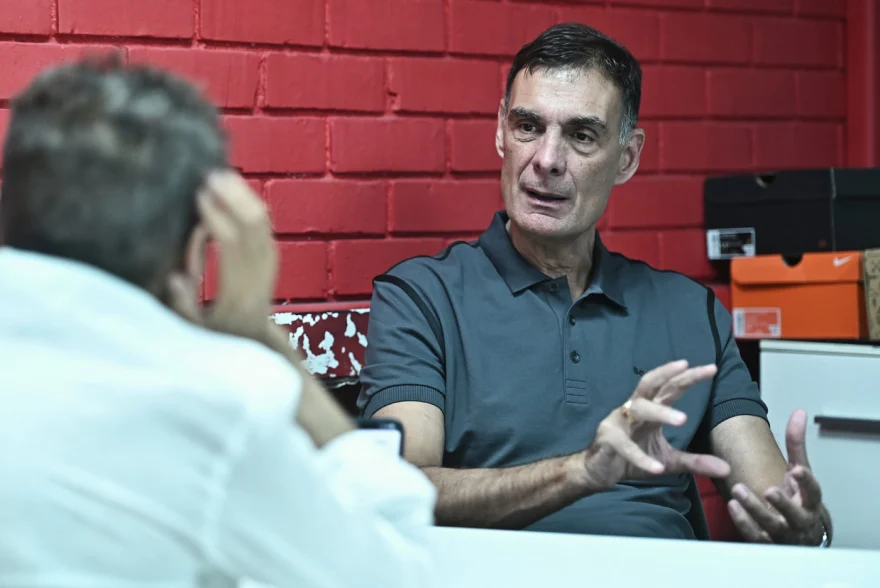
Scene 4: “Olympiacos is an idea — but I’m always ready to leave.”
D.D.: Let’s talk basketball. What does Olympiacos mean to you?
G.B.: Olympiacos is an idea. It’s history, values, a way of thinking. But I’m always ready to walk away. I don’t hang on to positions. You can’t function out of fear. I stay true to myself. The moment I feel I can’t offer anything more — I’m gone.
D.D.: How do you handle pressure?
G.B.: I struggle when I see people attacking logic — when decisions are irrational, when there’s no meritocracy. That frustrates me.
Giorgos Bartzokas isn’t just a coach. He’s a product of a remarkable lineage — a thinker, a leader, and a man with a conscience rooted deeply in one of the most dramatic chapters of modern Greek history. His story, like his father’s, reminds us that values don’t just live in politics or war — they live on courts too.
Thank you! Here is Scenes 5 and 6 of the interview between Giorgos Bartzokas and Dimitris Danikas, translated into a polished, expert-level sports interview style — clear, articulate, and emotionally intelligent, as if appearing in a high-profile international sports magazine or documentary.
Scene 5: “In basketball, Olympiacos has nothing to envy from any European club.”
DIMITRIS DANIKAS: You’ve been blessed with encounters with extraordinary people and incredible moments throughout your life and career.
GIORGOS BARTZOKAS: You know, I didn’t fully realize it while it was happening. But over time, as you reflect, you start to understand the influences you’ve had, the foundations you were given, and the people who shaped your thinking.
D.D.: After your early days with smaller teams, when did you make your move to the big leagues?
G.B.: I became assistant coach to Panagiotis Giannakis at Marousi for three years. Then I got my first opportunity as a head coach at Olympia Larissa, where I stayed for another three. That was my first head coaching role in the Greek top division. From there, my path took me back to Marousi, then to Panionios for two years, and eventually to Olympiacos for my first stint in 2012. I stayed for two and a half years before heading abroad — first to Lokomotiv Kuban in Russia, then to Barcelona for a season, and then back to Russia with Khimki.
D.D.: What’s the key difference between coaching Barcelona and Olympiacos?
G.B.: Every club is unique. Barcelona is very political — it’s essentially the flagbearer of Catalan identity. Many of its executives are former politicians. The club is owned by its 100,000 members, who vote in the board. That “més que un club” isn’t just a slogan — it’s real. But with politics involved, things get complicated.
D.D.: How so?
G.B.: For example, the administration is elected every four years through campaigns — two factions competing for the presidency. That creates a built-in opposition. Half the people might be happy when the team wins, but the other half aren’t — because they want the current leadership to fail so they can take over. I know it sounds simplistic, but that’s the reality.
D.D.: So the contrast with Olympiacos is stark.
G.B.: Olympiacos is a major club in Europe — no doubt. But in Barcelona, the basketball section is still under the broader FC Barcelona banner. It’s a football-first club. Even the logo says it: Futbol Club Barcelona. One president oversees all sports.
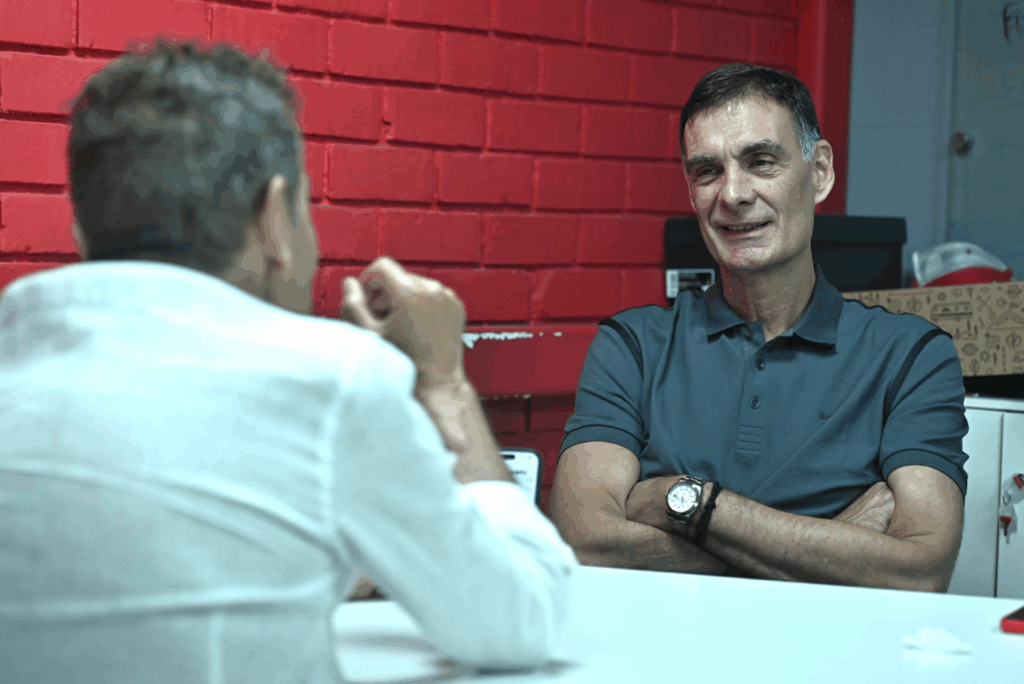
D.D.: While Olympiacos basketball is autonomous.
G.B.: Exactly. One club, but with separate leadership in football and basketball. Olympiacos basketball stands completely on its own. And when it comes to basketball, Olympiacos doesn’t trail behind anyone in Europe. We’ve won three EuroLeague titles, reached four straight Final Fours — we’re respected across the continent.
Scene 6: “The Nazi party rose through sports clubs — fanatics are easy to manipulate.”
D.D.: Let’s stay on that thread. It was remarkable that two Greek teams made the Final Four — and yet neither reached the final. Was there a sense of overconfidence within Olympiacos?
G.B.: Not at all. We had a 20-day preparation period before the Final Four — during which seven of our players were injured. On paper we looked whole, but in reality, we were completely out of rhythm and out of shape. Seven guys were getting injections just to play. We couldn’t practice properly. We were decimated. Overconfidence was the last thing on our minds.
D.D.: But expectations were massive.
G.B.: Exactly — all season we were at the top of the standings, everyone considered us the favorite. But we knew internally that to win the EuroLeague in that state would require a miracle. The Final Four is unforgiving. It’s one night — win or go home. The other teams are elite, too. And when you’re the favorite, the pressure can crush you more than it drives you. That’s what happened — along with Monaco playing an excellent game.
We genuinely believed we could win it this year. But no matter how much money you invest or how well you prepare, nothing guarantees you’ll lift the trophy.
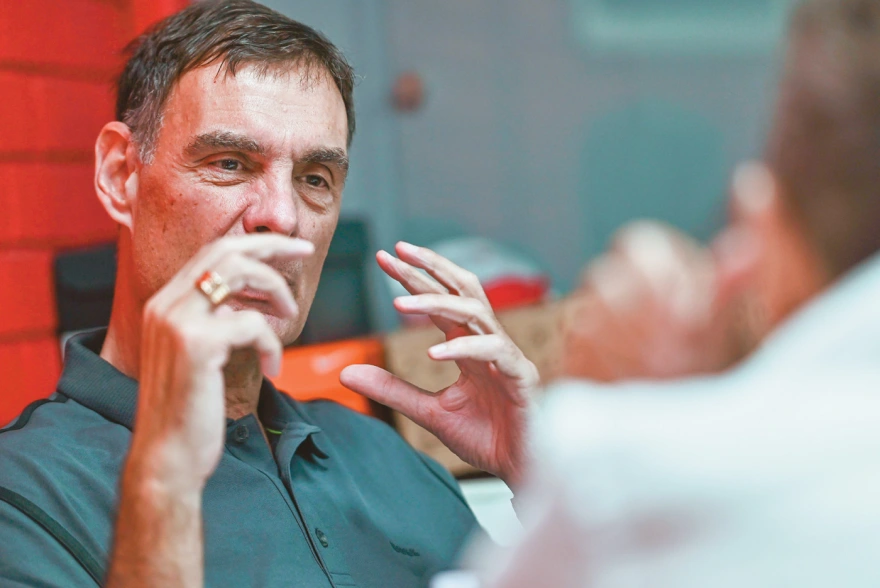
D.D.: You can’t win every time. Look at Manchester United — my team — they’re in shambles.
G.B.: You support United? So do I — die-hard fan! My uncle, who made me an Olympiacos fan, also introduced me to United. I’ve been following them since I was a kid.
D.D.: Same here. But after Ferguson left, everything collapsed.
G.B.: These things run in cycles.
D.D.: Exactly. Winning forever is impossible.
G.B.: True — but try explaining that to hardcore fans.
D.D.: What’s your view on fanatics? How do you deal with them? Aren’t they destructive — in sports, in politics, everywhere?
G.B.: It depends. Age, social background, standard of living — these all play a role. Most ultras are young. And youth is easy to manipulate.
Take this for example: the Nazi party in Germany — it rose in part through sports clubs.
If a young person has limited prospects, low income, no job, no family support — they want to win somewhere. They want to feel victorious, even if only through their team. That creates intense emotional swings. They react violently when they lose, and wildly when they win.
In Liverpool, the fans are dockworkers. In Newcastle, coal miners. Imagine how hard their weeks are. What gives them pride? Their team winning on Saturday. That’s why the emotions run so extreme — and why we often see extreme behavior.
Of course, I’m absolutely against that mindset. But I understand where it comes from.
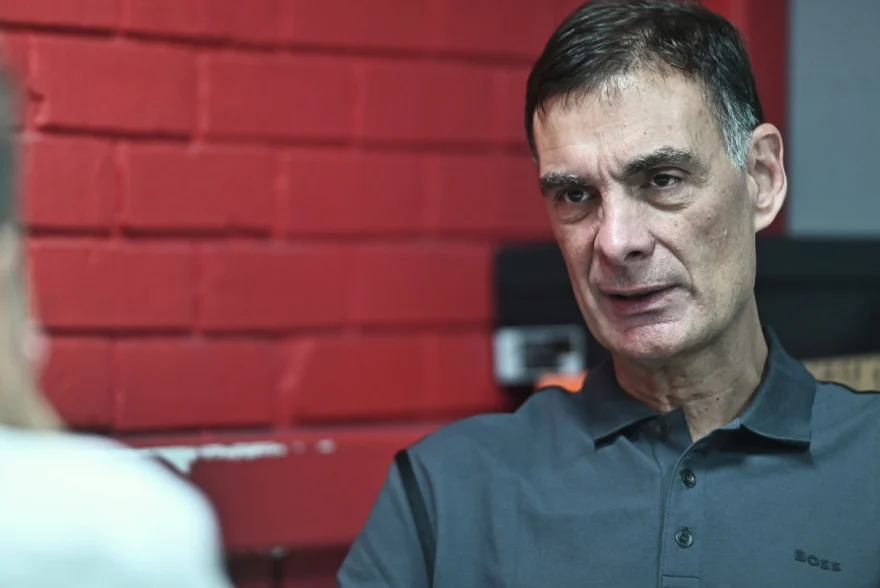
Scene 7: “Every player is now a company”
D.D.: Do you have problems with hardcore fans?
G.B.: During my first stint with Olympiacos, even though we won the EuroLeague, I left after a loss to Panathinaikos. Essentially, I left because when we returned to SEF, there were 500 people there with aggressive intentions toward us. Nothing extreme happened, but they were against me and the entire team. As the team’s coach, I resigned for that reason — because I believed Olympiacos and its own fans couldn’t be against the team. In my second stint with Olympiacos, I’m treated completely differently. Because I’ve had a career abroad, and in the five and a half years I’ve been back, we’ve won nine titles, gone to four Final Fours, and broken many records in the club’s history. And because I’ve been a fan of Olympiacos since I was a child, I’m seen as “one of their own.” But, of course, that’s always very fragile — because here even families split over this. It’s fragile because it depends on whether the team keeps winning.
D.D.: But how does a game stop being entertainment for the fan and turn into a jungle or an arena? A game should mean enjoyment, joy, having fun.
G.B.: Which fan are you talking about? Right now, an overwhelming majority of Olympiacos fans, if you ask them whether they’d prefer to see their team win a game without watching it, or see it as a spectacle and lose — they won’t choose the second. I have many friends who, out of stress, don’t even watch big games — they go out for a walk until the game is over. So don’t look at it as simple entertainment. It’s not cinema, theater, or a music performance. It’s not a game anymore — it’s far from being a game now.
D.D.: Financial factors are involved too, right?
G.B.: Of course. The stakes are huge now. Many people make a living off sports business. We’re talking about corporations now.
D.D.: Which corporations? You mean sponsors?
G.B.: There are sponsors, but each player is also a company now. When a player earns so much money and has an entourage living off of them, then that player is essentially a small business. It’s an environment totally opposite to the coach’s role. The coach stands for teamwork, wants the players to play together, without egos — for one to play for the other. The player’s environment is completely opposite. The agent tells the player only what he wants to hear — to avoid being fired and replaced. He wants to secure bigger contracts, and to get bigger contracts you need better stats, more points scored. That personalizes basketball, while basketball is the ultimate team sport. Today, it’s becoming increasingly individualistic — in the U.S., it’s almost entirely individual. A star player can even decide who the coach is, who their teammates will be, or what the tactics will look like.
D.D.: So a good player can determine the team’s future?
G.B.: To a great extent, yes. It depends on the culture. For example, in England, when the club owners were English, coaches stayed for decades — Ferguson for 28 years, Wenger over 20 with Arsenal. The coach was respected, especially if he did his job well. When foreign owners came — Arabs, Americans, Chinese — they brought a different culture. If you don’t bring immediate results within six months or a year, you’re fired. That’s why now in England the coach isn’t as important anymore. Coaches are replaced frequently. And basketball is even more collaborative than football.
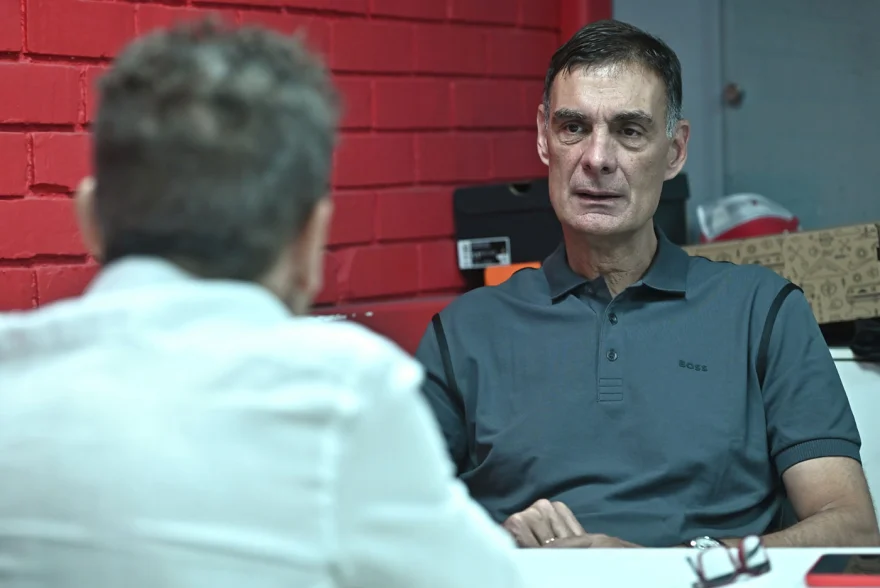
D.D.: Why?
G.B.: Because everyone defends and everyone attacks. If someone moves to a spot, someone else has to fill that space — automatically. There’s interaction on both offense and defense. If one of the five is more selfish than they should be, it can ruin team chemistry. Human relationships in basketball aren’t built in hotels or dinners — they’re built on the court. So as a coach, you’re expected to produce results based on teamwork, solidarity, and collaboration, while the whole system is pushing in the opposite direction — like “don’t pass the ball to that guy.” You see it even with kids. Parents go to games — and they’re the worst kind of fans now — and tell them, “Why did you pass the ball? You should’ve shot. Why should that other kid score?” The very joy that sports give them — connection, friendship, relationships — is canceled by their dad. “Why’d you give him the ball?” This slowly turns into a monster that, in professional teams, the coach has to manage alone.
Scene 8: “A daily battle: how the ‘we’ defeats the ‘me'”
D.D.: There’s this big contradiction — the individual wins over the collective. How do you manage that?
G.B.: Through a lot of conversations. But I also try to do recruiting — to bring in or retain players who are altruistic, who think more about the team than themselves. And they pass on that mentality to others. Everyone thinks about themselves — even me. It’s my career and job. But at the same time, I have to promote that idea — that we must be united. There are still such players, who are unifying, prevent crises, try to talk to those who are too egotistical — because there are a lot of huge egos in a team. And ultimately, that’s a daily battle — how the “we” will defeat the “me.”
D.D.: Are they all stars?
G.B.: Not all, but in some way, yes.
D.D.: Stars, celebrities. Milutinov, for example, got a huge contract. But how is it possible that these kids make so much money when people out there are struggling?
G.B.: We live in a bubble. That contradiction is part of our society and tied to entertainment. Basketball is entertainment. Just like Hollywood stars can make 20 million for a film, or Coldplay can fill OAKA twice and every stadium on tour, earning billions. People want to go and enjoy a show. So, naturally, the thing people are paying for brings big money to the ones creating it.
D.D.: And it becomes a monster.
G.B.: Isn’t our society the same? Aren’t there many who grow ultra-rich at the expense of those who can’t eat?
D.D.: Sports, music, cinema — they’re all miniatures of that system. How do you manage your players?
G.B.: These kids have a lot of insecurities and a lot of stress. Intense pressure. Because a bank account is one thing — but how do you maintain it? How do you maintain your name, play in big games, win titles that bring you more money? It creates insecurity and wears a person down. And they don’t live normal lives. When you’ve played 80 games in 10 months, with everything that comes with it — all the travel, sleeping at 5 a.m. from adrenaline or jumping straight on a flight after a game — it’s not normal life. They don’t get weekends off like regular people, to spend with family or clear their heads. That’s when we’re working. We might get 4–5 days off total in 10 months. Then there’s the summer — maybe a month — where you try to pretend you’re living a normal life. That’s the cost of the whole story.
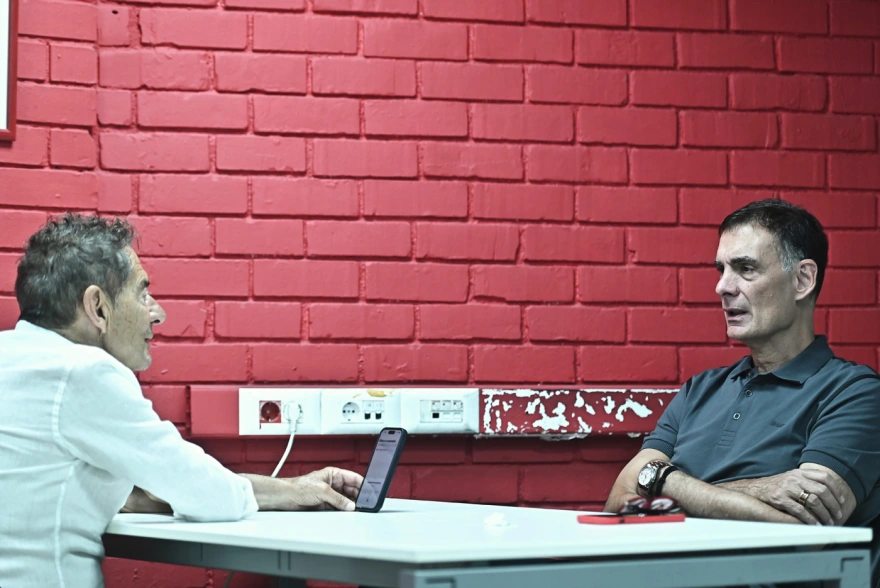
D.D.: What’s your daily routine like? Do you wake up at 6 or 7?
G.B.: Not at all. I wake up around 8–8:30.
D.D.: Do you work out?
G.B.: No. I go straight to the court — our practice is in the morning to midday. Afternoons are free.
D.D.: You go to the office and do what?
G.B.: Meetings with my assistant coaches, game prep.
D.D.: How many assistants do you have?
G.B.: Four — just the basketball coaches. We also have trainers, physiotherapists, doctors — we all meet every day.
D.D.: How many in total?
G.B.: Around fifteen support staff for the players.
D.D.: And what do assistant coaches do?
G.B.: Each has a specialty — one focuses on defense, another on individual player development, another on offensive systems. The doctors are critical. If a player gets misdiagnosed or the wrong treatment — and he earns €3 million a year — and he’s out for six months, that’s €1.5 million wasted. So you can see how important their roles are. We need to be very tightly knit.
Ask me anything
Explore related questions




