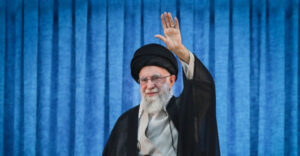
When he appeared in public for the first time last October after five years, Iran’s supreme leader, Iran’s Ayatollah Ali Hosseini Khamenei, sent an unrelenting message: “Israel will not last long, he told tens of thousands of supporters at a mosque in Tehran during Friday prayers.
At a ceremony at a mosque in Tehran during a Friday prayer in the afternoon, he addressed a crowd of 10,000 demonstrators at the mosque.
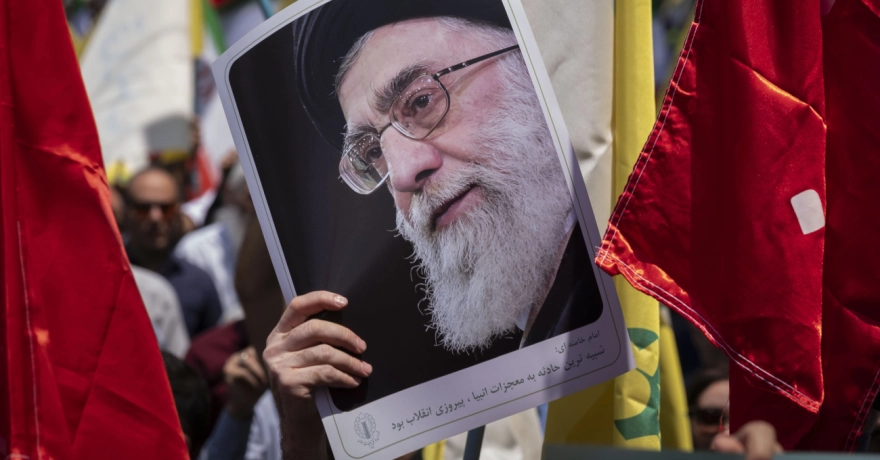
“We must stand against the enemy with unwavering faith,” the 86-year-old – now 86 – leader stressed, days after Israeli strikes on Hezbollah headquarters in Beirut killed his close ally Hassan Nasrallah.
The loss of Nasrallah was a personal blow to Khamenei, and the Israeli air strike against Iran that followed (last Friday) a new strategic humiliating milestone. Tehran’s response came with a barrage of missiles and drones aimed at Tel Aviv, but Israel’s attacks continue unabated. Iranian air defenses are proving inadequate, and the network of Islamist militias that Khamenei has been building for decades has effectively collapsed.
He now has few good options – a situation this cautious, pragmatic, conservative, and ruthless revolutionary has always tried to avoid.
From Masjid to Power
Born in Mashhad to a humble family of lowly clerics, Khamenei took his first steps as a radical in the feverish atmosphere of the early 1960s. The then Shah Mohammed Reza Pahlavi had embarked on a major reform programme that was largely rejected by the country’s conservative clergy. Khamenei studied religious studies at Qom and was inspired by Ayatollah Khomeini, embracing the traditions of Shia Islam. By the end of the decade, he was carrying out covert missions on behalf of the now-exiled leader and forming networks of Islamist resistance.
Alongside his Islamic studies, the young Khamenei read Western literature – Tolstoy, Hugo, Steinbeck- and encountered thinkers who sought to fuse Marxism and Islamism to create new ideologies, and became fascinated by anti-colonial currents and the discourse of the Egyptian Islamist Sayyed Qutb, which he translated into Farsi.
How he got to the helm of the Islamic Republic
Imprisoned repeatedly, he participates in the 1978 revolutionary protests and 1981 is elected president after an assassination attempt leaves him with his right arm paralyzed. When Khomeini died in 1989, Khamenei succeeded him, with a constitutional adjustment, and amassed powers unprecedented in the Islamic Republic.
His central arm is the Revolutionary Guards of the Revolution (IRGC), but he makes sure to maintain multiple networks of influence and loyalty in neighbouring countries. By the late 1990s, he had eliminated opponents and strengthened the regime’s hardcore. The writers he once admired are persecuted. Anti-regime activists abroad are murdered.
The axis of resistance and the “minefield” of compromise
Despite the election of reformers to the presidency, such as Mohamed Khatami in 1997, who had some freedom of action, Khamenei does not allow substantive change. He allows tentative openings, such as the rapprochement with the US (through Khatami) after 9/11, but he never deviates from his basic principle: protecting the revolution and the theocratic regime. In this context, he also supported the Guards’ efforts to exhaust US forces in Iraq after their 2003 invasion and expand Iranian influence in the neighbouring country.
Moreover, he invested in the strategy of the proxies: Hezbollah, Hamas, Houthis, and Shiite militias in Syria and Iraq, all of whom formed the so-called “axis of resistance”. But after the Israeli attacks and the fall of the Assad regime in Syria, the edifice is collapsing.
Economics, repression, and isolation
Khamenei faces constant popular uprisings, which he quells with an iron fist. At the same time, the economy is sinking, while women, LGBT+ people, and religious minorities suffer constant persecution. He projects an image of humility, living in a house on Palestine Street in Tehran, though the authenticity of his ascetic life is questioned.
Is the end of his era approaching?
For more than 35 years, Khamenei has methodically navigated between enemies and internal rivals, avoiding war and ensuring the regime’s survival. But today, he faces his greatest gamble: aged, isolated, and weakened, he seeks a way out where there may be none. The debate over his succession has already begun – and with it, the final chapter of an era that marked the Middle East may be beginning to be written.
Ask me anything
Explore related questions