





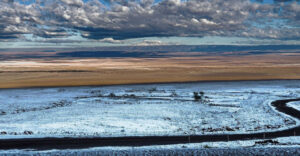
A sight few ever expected to witness appeared on Thursday, stunning both locals and scientific observers: the Atacama Desert in northern Chile, the driest region on Earth, “awoke” blanketed in snow.
The striking phenomenon quickly went viral and even took seasoned climatologists by surprise.
The ALMA Observatory, located at an altitude of 2,900 meters, posted images on social media.
Indeed, the Atacama is one of the most geographically unique areas on Earth. With annual rainfall in some parts not exceeding one millimeter, its soil is so dry and lacking in organic matter that it’s often used as a model to simulate Martian conditions.
NASA and other space agencies have conducted numerous tests in the region using robotic vehicles and scientific instruments, due to the terrain’s morphology and composition, which closely resemble those of the Red Planet.
At the same time, thanks to its clear skies and minimal light pollution, the area is one of the world’s top destinations for astronomical observations. Some of the most advanced telescopes on Earth are based there, including ALMA, a collaborative project between the European Southern Observatory, the U.S. National Radio Astronomy Observatory, and Japan’s National Astronomical Observatory.
Although snowfall isn’t entirely unheard of at high altitudes in the region—such as on the Chajnantor Plateau above 5,000 meters, where ALMA’s main telescope is located—snowfall at its facilities at 2,900 meters is extremely rare. According to the observatory, the last time something similar occurred was ten years ago.
Climatologist Raúl Cordero from the University of Santiago told Agence France-Presse that it’s still too early to directly link the event to climate change, but noted that scientific models show an increasing likelihood of such rainfall or snowfall events in the Atacama in the future.
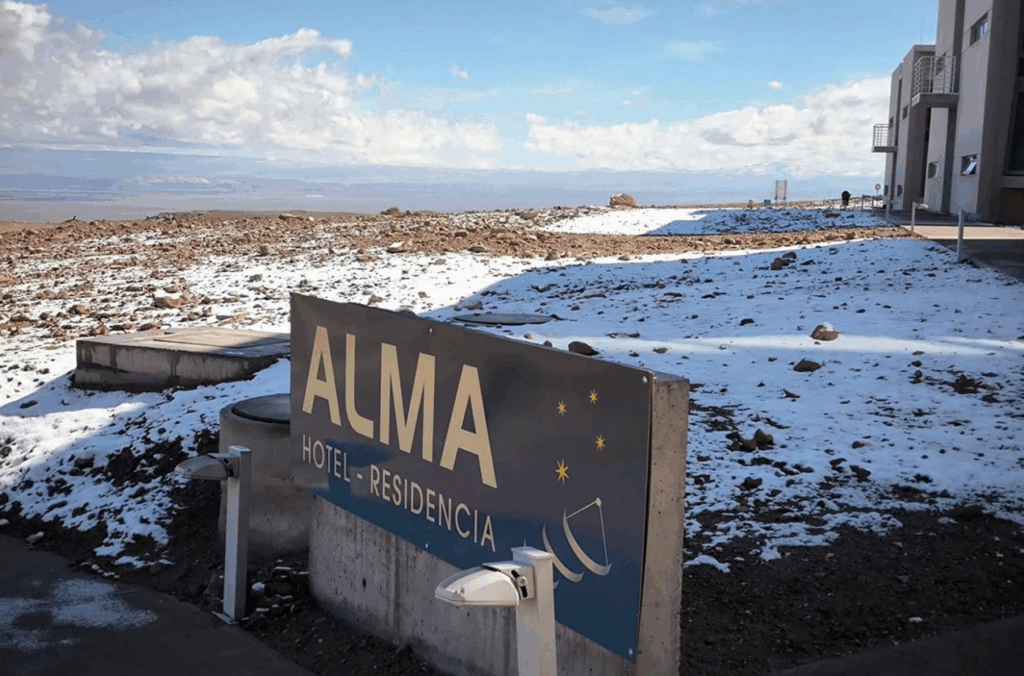
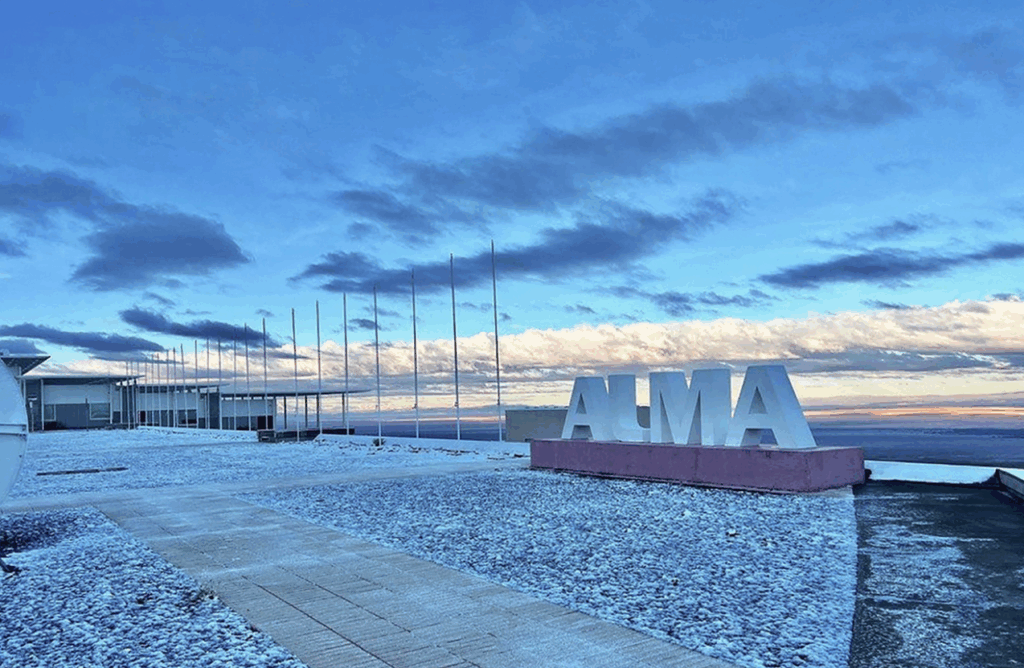
Images of the white veil that covered the typically dry horizon of the Atacama have traveled around the globe. It’s not just the striking contrast—the globally recognized brown-gray landscape suddenly turned white—but also the implications for the future. While the scientific community remains cautious about drawing dramatic conclusions, the recording of such extreme phenomena in typically arid areas adds to the growing evidence that climatic balances are shifting.
And if the Atacama is Earth’s “mirror of Mars,” perhaps its snow is yet another reminder that our own planet still has the power to surprise us…
Ask me anything
Explore related questions




