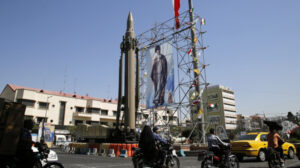
Once the US and Israeli bombs stopped falling in Iran, the leadership and security forces came out of their bunkers and began a new wave of repression, this time targeting the population itself. According to the Wall Street Journal, authorities are targeting alleged spies, dissidents and opposition members, trying to regain control after the shock of the bombings.
Checkpoints have sprung up across Tehran as the regime searches for those it suspects aided Israeli attacks on strategic infrastructure, air defenses and top scientists.
Executions and arrests in the aftermath of the war
The atmosphere in the Iranian capital remains heavy with the smell of explosives. Security forces have already arrested hundreds of people, with arrests continuing daily. According to Amnesty International, more than 1,000 people are being held as suspected accomplices of Israel.
The government has even proceeded to execute at least six men. “The situation for the Iranian people is more dangerous now than before the war, warns Nobel Prize-winning activist Narges Mohammadi.
Moral police and daily “raids”
The regime is not limited to “hunting spies”. It is also reintroducing the notorious “vice police”. “The police stopped us because my friend’s socks were too transparent,” says a woman who recently returned to Tehran.
Intelligence agencies are urging people to report neighbors and suspicious movements. They have even released instructions on how to identify “agents” – from closed curtains to excessive use of hats and sunglasses.
600 people killed, 5,000 injured
The Israeli and US airstrikes were the first consecutive foreign strike on Iranian soil since the war with Iraq. Mossad had reportedly penetrated deep: from explosive drones to teams of operatives who hit nuclear facilities and the notorious Evin prison.
Tehran turned into a war zone. Residents describe sleepless nights on their rooftops, watching missiles and explosions. According to Iranian authorities, more than 600 people were killed and nearly 5,000 injured.
Khamenei in shelter – elites pay the price
Throughout the war, supreme leader Ali Khamenei was hiding in a bunker outside Tehran. His isolation made diplomatic talks with Europeans trying to broker a ceasefire difficult.
The capital’s northern affluent districts, home to scientists and generals, were hit hardest, sending shockwaves through the regime’s elite.
Fear of flight and transfer of assets
Iran has taken precautionary measures to protect valuable assets. Large shipments of crude oil were shipped to Asia, while civilian aircraft – even the presidential Airbus – flew empty to Oman, carrying cash and valuables to save them from possible destruction.
Occupation of a regime built for survival
Despite the severe blow to security, the regime held out. “There was no tipping point, the leadership survived, and the system proved that it was not built for popularity but for survival, said Narges Bajoghli, a professor at the Johns Hopkins School of International Studies.
The new generation of Revolutionary Guards and paramilitary cadres coming forward is being described as even harderline. The “next day” seems even more authoritarian and unpredictable.
Ask me anything
Explore related questions