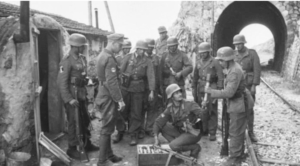
One topic that, to our knowledge, has received little attention from Greek historians is the possible involvement of Arab volunteers on the side of the Germans during the Occupation of Greece. Prompted by a reader’s comment on a recent article, we searched online for evidence related to this subject. Greek-language sources are scarce, and some even dispute whether Arabs were present in Greece during the German Occupation.
In contrast, foreign sources provide more detail and insight. Even if one questions what’s written on Wikipedia, the article from axishistory.com titled Deutsche-Arabische Bataillon nr 845 (German-Arab Battalion No. 845), the 32-page study by Antonio J. Muñoz titled Lions of the Desert: Arab Volunteers in the German Army 1941–1945 (accompanied by annotated photographs), and the article on warhistory.org titled Muslims in the Wehrmacht, all leave no doubt: Muslims from the Caucasus and North Africa participated in World War II on the side of the Germans.
Particularly striking is Hitler’s evident admiration for Muslim fighters, which we will explore in more detail. At the heart of this involvement lies the struggle over Palestine, a region heavily influenced (once again) by the British.
The British Mandate for Palestine
After World War I, the Allies placed Palestine under British control through the British Mandate, decided at the San Remo Conference in April 1920. We discussed the events leading to WWII in detail in our article From the Old Testament to the Present: The Arab-Jewish Conflict – The Role of the US and Britain in the Creation of Israel (October 16, 2023). In 1939, Britain issued the “White Paper,” declaring that the mandate would end within ten years, after which Palestine would become independent. Jewish immigration was capped at 15,000 annually until 1944 and would thereafter require Arab approval—an unlikely prospect. The White Paper left both sides dissatisfied. During WWII, most Arab nations remained neutral.

However, some Arab leaders approached the Nazis, hoping they would free the Arab world from British imperialism and Zionism. In contrast, Jews in Palestine had no choice but to ally with the Allies, knowing that a German victory would likely mean their annihilation. Zionist leaders, following the advice of David Ben-Gurion (then head of the Jewish Agency and later Israel’s first Prime Minister), adopted a dual strategy: “We must help the British in the war as if the White Paper doesn’t exist and fight the White Paper as if there’s no war.” As a result, thousands of Jews from Palestine joined the British forces, often taking on dangerous missions, while others helped rescue Jews in German-occupied Europe.
(Source: Arthur Goldschmidt Jr. – Aomar Boum, A History of the Middle East, Epikentro Publishing, Thessaloniki, 2016)
Why Hitler Admired Muslim Warriors
One lesser-known aspect of Hitler’s personality was his strong admiration for Muslims. He considered them the only reliable soldiers and advocated their unconditional recruitment. On December 12, 1942, during a discussion at his military headquarters about recruiting non-Russian volunteers into the Wehrmacht, Hitler expressed doubt about Georgians and Armenians, stating:
“The only people I consider reliable are the Muslims. Everyone else is untrustworthy.”
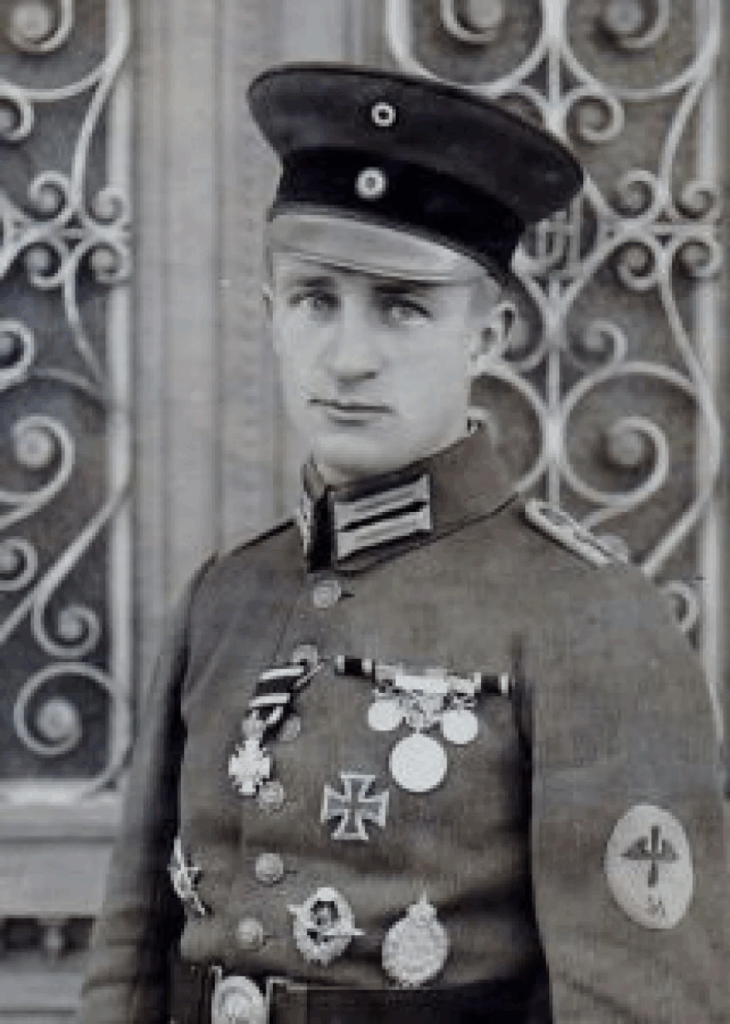
Why this open admiration for Muslims? Several reasons:
- He held ideologically positive views about Islam.
- He may have been influenced by his experiences during WWI.
- He was likely impressed by the fighting spirit of Muslims in the North Caucasus and Crimean Tatars.
This perspective was shared by Wehrmacht leaders. Muslim recruitment was justified not only by manpower shortages and propaganda value but also by religious beliefs—the idea that Islam could reinforce strong military discipline and motivation.
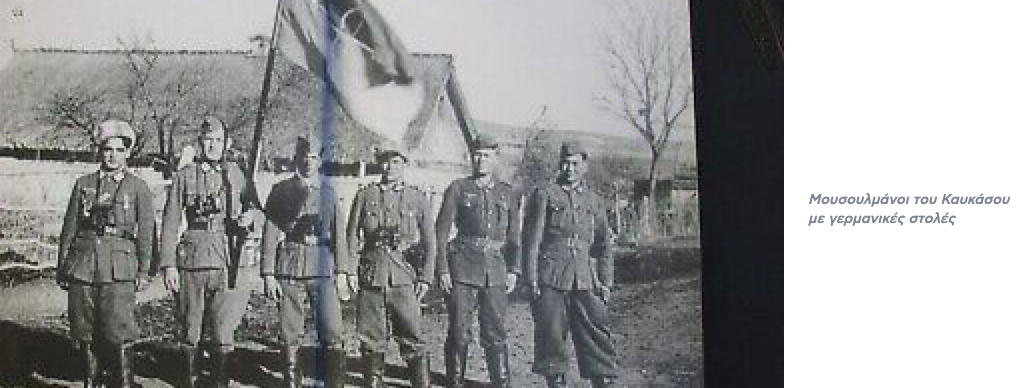
The Muslim Legions of the Wehrmacht
Muslim recruits were also valued due to the “political-religious stance of Turkic (Mohammedan) peoples” and their “largely excellent military capabilities,” which the German command sought to exploit to the fullest. Just weeks later, German Army Chief of Staff Franz Halder emphasized that recruitment was not only to bolster military strength but also for its psychological and propaganda effect on enemy forces and civilians.
On December 22, 1941, Hitler approved the creation of the Eastern Legions. By January 13, 1942, the first two were formed:
- The Turkestan Legion (Turkestanische Legion)
- The Caucasian-Mohammedan Legion (Kaukasische-Mohammedanische Legion), later renamed the Azerbaijani Legion.
Both were composed entirely of Muslims. In February came the Armenian and Georgian Legions, followed by the North Caucasian Legion in August and the Volga Tatar Legion in September.
Of these six, four were almost exclusively Muslim. They fought from Stalingrad and the Caucasus to Berlin and the Balkans. Total manpower ranged from 260,000 to 330,000, depending on estimates for the Turkestan Legion, which alone may have included between 110,000 and 180,000 men (according to warhistory.org).
The fiercest and most brutal were the Crimean Tatars. In early 1942, Manstein’s 11th Army began recruiting Muslims. A letter from a Crimean Tatar Muslim elite to Hitler expressed “immense gratitude to the Führer for liberating us from bloody Jewish-Bolshevik rule” and offered assistance in exterminating local resistance groups. Around 20,000 Crimean Tatars fought alongside the Nazis, mostly in anti-partisan operations. Their effectiveness, though marred by brutality, earned Hitler’s admiration—and they are still regarded today as some of the world’s toughest warriors.
Arabs Who Fought with the Nazis
While the Muslim recruitment campaign in the Caucasus was relatively successful, efforts to mobilize Arab Muslims from North Africa and the Middle East were far less fruitful. According to Antonio Muñoz, between 1941 and 1945, the Axis recruited:
- 500 Syrians
- 150–120 Palestinians
- 450 Iraqis
- Roughly 12,000 Moroccans, Tunisians, Algerians, Egyptians, Libyans, and desert nomads
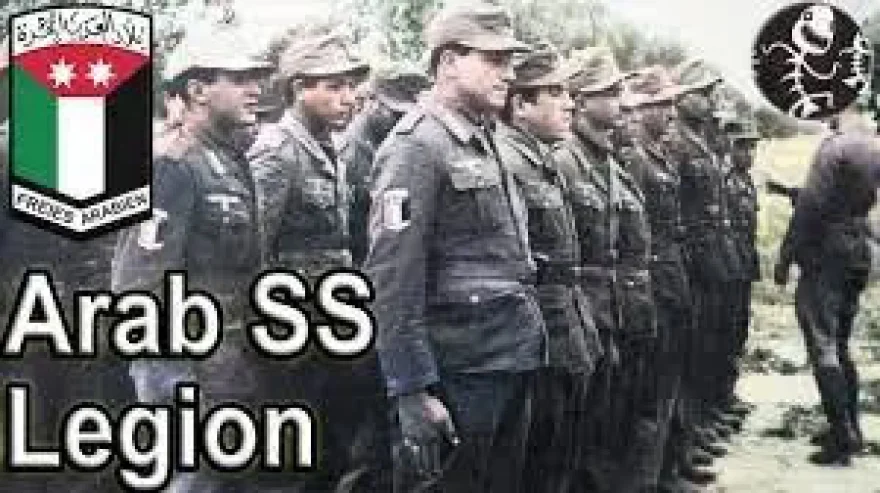
About 6,300 of these served in German forces, while the rest joined the Vichy French collaborationist regime. In July 1941, the Germans created a special unit, Sonderstab Felmy (Special Staff Felmy), led by WWI veteran Helmuth Felmy, to train Arab volunteers. This effort culminated in the creation of the German-Arab Training Unit (DAL) in late 1941.
However, volunteer turnout was poor. After the Arabs’ defeat in the Anglo-Iraqi War, a few joined the Germans. In May–June 1942, Felmy formed the Free Arabian Legion, but Turkey’s refusal to allow Arab transit from Iraq—where they had fought the British—posed a major obstacle.

Some Arab volunteers were recruited from POW camps and were later stationed at Cape Sounion in Greece. Internal disputes among the Arab recruits were constant. Felmy frequently sought guidance from the exiled Grand Mufti of Jerusalem, Amin al-Husseini—one of the main ideological forces behind Arab-Nazi cooperation—on how to resolve these tensions. Unbeknownst to Felmy, these disputes mirrored the broader political divisions among Arab leaders of the time.
Ask me anything
Explore related questions