





In the early 1950s, Greece was still struggling to emerge from the devastation of the Occupation and the Civil War. Amid this turbulent period, numerous construction companies sprang up to support the country’s rebuilding effort using resources from the Marshall Plan. Some of them left a lasting impact by helping establish essential infrastructure, laying the groundwork for the nation’s recovery and eventual development.
Among them was Archimidis, founded in 1949, which became the country’s most significant port construction company, with Konstantinos Karpidas as a leading executive and shareholder. Another notable player was Odon & Odostromaton S.A., founded in 1924 by Theodoros Konstantopoulos, specializing in roadworks and bridges, and later expanding into energy and water projects.
In the immediate post-liberation years, construction activity naturally focused on housing and reconstructing the railway and road networks. However, the economic hardships, lack of equipment, and political instability made conditions extremely difficult for contractors.
The formation of joint-stock technical companies and the introduction of higher contractor classifications enabled a new wave of firms—such as Euklidis, EDOK, ETER, TEMKA, AEGEK, Domiki ATE, and later Skapanefs, Proodeftiki, TEB, Aliakmon—to take on larger-scale projects.
Vision and Origins
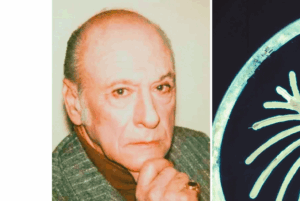
Having endured the challenges of the Greek construction market, Konstantinos Karpidas possessed both acute business intuition and an outlook that extended well beyond national borders. He is credited with the boldness and determination required—at the time even to consider international expansion.
Together with Theodoros Konstantopoulos and Giannis Andropoulos—another industry pioneer who began his career at Archimidis—he took the decisive step.
In 1959, they signed the founding agreement for a joint venture between Archimidis and Odon & Odostromaton, naming it Archirodon, a combination of the two companies’ names (Archi + r + Odon).
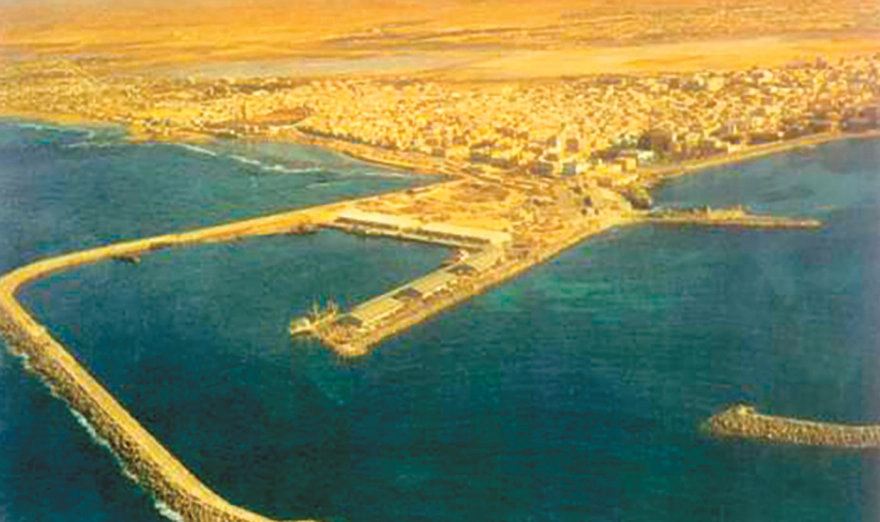
Their first target: the major contract for reconstructing the port of Benghazi, completely destroyed during World War II. In November 1960, Archirodon landed in Libya, marking the beginning of a remarkable journey that continues to this day.
More than its hundreds of large-scale projects, Archirodon stands out for one pioneering reason: its outward-looking vision, driven by Karpidas.
A Pioneer in the Arab World
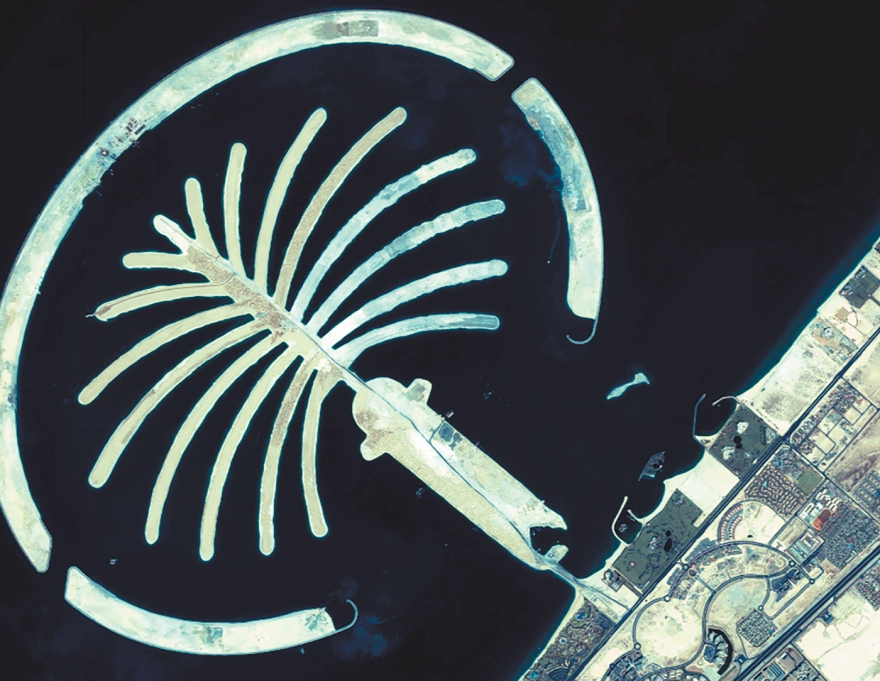
In 2001, Archirodon took on the iconic Palm Island project in Dubai, with a budget of $1.5 billion.
Among the old guard of Greek construction companies, Archirodon is the only one that survived the sweeping changes in the domestic industry—changes that saw the closure, acquisition, or merger of nearly all major post-war firms. While these earlier companies helped shape the next generation of Greek contractors, most vanished entirely.
Even its founding firms did not escape this fate. Odon & Odostromaton was acquired in 2002 by Alfa-Alfa Holdings (owned by entrepreneur Apostolos Allamanis) and subsequently disappeared. Archimidis passed into the hands of Athina ATE (Archirodon’s Greek subsidiary) and later stalled during operations in Libya.
By contrast, Archirodon proved a true survivor, growing into Greece’s first and only multinational construction group of this scale.
Key Milestones
Benghazi was Archirodon’s passport to the Arab world. By 1962, it had undertaken the reconstruction of the port of Beirut, paving the way for a string of projects in Saudi Arabia—then a vastly different country than today. Greek engineers and workers often operated in primitive, grueling conditions, but these early sacrifices laid the foundation for long-term regional presence.
Through consistent quality and capability, Archirodon earned the trust of Arab clients, especially the Saudi royals. In 1967, it began building the Jeddah port complex, becoming a development gateway for Saudi Arabia. Dammam followed in 1969, then Yanbu. In 1974, it entered the UAE market with the port of Sharjah. By 1979, it had moved into high-spec defense and security projects.
The 1980s saw expansion into new markets like Oman and Jordan, where it constructed government buildings and infrastructure. In the 1990s, it diversified into energy (oil & gas) and water desalination, a critical sector in the region.
Flagship projects included:
- 1991: Yanbu Desalination Plant
- Shoaiba Stream Power Plant, dubbed the “Giant of the Middle East”, a 15-year mega-project
- Das Island Oil Terminal in the UAE
- LNG Terminal in Oman
It then expanded to Kuwait and Bahrain, and by 2001, took on the iconic Palm Island in Dubai.
Global Expansion
By the 2000s, Archirodon had become a dominant player in the Middle East. It ventured into:
- Singapore (Changi Outfall subsea pipeline)
- Kazakhstan (Kashagan East Field artificial island)
- UAE: Khalifa Port
- Europe: Latvia, Romania, Malta
Later came:
- Ras Al-Khair Project in Saudi Arabia, the world’s largest desalination plant
- Al Faw Port in Iraq
- Zirku Island (UAE) and Yanbu South Terminal (Saudi Arabia)
- Laayoune Port (Morocco)
- Bab Onshore Oil Field upgrade (UAE)
- Red Line Doha Metro (Qatar)
Even during the COVID-19 pandemic, Archirodon pressed on with major infrastructure projects like the Etihad Rail in the UAE.
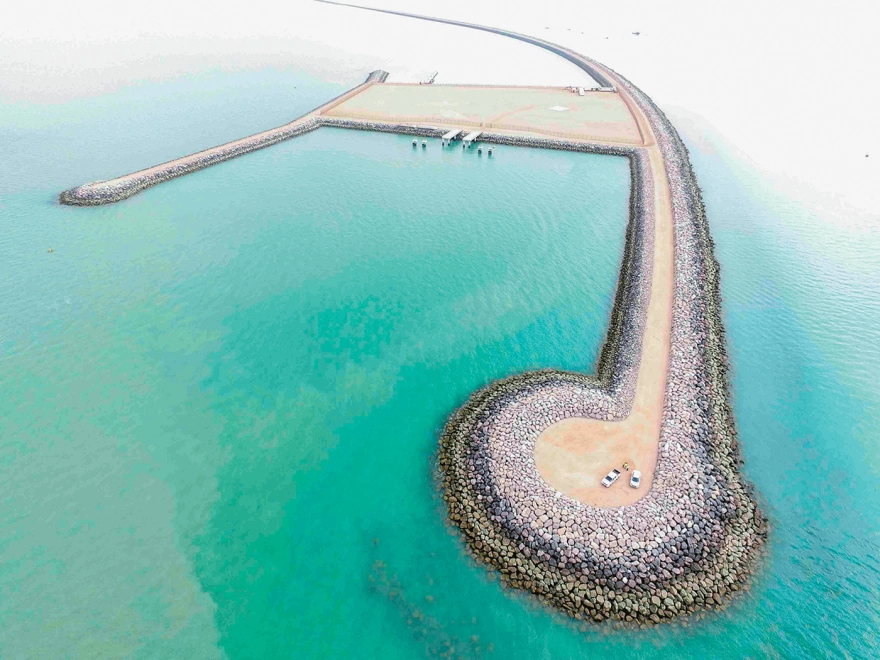
In 2022, it delivered the Shura Bridge, linking mainland Saudi Arabia to Shura Island in the Red Sea. In 2024, it began work on the Port of Neom’s Oxagon, part of the kingdom’s ambitious giga-project.
Figures and Legacy in Greece
In its 66-year journey, Archirodon has executed hundreds of projects worth many billions of euros, including:
- 250 ports and coastal protection projects
- 150 breakwaters and berths totaling a length greater than the Grand Canyon
- 155 km of seawater pipelines
- 2,500 km of rail—enough to connect the UK to Russia
- 60 km of bridges
Today, it operates as a multinational EPC contractor, with offices in 30 countries and a staff of over 10,000 from 30 nationalities.
Despite its global footprint, the company retained strong ties to Greece. In the 1980s, its subsidiary Athina ATE contributed to major sports venues like the OAKA Olympic complex and Peace & Friendship Stadium, and participated in subcontracting for Athens Airport, the Rio-Antirrio Bridge, Henry Dunant Hospital, and key motorways. In 2007, Athina ATE came under the control of Avax Group.
While Archirodon maintained offices in Greece, its Greek entity, Archirodon Hellas, entered liquidation in 2020. The group’s presence in the country continues through its Dutch parent, Archirodon Group N.V.
It Wasn’t Always Smooth Sailing
Despite its unprecedented success, Archirodon’s path wasn’t without setbacks—both financial and personal.
The company was affected by crises in the Middle East, such as the Libyan Civil War. In Iraq, it went to court over the Al Faw Grand Port, seeking over $105 million in compensation.
Tensions also arose among its founders. Giannis Andropoulos, who passed away recently, described in his memoir the rupture with Karpidas that led to his departure. In 1988, Karpidas called him back during a financial crisis, offering 15% equity to help rescue the company. Andropoulos claims he succeeded—but ultimately received only 3% and left for good.
Personal Life
Karpidas was not known for his sociability. Though well-connected in political and business circles, he shunned the spotlight, preferring to invest in art collecting—a passion enhanced by his third wife, Pauline (he married four times). One of his lesser-known hobbies, according to Andropoulos, was horse racing, and he reportedly kept racehorses during his time in the U.S.
Ask me anything
Explore related questions




