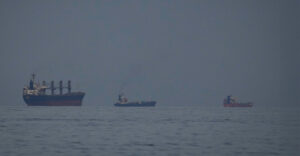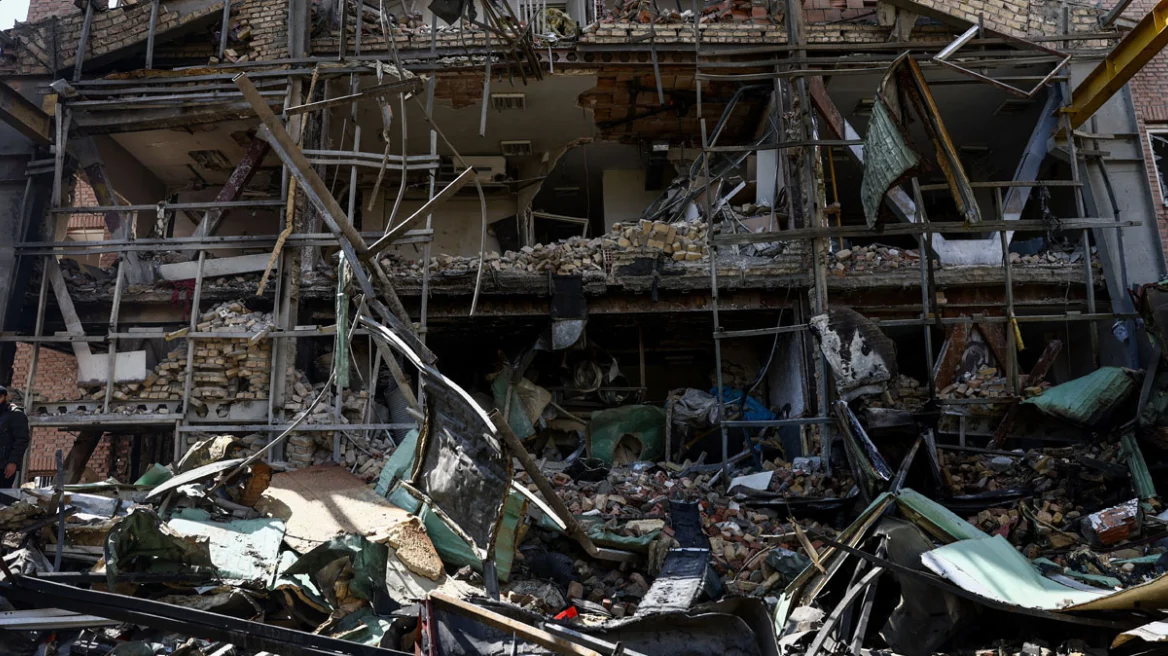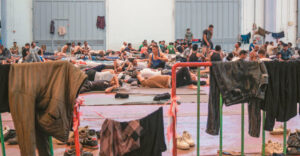
“What is being done from North Africa and Libya is an operation of migrant invasion of Europe.” With these words Minister of Immigration and Asylum, Thanos Plevris, described the situation at the sea border south of Crete in Parliament the other day. The numbers are inexorable and of course they are what led the government to take the extraordinary measures to manage the migration flows: Creating a closed structure in Crete, suspending the processing of asylum applications and detention for those whose applications are rejected.
The boatloads that arrive in Crete from time to time have brought the island to the limits of endurance, with the local government having exhausted every way of dealing with the issue. And how could this not happen, after all, when in just a few days last week nearly 2,000 illegal immigrants arrived by boat. Some were rescued by the Coast Guard, others arrived on their own on beaches, with images of their “landing” making the rounds on the Internet.
“THEMA,” having given the necessary attention to the issue, has presented both documentaries on Gavdos and extensive reports on the size of the arrivals. Two weeks ago, we revealed that more than 7,000 illegal immigrants had arrived in Crete since the beginning of the year. It took only a few days and the numbers soared, reaching 9,800 by last Thursday. It is the demographics, however, that raise many questions, as almost 95% of those arriving are men aged 18-35.
Cities without war
Of the above total, 80%-85% of arrivals come from countries that are not experiencing war, such as Egypt, Bangladesh and Pakistan. All of these, at 98%, see their asylum claims rejected. The number of Sudanese may have increased recently, but they still have not exceeded 1,500. This setting sets two facts.
On the one hand, only the Sudanese are those with a “refugee profile” since they come from a war zone, while the remaining 85% or so see their applications rejected, which means that out of a total of 9,800 almost 8,000 are not entitled to remain in the country and will have to return to their country of recruitment.
One of the key questions that arises, looking at the demographics, is why Sudanese, while flooding Libya by the millions with which they share a land border in the desert, are not the ones who outvote the soapboxes crossing the Mediterranean. “The smugglers must give this answer,” officials of the Ministry of Immigration and Asylum say, with the most plausible explanation being that it is the Sudanese who, because of their situation, find it difficult to meet the tariffs set by the slave-trafficking rings.
Besides, as “THEMA” had revealed, the amounts they ask for, sometimes even impersonating … travel agencies, range from 3,000 to 10,000 euros. There are quite a few who, as competent sources say, do not even know that their destination is Greece, which confirms the degree of exploitation and deception.
At the same time, it is worth noting that the difficulty of cooperation with local authorities inside Libya is particularly high, which intensifies the impossibility of controlling migratory flows from the point of departure. The reason? The huge amounts of money being moved by organised smuggling rings, which appear to have strong connections and political cover.
By a rough but indicative calculation, the roughly 9,000 irregular migrants who have arrived in the country since the beginning of the year with a fare of €5,000 equate to more than €45 million in revenue for criminal networks operating in North Africa. It is a parallel “economy” fuelled by human desperation, but also by the impossibility of control in areas such as southern Libya, where the state either does not exist or has been replaced by armed militias.
Points of departure
Meanwhile, according to the latest figures from the International Organization for Migration (IOM) in Libya, in the week of 29 June to 5 July 2025 alone, a total of 397 migrants were intercepted and returned to Libya, mostly in areas such as Tripoli, Zouara, Sabrata and Derna. These locations act as key departure points for migrants trying to cross the Central Mediterranean to Europe. As of early 2025, the number of migrants intercepted and returned to Libya already stands at 11,923, of which 10,281 are men, 1,103 women and 394 children, while demographic data is not available for 145 people.
Comparison with previous years shows that the phenomenon is escalating. In 2024, a total of 21,762 migrants were returned to Libya, with 665 recorded deaths and 1,034 missing. In 2023 the numbers were equally dramatic: 17,190 people were repatriated, with 962 deaths and 1,536 missing. The IOM stresses that Libya is not considered a safe country for migrants, and underlines that the maritime operations data are from initial reports and are subject to constant review.
The situation developing on the country’s southern maritime border, against the backdrop of Libya and uncontrolled migratory flows, is not just a humanitarian or management issue. It is a multifaceted crisis involving organised circuits, millions of euros and political expediency.
Ask me anything
Explore related questions