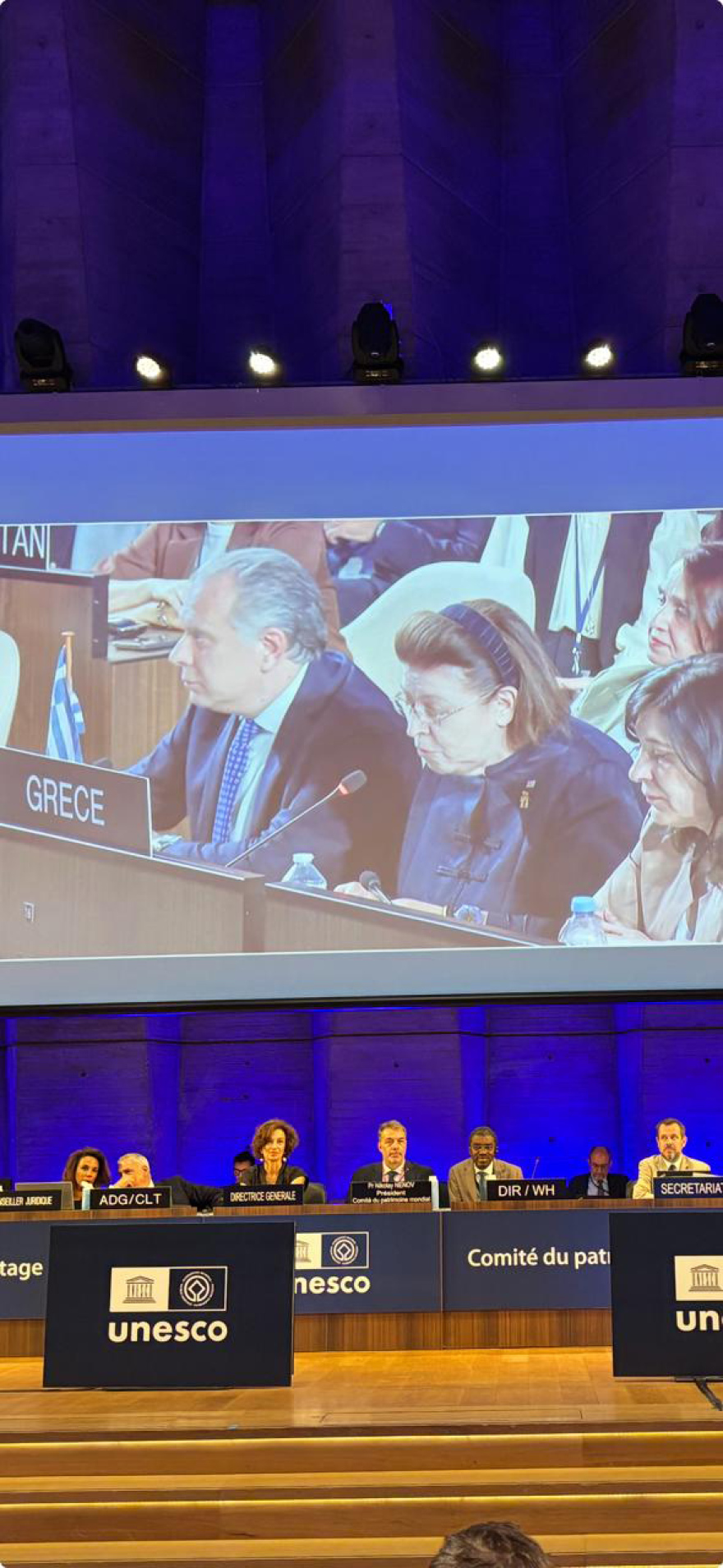
The Minoan Palace Centers included in UNESCO’s World Heritage List – Mitsotakis: “Another noble goal of our country has become a reality”
International recognition of the outstanding universal value of the archaeological sites of Knossos, Phaistos, Malia, Zakros, Zominthos, and Kydonia – Mendoni: A landmark day for our homeland, the Greek people, Crete, and culture
Newsroom
Δείτε περισσότερα άρθρα μας στα αποτελέσματα αναζήτησης
As of today, the Minoan Palace Centers are officially inscribed in UNESCO’s World Heritage List, announced the Ministry of Culture, emphasizing that the inscription—declared during the 47th Session of the World Heritage Committee—represents a major achievement for Greece.
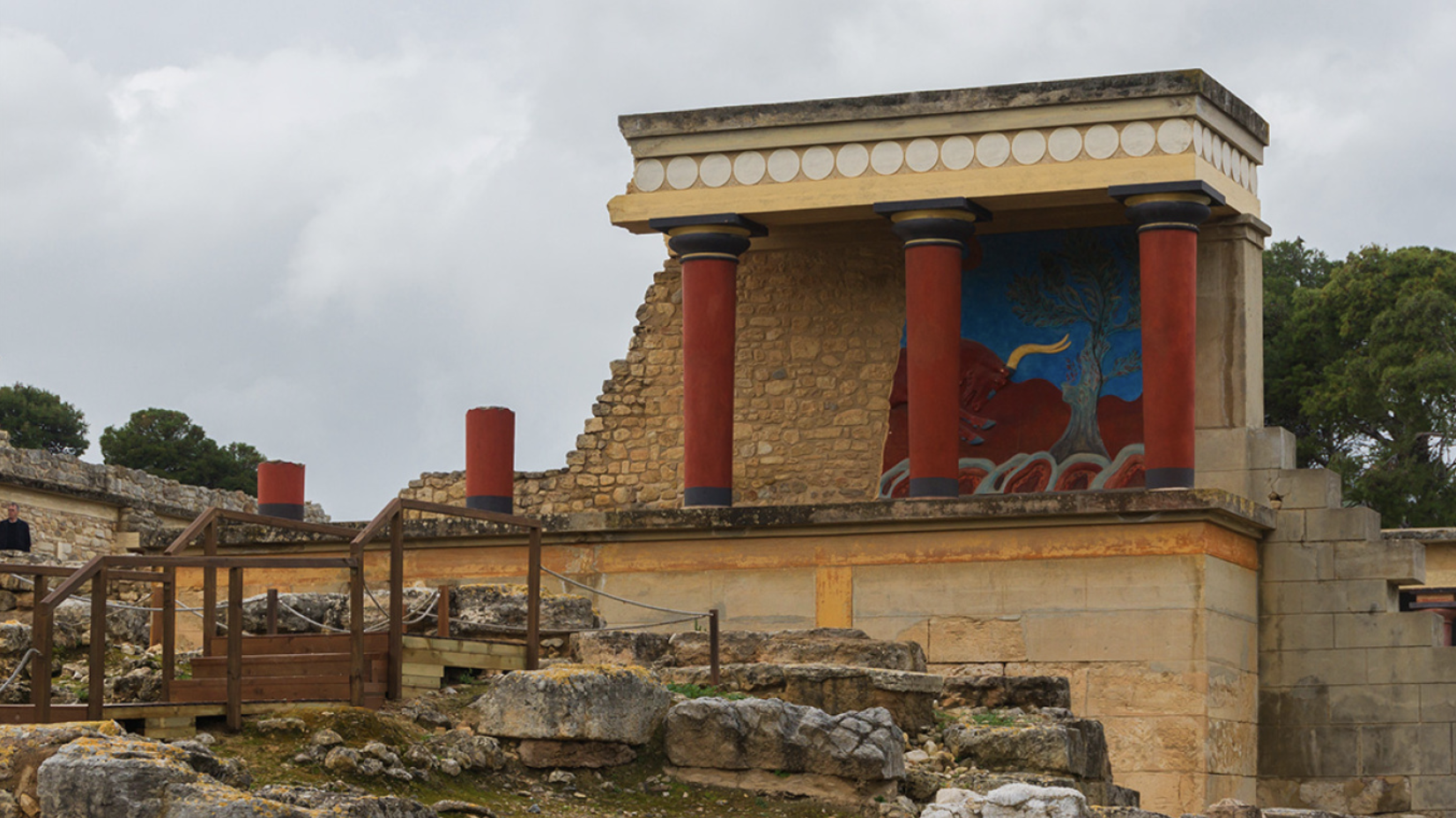
This inscription constitutes international recognition of the outstanding universal value of six extremely important archaeological sites in Crete—Knossos, Phaistos, Malia, Zakros, Zominthos, and Kydonia—which formed a serial nomination.
At the same time, it marks a commitment by Greece to preserve and protect the cultural values of these monumental heritage complexes.
The Ministry adds that this inscription is the culmination of a systematic, painstaking, and long-term effort by its experienced personnel and services, and of their constructive cooperation with the Region of Crete and other relevant bodies in preparing the nomination dossier.
The World Heritage Committee, based on the evaluation of the advisory body ICOMOS, recognized the Outstanding Universal Value of the Minoan Palace Centers, their authenticity and integrity, as well as the existence of a robust protection framework and a structured Management Plan—essential components for World Heritage listing.
Mitsotakis: “Another noble goal of our country has become a reality”
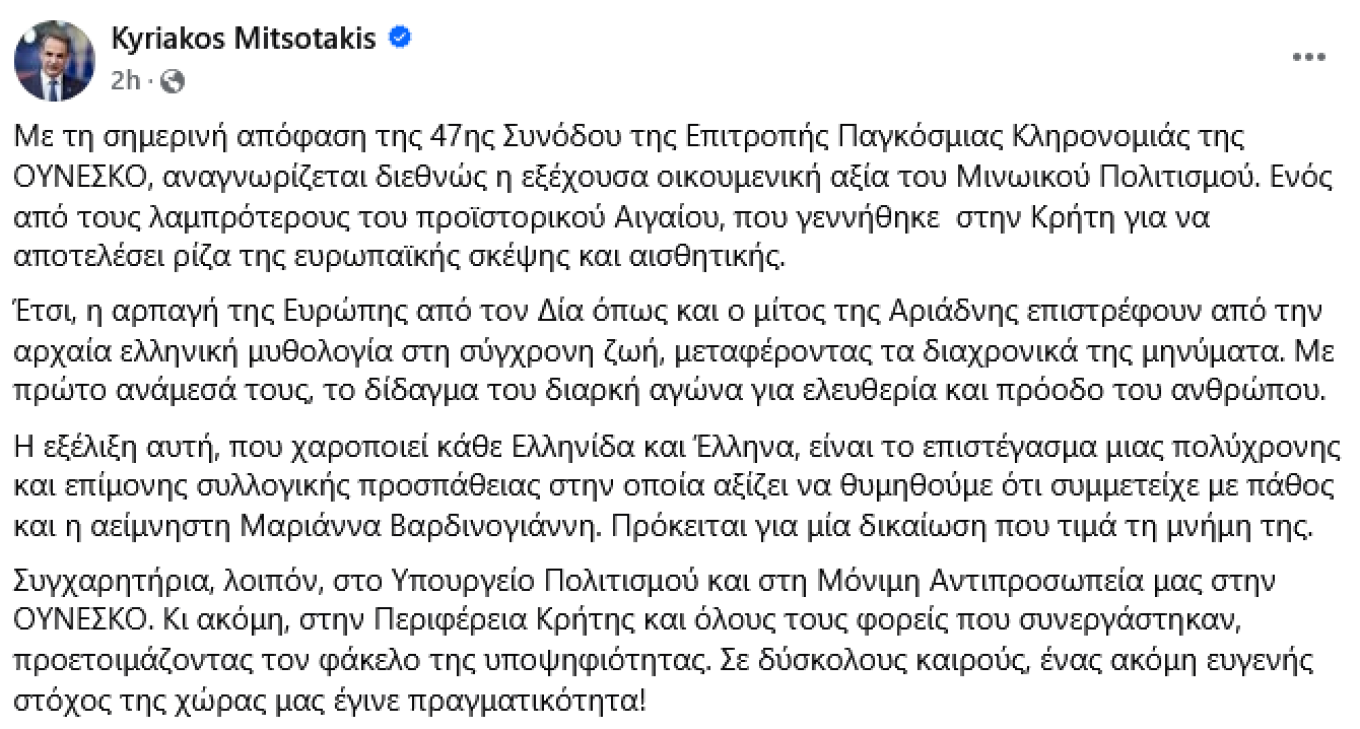
Commenting on UNESCO’s decision, Prime Minister Kyriakos Mitsotakis stated:
“With today’s decision by the 47th Session of the UNESCO World Heritage Committee, the outstanding universal value of the Minoan Civilization is internationally recognized—one of the most brilliant of the prehistoric Aegean, born in Crete to become a root of European thought and aesthetics.
Thus, the abduction of Europa by Zeus and Ariadne’s thread return from ancient Greek mythology into modern life, conveying their timeless messages. Chief among them, the lesson of humanity’s constant struggle for freedom and progress.
This development, which brings joy to every Greek, is the crowning achievement of a persistent and long-standing collective effort—one in which the late Marianna Vardinoyannis passionately participated. This recognition honors her memory.
Congratulations to the Ministry of Culture and our Permanent Delegation to UNESCO. Also, to the Region of Crete and all the bodies who collaborated in preparing the nomination. In challenging times, another noble goal of our country has become a reality!”
Statement by Minister of Culture Lina Mendoni:
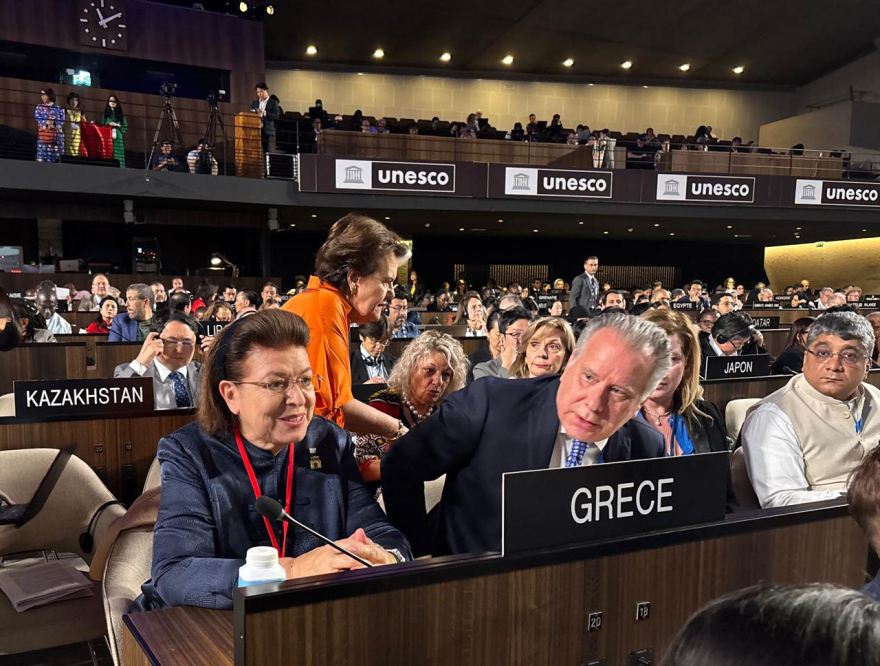
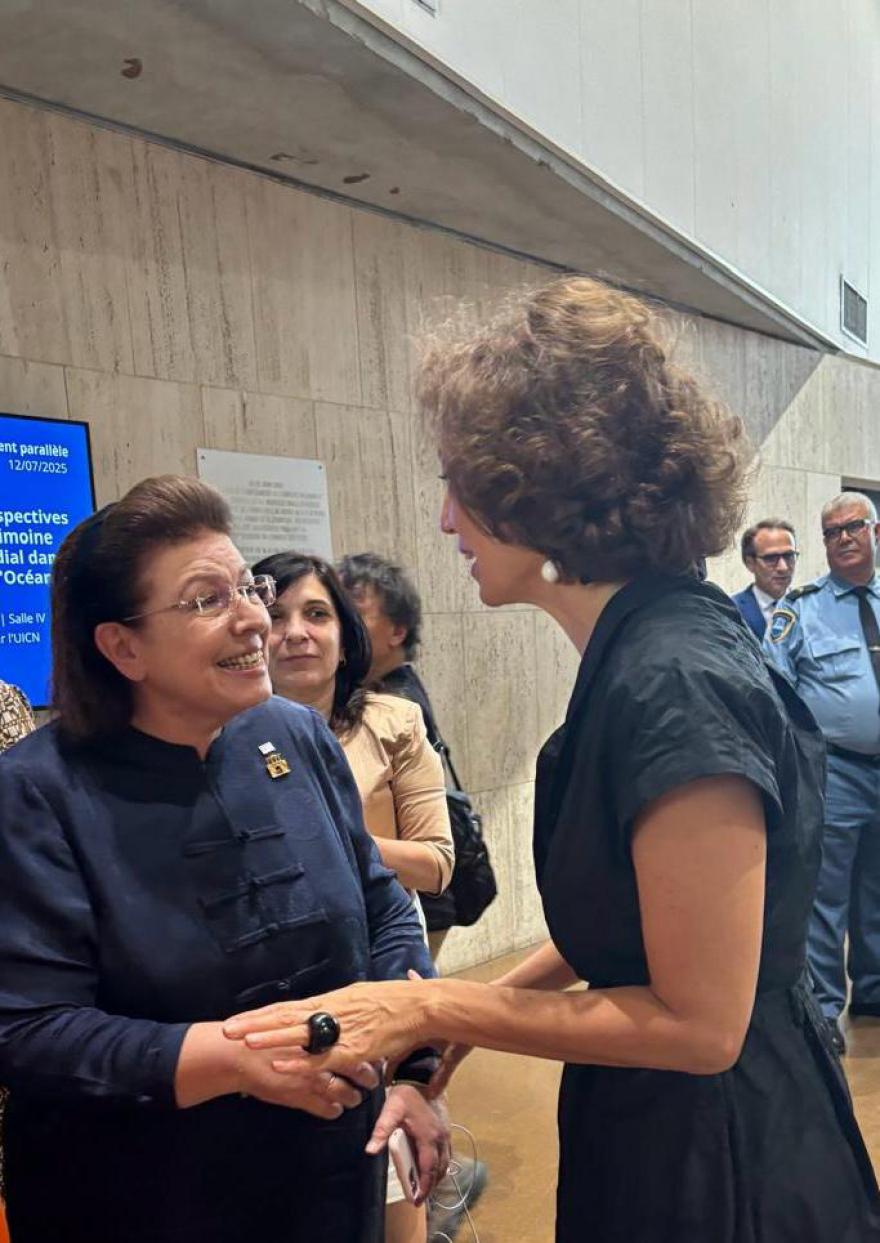
Present during the announcement of the inscription, Lina Mendoni stated:
“Today is a landmark day for our homeland, the Greek people, Crete, and the long arc of our civilization.
With the inscription of the Minoan Palace Centers on the World Heritage List, the Minoan civilization—one of the brightest of the prehistoric Aegean—is globally recognized and established. The impressive architectural remnants of the Minoan palace complexes across Crete are the authentic expressions of this civilization. The palaces were not merely administrative and economic hubs; they were centers of culture, art, and technological innovation. Creations of high artistry and monumental architecture, featuring advanced writing and administrative systems, and with strong trade and cultural ties to the Eastern Mediterranean peoples.
Highlighting the Minoan civilization allows us to better understand the origins of European cultural development, firmly establishing Crete as a cradle of civilization of global significance.
I sincerely thank everyone who contributed to this national achievement—from the institutional representatives of UNESCO and the World Heritage Centre (especially Director Lazare Eloundou), to the Ministry of Foreign Affairs, our Permanent Delegation (led by George Koumoutsakos), the Region of Crete (especially Stavros Arnaoutakis), and, of course, my colleagues in the Ministry of Culture—Elena Kountouri, Dina Benisi, Themis Vlachoulis—and our representatives on the World Heritage Committee, such as Eugenia Gerousi. Thanks to their hard work, deep experience, knowledge, and dedication, today we all feel exceptionally proud.”
The Minoan Palace Centers are the most emblematic element of the identity of Minoan civilization, one of the most significant prehistoric cultures of the Eastern Mediterranean, which developed over two millennia (2800–1100 BCE). The Minoan heritage—a repository and treasury of values, myths, and social ideals—has influenced artistic and intellectual thought over thousands of years.
The legend of the complex and labyrinthine structure designed for King Minos—a marvel of engineering—symbolized creativity and complexity and reflects the architectural sophistication and monumentality of the palaces. It remains to this day a global symbol of intricate organization in terminology and form. Likewise, Minoan art, with its naturalistic character, continues to influence creative expression worldwide in fields such as philosophy, painting, literature, music, poetry, theater, and cinema.
These palace centers are the most authentic and representative expression of flourishing Minoan society, offering evidence of early urban development and revealing complex socio-political structures organized around a hierarchical administrative system. They served as administrative, economic, and religious centers—their complex architectural forms, influenced by Egypt and the Near East, were designed to meet the diverse needs of a stratified society.
These monuments serve as timeless references in human history, offering material testimony to the development of early economic systems such as agriculture, animal husbandry, and maritime trade. They are also a valuable source for the earliest European writing systems—Cretan Hieroglyphic and Linear A—which originated on Crete in the early 2nd millennium BCE.
The Directorate of Prehistoric and Classical Antiquities was responsible for compiling the nomination dossier, in collaboration with the Ephorates of Antiquities of Crete and with the strong support of the Region of Crete. Foreign Archaeological Schools and directors of ongoing excavations in Crete made important contributions to the archaeological documentation. The National and Kapodistrian University of Athens (Department of Environmental Physics – Meteorology) greatly contributed to documenting climate change-related risks, while the academic community provided extensive expertise on specialized topics in Minoan archaeology.
The dossier was enriched with material willingly provided by local authorities, external collaborators, and experts. The Ministry of Climate Crisis and Civil Protection played a significant role in drafting risk management plans included in the Management Plan. Additionally, in excellent cooperation with the Region of Crete, a strategy titled “Integrated Territorial Investment (ITI): Cultural Routes of the Minoan Palace Centers” was developed, aiming to upgrade the visitor experience at the sites.