





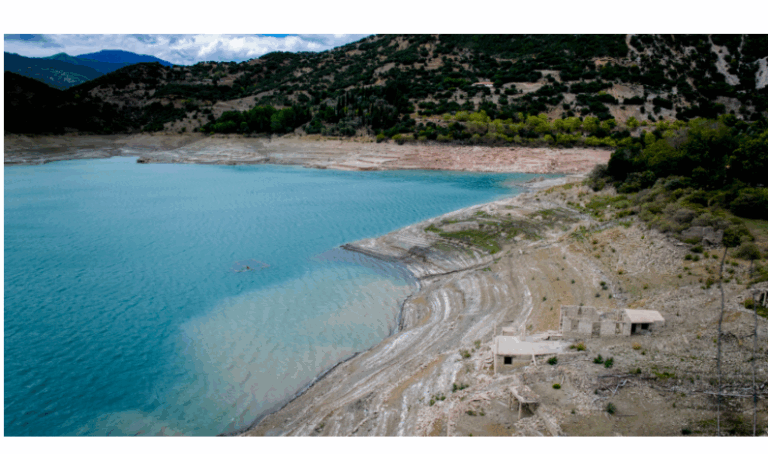
A Radical Shift in Water Management
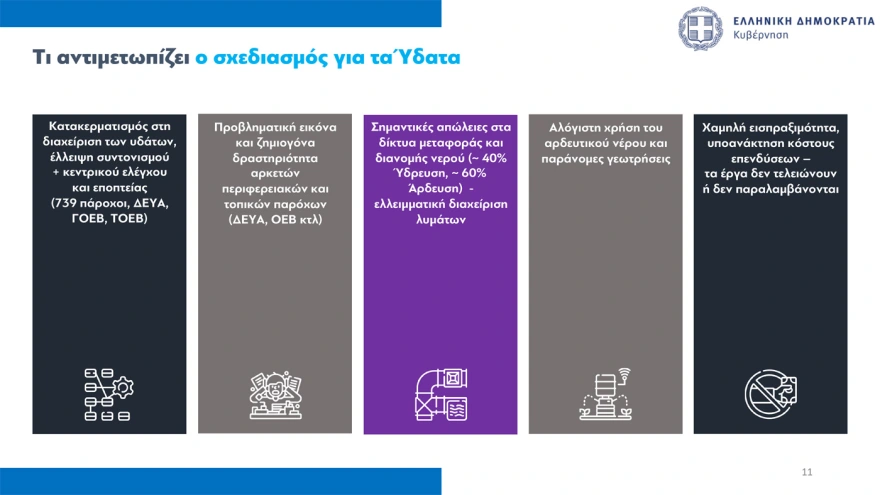
To tackle the fragmented responsibilities among various agencies, the government will overhaul Greece’s water management system. The new model aims to be more centralized, efficient, and investment-driven.
Modern technology and alternative methods of water production — such as desalination — will play a key role in the transition.
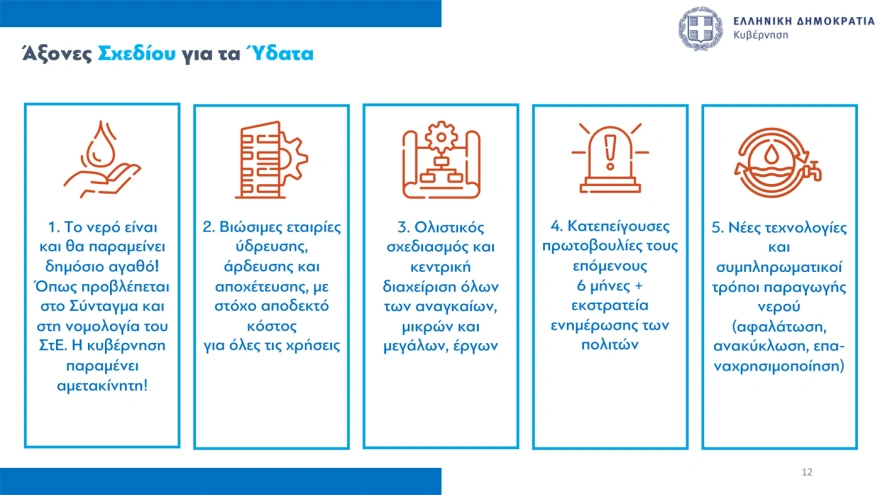
The Five Emergency Actions:
- Protecting Water as a Public Good
The Constitution and Supreme Court jurisprudence will continue to safeguard water as a public resource. - Sustainable Utility Companies
Water supply, irrigation, and sewage providers must operate sustainably while maintaining affordable costs for consumers. - Centralized Project Planning
A unified national framework will oversee both small and large-scale water infrastructure projects. - Immediate Measures Within Six Months
The government will launch an urgent action plan in the coming six months, coupled with a public awareness and education campaign. - Innovation in Water Production
Emphasis will be placed on new technologies and alternative sources like desalination, recycling, and water reuse.
Next Steps
The above strategic pillars will be further developed and specified in the coming weeks. These plans will also accelerate the implementation of already-approved or pending projects.
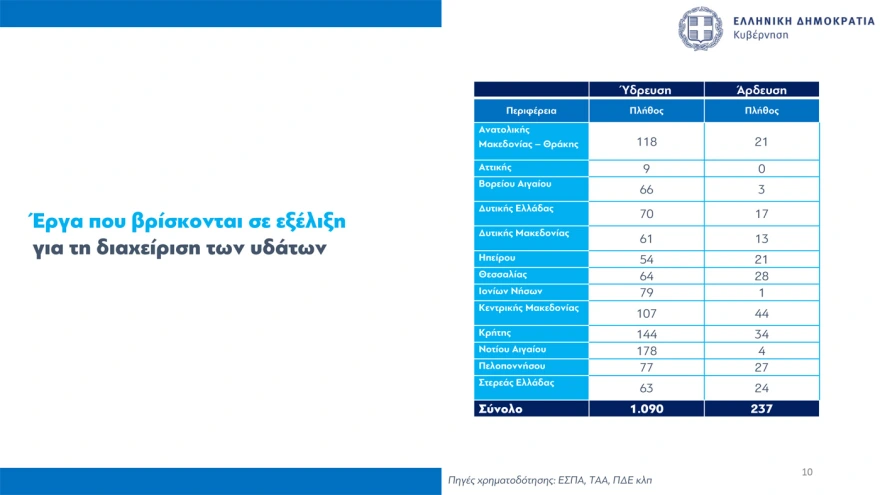
Currently, more than 1,200 water-related projects are in progress nationwide:
- 1,090 relate to water supply
- 237 to irrigation
These come on top of 278 projects completed since 2019.
Despite this progress, it is clear that further investments and a more coordinated national effort are essential to tackle this critical environmental and social challenge.
Key Highlights:
- Water Will Remain a Public Good
Prime Minister Mitsotakis emphasized that water is, and will continue to be, a public resource and a vital necessity — and must be treated as such. “Water is a public good and a resource of critical importance,” he stated. - Urgency of National Planning
Officials stressed the urgent need for a national strategy to address the water crisis, moving beyond short-term fixes to establish sustainable long-term planning. - Scientific Data and Global Rankings
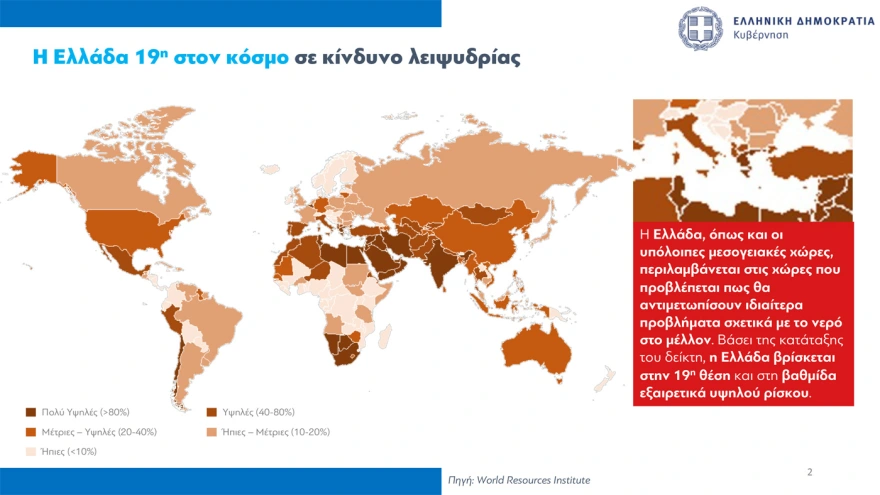
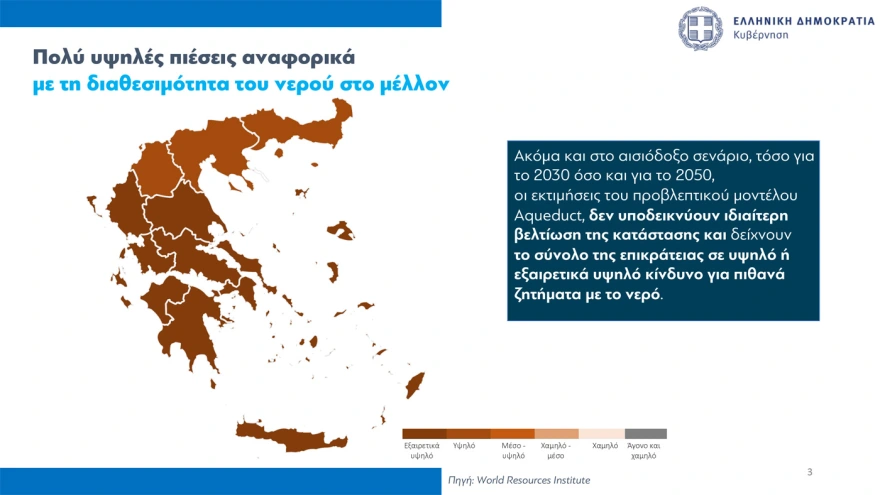
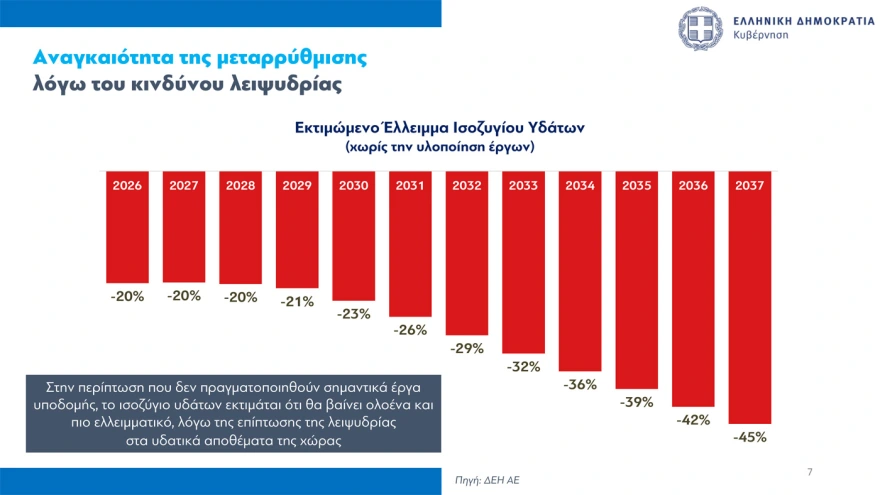
Scientific findings presented during the meeting showed the extent of the issue, worsened by the climate crisis — particularly across Mediterranean nations. Europe is the fastest-warming continent globally.
Greece now ranks 19th worldwide in terms of water stress risk.
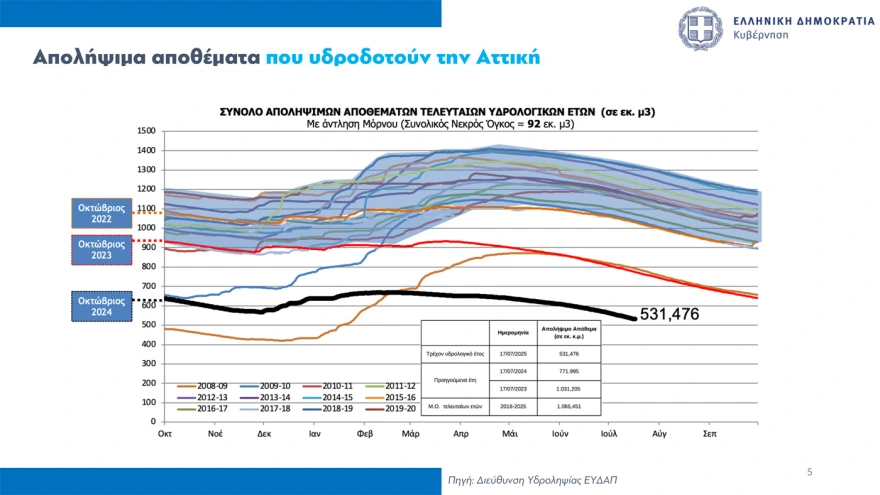
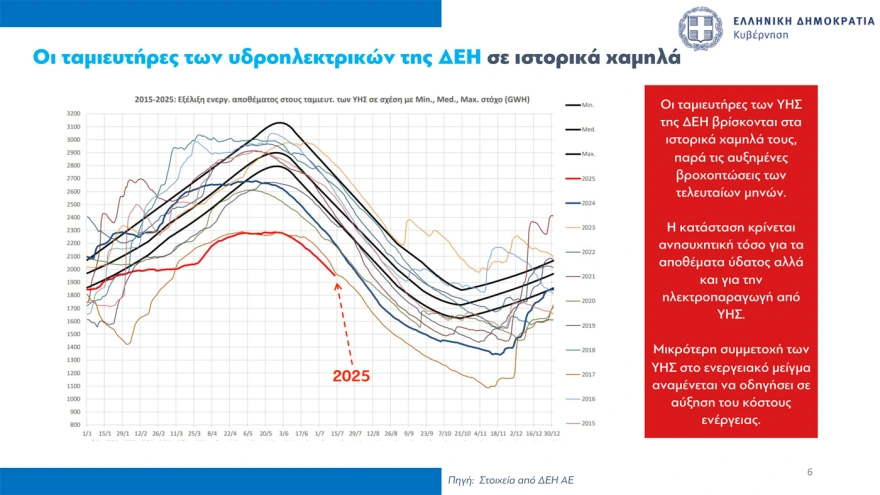
In Attica alone, water reserves have dropped by more than 50% compared to 2022, and dam levels are at record lows.

Ask me anything
Explore related questions




