A shocking incident occurred on July 11th in Donousa.
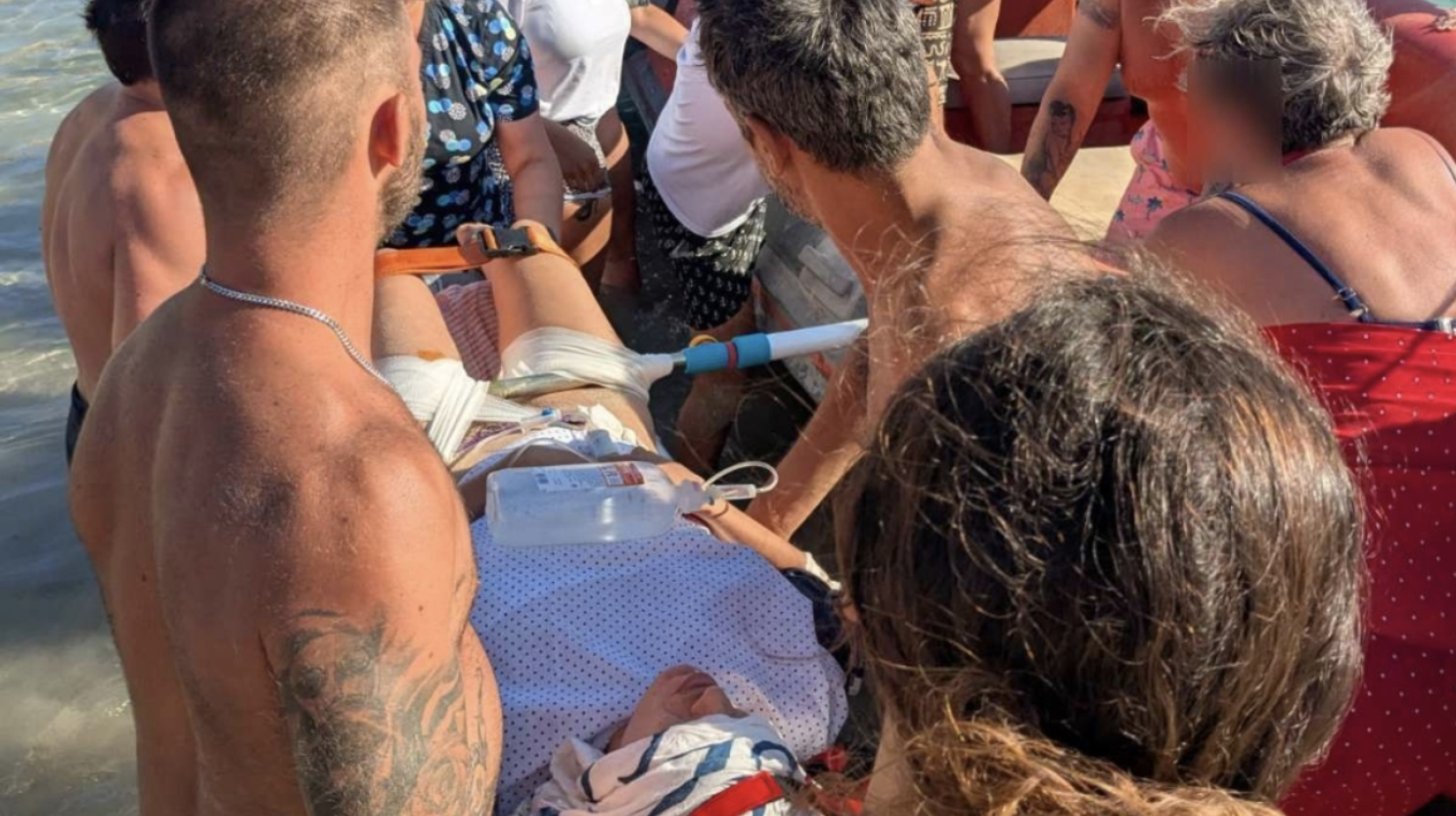
According to a report by local vacationers, a woman who was on a beach without road access was injured when a gust of wind swept a nearby umbrella, which then impaled her thigh.
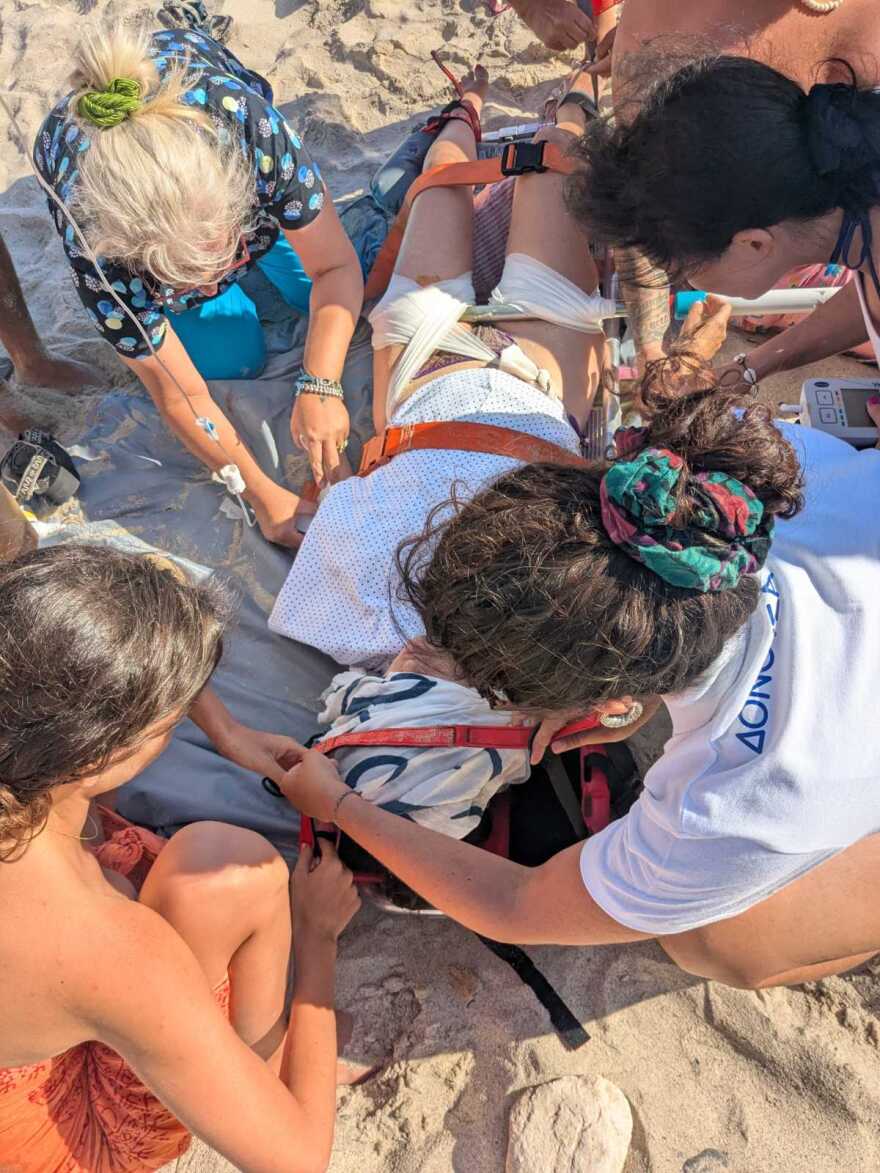
“The wound was deep and serious, as the umbrella pole had nearly pierced through the thigh from one side to the other. Bystanders stabilized the umbrella, while the island’s doctor and nurse, who arrived quickly via the boat that ferries people to the beach, dressed the wound and administered fluids, relieved to confirm the femoral artery had not been hit. However, the critical question remained: how could the woman be transported without removing the pole, avoiding the risk of uncontrolled bleeding?” the report stated.
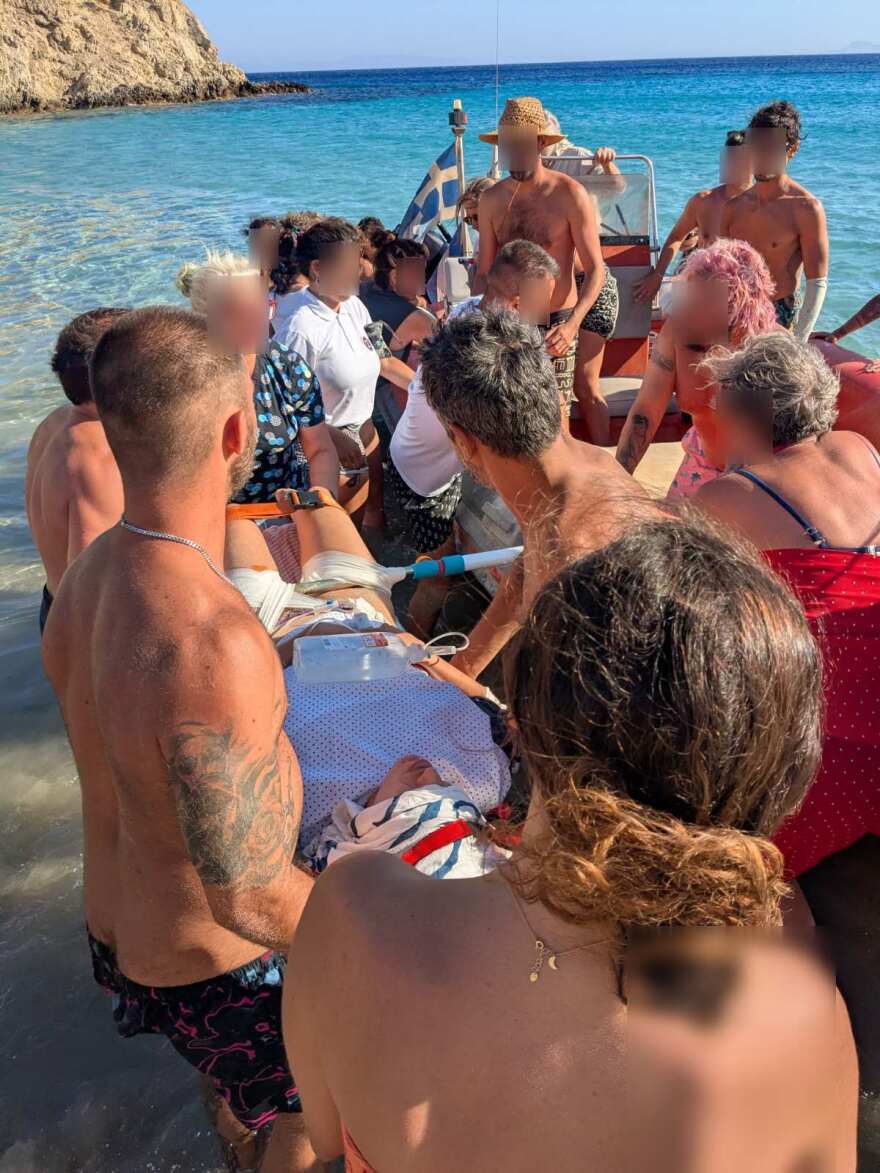
Eventually, the solution came from an 80-year-old man who approached the beach in his boat. Bathers acted as stretcher bearers and helped transport the young woman to the island’s helipad, from where she was airlifted to Red Cross Hospital, where she is now recovering.
See the photos:
Full report text:
“A serious medical incident in Donousa in recent days painfully exposed the health system’s unpreparedness in remote areas—and more specifically, the lack of any protocol for accidents on isolated beaches with no road access.
Shortly after 4 p.m. on July 11, the calm of the beach was shattered by an unexpected and shocking event.
A sudden gust of wind swept up a beach umbrella and launched it with such force that it impaled the thigh of a young woman sitting under a neighboring sunshade. The wound was deep and serious, as the umbrella pole had nearly pierced the thigh from one side to the other. Bystanders stabilized the umbrella, while the island’s doctor and nurse, who arrived quickly via the ferry boat that transports people to the beach, dressed the wound and administered fluids, relieved to find the femoral artery had not been hit. But the critical question remained: how could the woman be moved without removing the pole, to prevent the risk of uncontrollable bleeding?
Following communication with the rural doctor, the national emergency service (EKAB) informed them that a floating ambulance from Naxos could not approach the beach due to the lack of a dock. Even if it could, each leg of the trip to and from Naxos would take two hours—and that day, there was no on-call surgeon or anesthesiologist, so immediate surgery would not be possible. It was decided that the woman would be airlifted by helicopter to Red Cross Hospital in Athens—already an exceptional case for the area—but the question remained: how would she get from the beach to the island’s helipad?
On the island, as on many others, there is no protocol or plan for such emergencies. The Coast Guard had no suitable boat to reach the shore, and there is no Fire Department presence at all. A stretcher-bearer was also missing, as that position remains unfilled. Thanks to the swift response, coordination, and solidarity of the island’s residents, a private speedboat capable of reaching the beach was found and used to transport the injured woman. Bathers acted as stretcher-bearers, and onboard the boat were the doctor, the nurse, and volunteers holding the umbrella pole steady. The boat’s driver, who heroically took the initiative, was over 80 years old and had recent health issues himself, while waves and strong winds made the transfer even harder. Still, they managed to get her safely to Stavros and then to the helipad.
Luckily, since the pole hadn’t damaged the femoral artery, there was enough time to organize the transfer. Despite minor delays caused by the helicopter, the woman was eventually transported to Red Cross Hospital and is now safely recovering. The swift mobilization of the island’s people, the immediate response by the rural doctor, the help of those present, and the luck that prevented major bleeding are what saved her.
At the same time, however, the incident highlighted the inadequate planning and total absence of protocols for such cases. If no one with a boat had been willing to take responsibility, and if there hadn’t been people to act as stretcher-bearers, the outcome might have been very different.
Many people visit remote beaches every day without realizing that in the event of a serious emergency, there is no safe medical coverage. We cannot rely solely on the goodwill of locals or on luck. Institutional care, planning, and the necessary logistical support are needed so that human lives are not put at risk due to lack of coordination.
Let Donousa’s example serve as a catalyst for change—not just another story that gets forgotten like so many others. The purpose of this article is to highlight the urgent need for real and immediate solutions.”
Article by: Konstantinos Kontras and Aigli Katsikavela
Ask me anything
Explore related questions