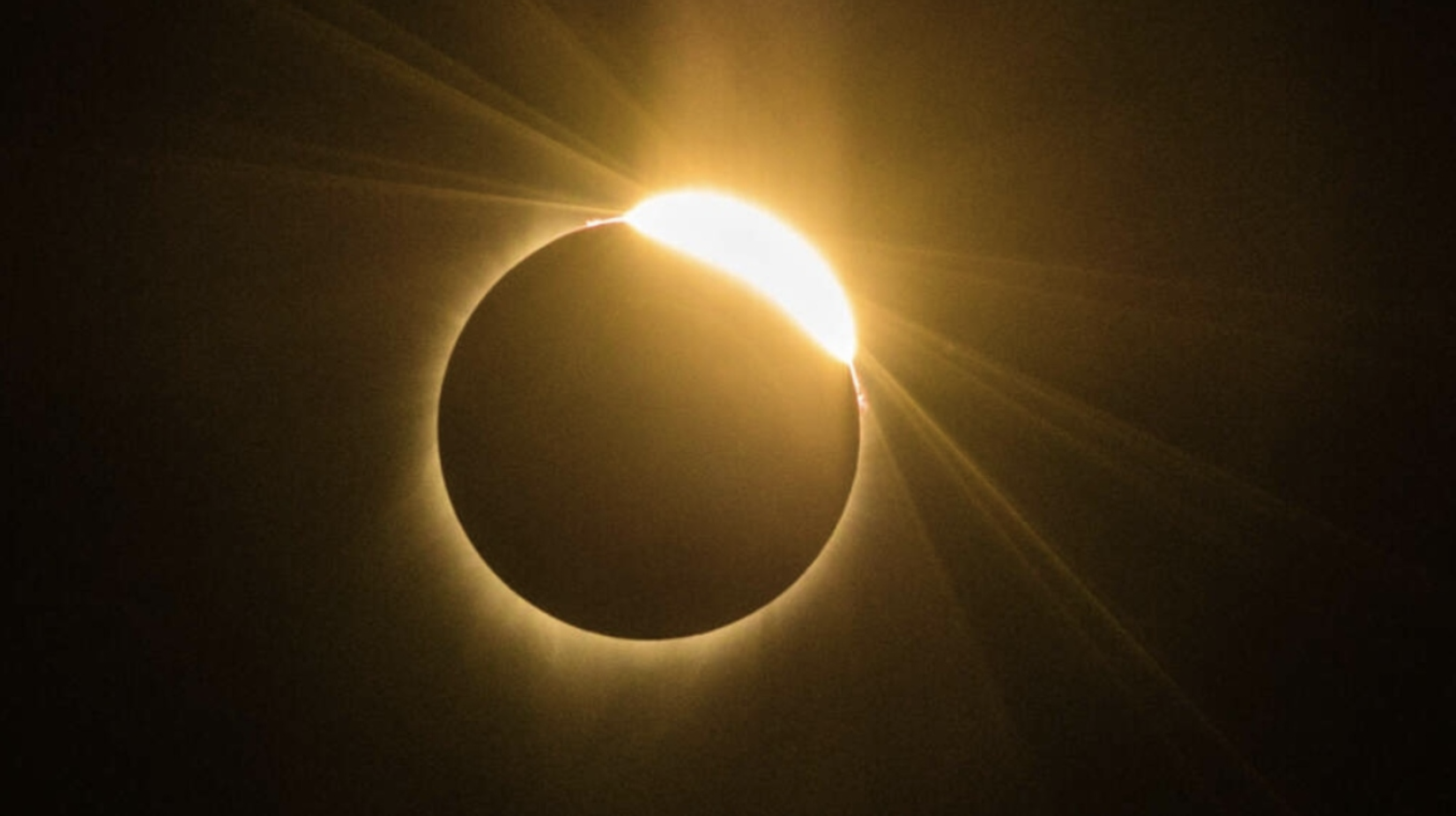
In about two years from now, on August 2, 2027, an extraordinarily impressive astronomical event is expected: a total solar eclipse, the longest of its kind since 1991.
This celestial phenomenon — already dubbed the “Eclipse of the Century” — will last 6 minutes and 23 seconds and will be fully visible from several countries in North Africa, including Egypt, Libya, Tunisia, and Morocco, hence its nickname: “The Great North African Eclipse.”
The Longest Solar Eclipse in Recorded History
Even more spectacular, however, will be another total solar eclipse set to take place on Sunday, July 16, 2186. During that event, the Moon will completely block the Sun for a staggering 7 minutes and 29.22 seconds, coming close to the theoretical maximum of 7 minutes and 32 seconds.
This will be the most prolonged total eclipse to occur over a 10,000-year period, from 4000 BC to at least 6000 AD.
The eclipse path will stretch across various regions in the Southern Hemisphere: it will brush past the southern Galápagos Islands (with Isla Española experiencing a total eclipse lasting 4 minutes), the northern part of Ecuador (where Isla Santa Rosa will be darkened for 3 minutes and 26 seconds), the capital Bogotá, Colombia (4 minutes and 50 seconds), central Venezuela, and northern Guyana, where the shadow will linger for 7 minutes and 4 seconds, just north of the city of Anna Regina.
It’s worth noting that the longest recorded eclipse in history took place on June 15, 743 BC, lasting 7 minutes and 27.54 seconds.
Ask me anything
Explore related questions