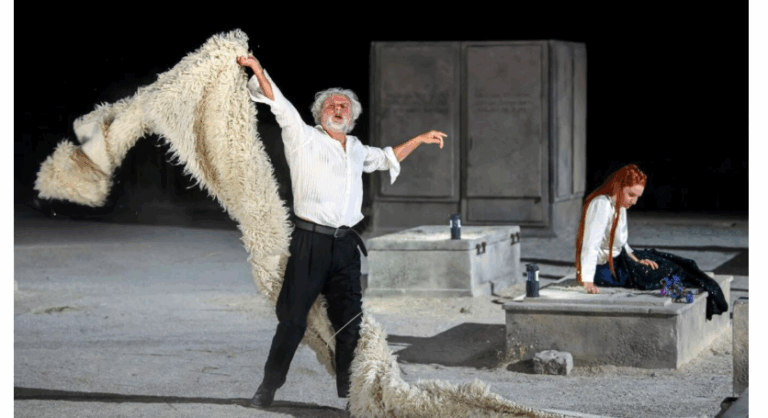
In a triumphant moment for contemporary Greek theater, director Yannis Houvardas’ bold reinterpretation of Sophocles’ two Oedipus plays received a rapturous five-minute standing ovation from over 17,000 spectators at the Ancient Theatre of Epidaurus this past weekend.
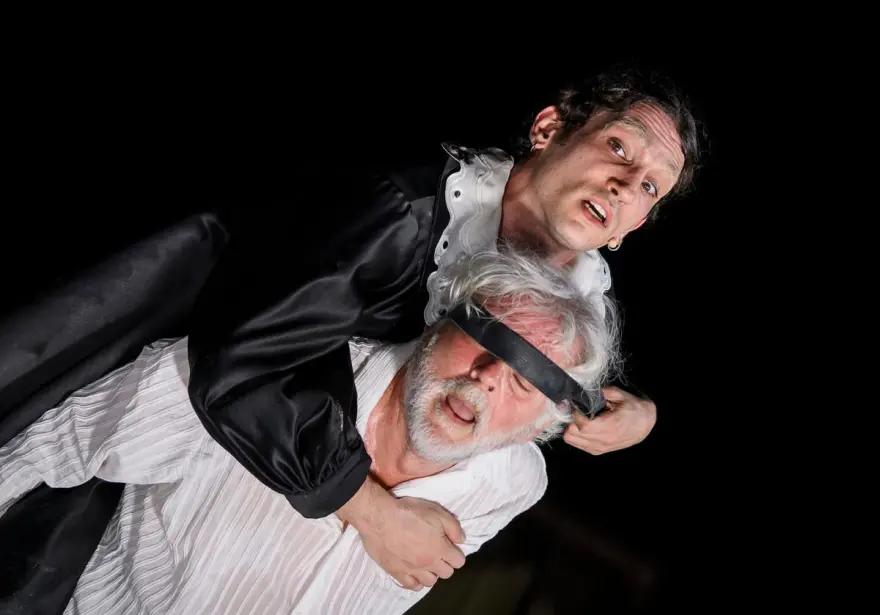
The production, an ambitious fusion of Oedipus Rex and Oedipus at Colonus, was performed on Friday and Saturday and featured a stellar cast including Nikos Karathanos, Karyofyllia Karabeti, Stefania Goulioti, Nikos Chatzopoulos, and Orestis Chalkias. Audiences, visibly moved and captivated, applauded the cast and creative team long after the final curtain.

Bringing together two of Sophocles’ most iconic tragedies in a single two-hour performance, Houvardas succeeded in crafting a cohesive, emotionally resonant narrative that delved deep into the psyche and fate of the tormented Theban king. This theatrical feat, daring in scope and rich in symbolism, was met with both critical and public acclaim.
The production was mounted as a co-initiative between the Athens and Epidaurus Festival and the cultural organization “Lykofos,” under the direction of Giorgos Lykiardopoulos, with the support of the Stavros Niarchos Foundation (SNF). Its aesthetic and atmospheric qualities — from lighting and set design to the fluid movement of the chorus — created a compelling stage experience that merged ancient drama with contemporary vision.

Among the standout performances, Nikos Karathanos delivered a deeply introspective Oedipus, embodying both the defiance of Tyrannus and the weariness of Colonus. Karyofyllia Karabeti’s regal presence added gravitas to the tragedy, while Stefania Goulioti, Nikos Chatzopoulos, and Orestis Chalkias each brought unique emotional layers to their roles.
For those who missed this landmark performance in Epidaurus, there is good news: the production will be staged at the Odeon of Herodes Atticus in Athens on September 13, followed by a nationwide tour. Audiences across Greece will have the chance to witness a staging that not only reinterprets ancient texts, but also reaffirms the timeless relevance of Sophocles’ work.

This moment marks not just a highlight of the Greek theatrical calendar, but a broader cultural statement — a celebration of heritage, artistic risk-taking, and the enduring power of collective storytelling in the cradle of drama.
Ask me anything
Explore related questions