

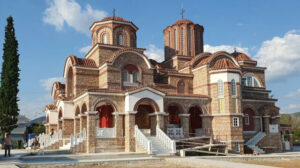
The Orthodox Church today commemorates a great despotic feast, the Metamorphosis of the Savior and in the refugee settlement of Nea Kromni, in one of the most beautiful suburbs of the city of Drama, a special church, now directly connected to Pontian Hellenism, is being celebrated. The reason is the Lavrentian Monastery or Nea Soumela, whose church is commemorated at the Metamorphosis of the Savior.
It was the eve of the great celebration and the joy of the hundreds of believers, members of Pontian clubs and associations who crowded the precincts of the imposing monastery, was diffused on their faces. As for the first time, after its thorough reconstruction by the late Metropolitan Drama Kyros Pavlos, the church opened its doors to believers, pilgrims and ordinary visitors.
It is a monumental temple that arouses the admiration of the visitor with its impressive mosaic icons and veteran inscriptions, the orthomorphisms, the ornate relief iznik tiles, and the symbolic relics that adorn it. Throughout the temple, there is a pervasive sense that Podos remains a living reality and not just a forgotten history. While there are clear references to the genocide of Pontic Hellenism and the expatriation from their unforgettable homelands.
Entering the main church, the visitor sees a cross carved in the stone with the date 1902, which the blessed Metropolitan of Drama brought in 1997 from Kromni of Pontus, from the church of the Transfiguration of the Savior, of the Alhazanton settlement. He placed it in the infrared of the holy church and it is surrounded by the weeping figures of the Virgin Mary and St. John Chrysostom accompanied by a verse of a well-known Pontic song: “NO CLAIS, NO CLAIS, NO CLAIS, MY YOUNG MAN, AND I’M GETTING THERE – THE ROMANIA, IF IT’S ALWAYS BEHIND ME, WILL BE ANOTHER”.
In the chapel, on the west side of the church, with the wooden carved iconostasis, dedicated to the Assumption of the Virgin Mary, there is a unique representation of Pontus made of stones and underneath it is the inscription: “I am drying up my heart in the LARRYGX if I have been saved from you, O PATRIA PONTIA EARTH”. The phrase ‘Let my larynx dry up if I forget you, O Pontian land’ is an archaic expression meaning ‘Let our throats dry up if we forget you, O Pontian land’. It is a curse, which expresses loyalty and love for the homeland, in this case, Pontus.”
The original temple that was constructed was the first attempt to revive Panagia Soumela of Pontus in the 1930s. It was founded by the then metropolitan of Chaldia, Lavrentios Papadopoulos from Varenoi of Kromni (1922-1928), hence its name Lavrentiani.
A church that will keep the memory of Pontos unquenched
Lavrentios established the first church in memory of Panagia Soumela in Greece, placing the first copy of the icon before it was even brought to Greece from Pontus. That is why he named the monastery Nea Soumela. The first katholikon was consecrated in 1927, but was demolished in 2006 due to structural problems, so that a new katholikon could be rebuilt, commensurate with the weight of the monastery’s history associated with Panagia Soumela of Pontus.
Speaking to APE-MPE, Professor of History and scientific collaborator of the Chair of Pontian Studies of the Aristotle University of Thessaloniki, Theodosis Kyriakidis, underlines: “As it happened in many areas of Macedonia and Thrace where refugees were settled, refugee metropolises who also followed the path of refugeeism along with their flock were placed or transferred with them. One of them, Metropolitan Laurentius of Chaldia, settled in Drama and created a new monastery, the so-called Laurentian or New Soumela, to preserve the memory of Pontian Hellenism there.”
“The one who worked with unsurpassed zeal, tirelessly, for the memory of the Pontian Hellenism in Drama”, continues Mr. Kyriakidis, was the late Metropolitan of Drama. He renovated the New Soumela from the ground up in luxury and made sure to gather, apart from rare relics of Pontos, all the deceased monks of the old Crusader monastery Soumela of Matsouka in Pontos.”
The first founder of the monastery was Metropolitan Lavrentios of Chaldia
The first benefactor of the monastery, Lavrentios, dedicated the first church, as late as 1927, to the memory of the victims of the Genocide of the Pontian Hellenism, even placing on the eastern side the inscription.
The completion of the construction of the impressive cult building, built in the style of Athonite churches, which dominates the western entrance of Drama, came to an almost violent halt after the unexpected death of Metropolitan Pavlos. However, it will certainly continue to be a spiritual mound of oblivion and a sacred place that keeps the memory of Pontus unquenched. Within the walls of the monastery, the pain of uprooting resonates, but also the hope of continuity, which will be expressed through the liturgical life, pilgrimages and cultural activities that it will host from now on.
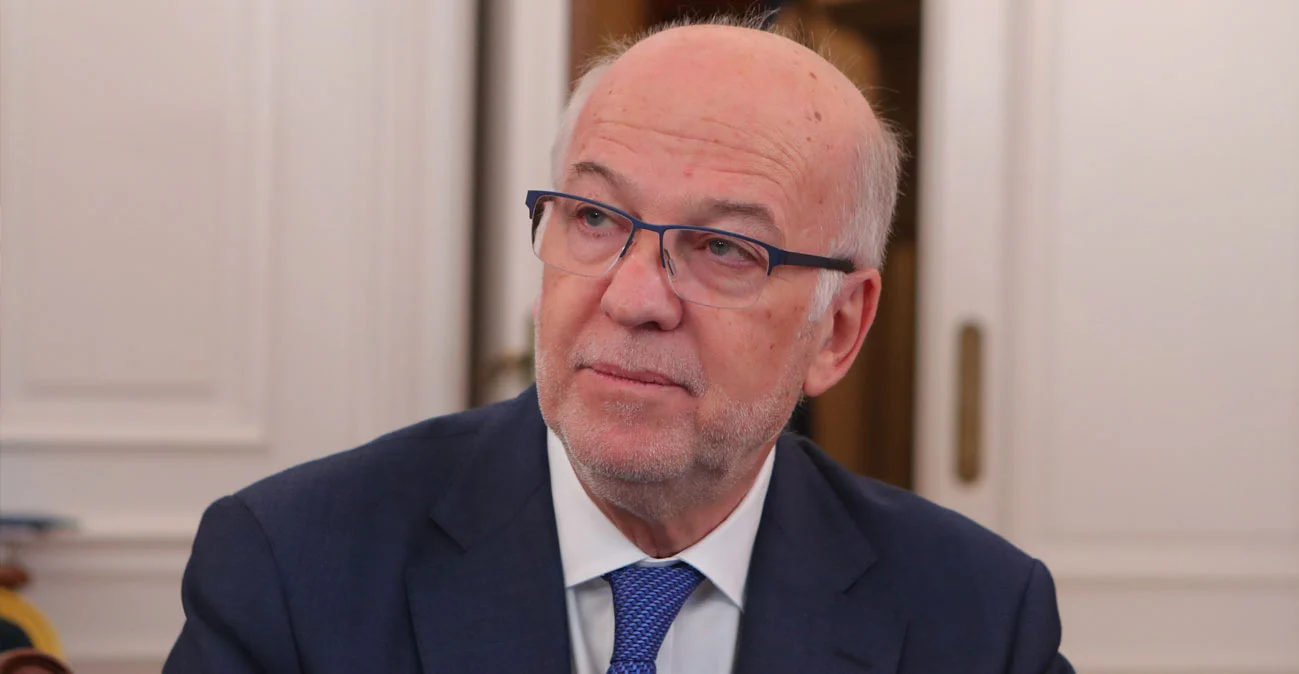
The new Metropolitan of Drama, Mr. Dorotheos, is making every effort to continue the work of his predecessor, to honour the memory of the first founder of the monastery, Metropolitan Laurentios of Chaldia, and of two of the last monks of Panagia Soumela, Abbot Anthimos Masmanidis and Hieromonk Polycarp Adaktylou – Parmaxous, who later settled in Nea Soumela.
The retrieval of the sacred relics of Metropolitan Lavrentios a few days ago, the glorious celebrations both on the eve of the feast and today, with the celebration of the solemn Divine Liturgy, show the interest and effort of the pastor of the critical Drama.
Ask me anything
Explore related questions