Coffee, the beloved daily habit for millions of Greek consumers, continues to become more expensive, inevitably following the global trend that has caused prices to skyrocket. Already this year, the price of coffee has increased by 25%-35%, following a more than doubling during 2024. This is attributed to many factors, chiefly the reduction in global production — and therefore supply — while demand increases. This is the basic law of the market, which pushes prices upward.
So, coffee is getting more expensive, and a key reason is the shrinking available quantity. The question is whether and to what extent the price surge will impact the Greek market, given that for Greeks, at least for now, the market’s resilience remains impressive. It’s a €4–4.5 billion market, with 10% in direct sales and the rest in consumption through all forms of foodservice.
It’s no coincidence that coffee in all its categories — Greek, instant, espresso, filter — not only remains high in price but that the outlook for the near future is far from optimistic. This is confirmed by the July inflation data showing coffee as one of the products contributing to inflation. Recent price hikes have ranged between 10% and 12%.
The picture on shelves and in foodservice
The first new wave of price hikes for coffee this year, ranging from 10%–15%, became apparent in early February. Companies had informed both organized retail and foodservice in time — the latter covering served coffee and takeaway services.
A trip to the supermarket confirms this reality. Instant coffee, one of Greeks’ favorites, has reached €9.22–€9.58 for the most popular 200-gram packaging, with the psychological €10 mark no longer far off.
In fact, the decaffeinated version of the same package averages €9.63. Greek coffee costs €4.03–€4.68 (for 194 grams), while filter and espresso coffees are similarly priced, depending on the variety, aroma, etc.
A similar pattern appears in small but cumulatively significant — because they’re successive — price hikes at takeaway coffee shops and cafés, where Greeks strongly show their preference for various coffee types.
In an earlier Kappa Research study for the Hellenic Coffee Association outlining Greek coffee consumer profiles, it was found that 77% believe coffee is expensive (52%) or very expensive (25%), versus just 21% who consider it reasonably priced and 2% who call it cheap. For takeaway locations, the differentiation is notable, but 53% of consumers still find the price expensive (43%) or very expensive (10%), compared to 40% who consider it fair and 5% cheap.
From the same study, it emerged that 84% of Greeks drink coffee daily. Half of them consume more than one coffee a day — two or more. 56% drink coffee at home, 25% at work, and 18% elsewhere, like at a shop or on the go.
And of course, this habit — even outside the home — wasn’t affected by the lifestyle changes and restrictions introduced a few years ago by the pandemic. Coffee sales only dipped 5.4% in 2020 due to COVID-19 but have since steadily risen, albeit slowly (1.3% in 2023 and 1.6% in 2024).
There is, however, a noticeable shift from the HoReCa market (restaurants, hotels, cafés) toward home consumption. This is attributed to inflationary pressures and the resulting drop in consumer purchasing power.
In 2024, according to market research firm Circana, coffee sales revenue reached €342 million, a 2% increase from 2023. Greek coffee remained the top seller (7,100 tons, €110 million). Instant coffee followed with 2,900 tons and €110 million, while espresso (including capsules) reached 2,300 tons and €86 million.
All segments are on an upward trajectory, except for filter coffee, which slightly declined to 2,060 tons and €36 million in sales.
Global price hikes
On the New York and London stock exchanges, international coffee prices — specifically futures contracts — reached in March the highest levels in 55 years for both Arabica (+111.5%) and Robusta, used in instant coffee and espresso blends (+81.45%). Fears of further increases are growing.
Just this year, Arabica’s price rose by 25% and Robusta’s by 11%. These two coffee types dominate global markets (in a 65%-70% to 30%-35% ratio) depending on production, with Robusta being more heat-resistant and containing nearly double the caffeine (2.7% vs. 1.5%).
In reality, both large coffee conglomerates and smaller processing companies had hoped for price drops and higher profits — but were proven wrong. The primary reason is climate change. Prolonged drought, water scarcity, and deforestation caused shortages in producing countries that remained high for a long time. Due to Brazil and Vietnam alone, global coffee bean exports fell 20.9% from December 2023 to December 2024.
Overall, due to climate change, the outlook for the coffee market is bleak even mid-term. Studies show that 50% of land currently suitable for coffee cultivation may disappear by 2050. In Central American countries alone, one-third of today’s plantations is expected to vanish within 15 years.
China, EU, and tariffs
The gap between global coffee supply and demand has widened as markets like China and India have rapidly entered the coffee scene, turning away from their national drink — tea.
Coffee market experts also point to a new EU Directive on deforestation as another cost-boosting factor.
Under this legislation, traders and producers must prove that coffee imported into the EU hasn’t been grown on land cleared after 2021 — particularly land deforested in the Amazon or elsewhere globally — contributing to greenhouse gas emissions and forest degradation.
Additional problems
In Greece, coffee prices are further inflated by the high VAT (24%) that was reinstated for served coffee from July 1, 2024, while remaining at 13% for takeaway. Added to this is the Special Consumption Tax (SCT), introduced on January 1, 2017, by the SYRIZA government.
The SCT adds €2 per kilogram of raw, unprocessed coffee, €3 per kilogram of processed coffee, and €4 per kilogram of instant coffee or preparations based on coffee extracts, distillates, or concentrates — whether imported or locally produced.

It’s estimated to generate €140 million annually, meaning over €1.12 billion has been collected in state revenues from 2017 to the end of 2024. According to market experts and the Hellenic Coffee Association, abolishing the SCT would reduce shelf prices by at least 10%.
The market map
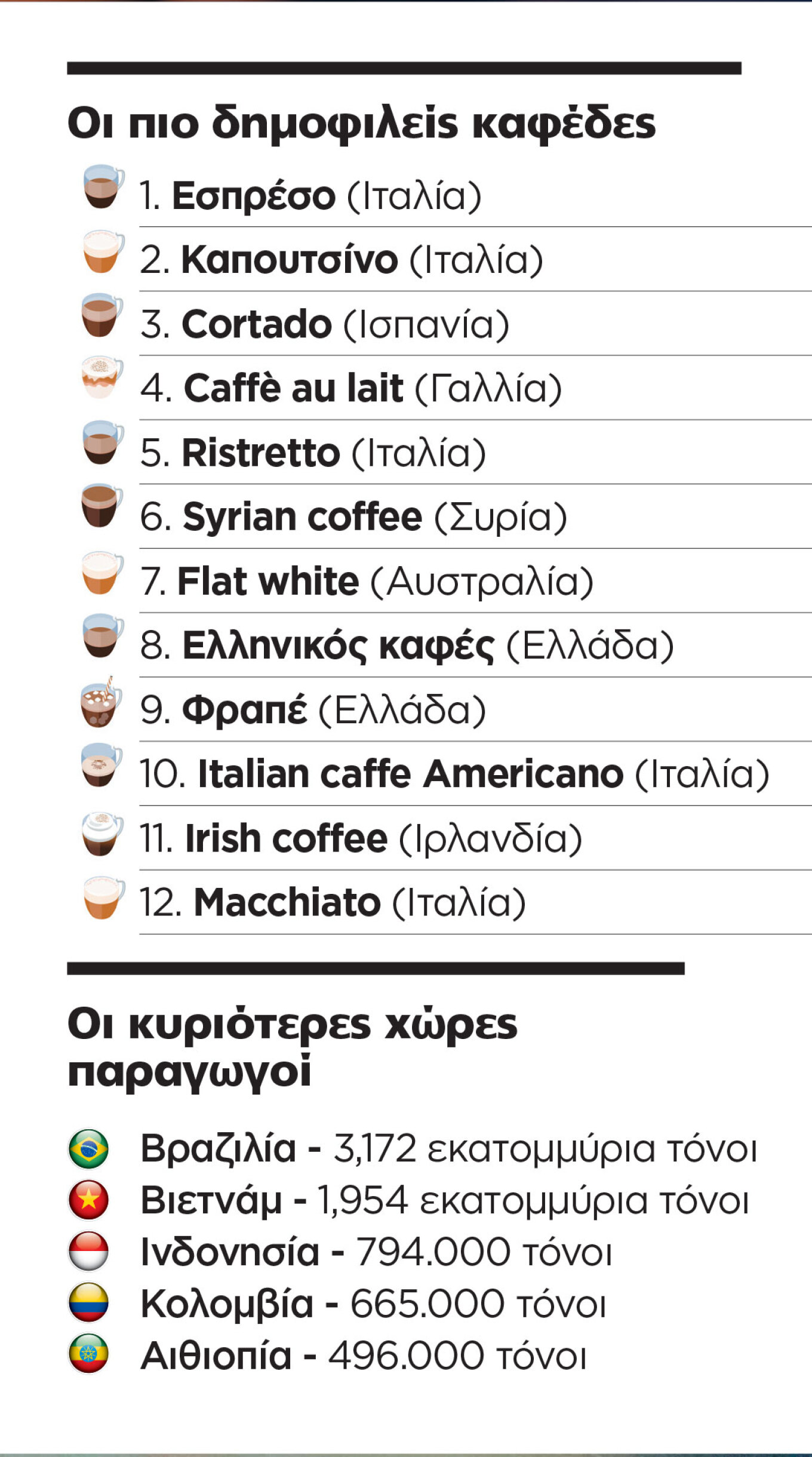
According to 2022 data from the ICO and the U.S. Department of Agriculture, Brazil tops the list of coffee-producing and trading countries, with 3.172 million tons produced. Second is Vietnam, primarily producing Robusta, mainly in the central highlands like Dak Lak, with 1.954 million tons.
Third is Indonesia, focused on Robusta, with major growing areas in Sumatra, Java, and Sulawesi, and 794,000 tons of production.
Colombia ranks fourth, known for its high-quality Arabica coffee, with 665,000 tons produced.
Ethiopia is fifth, producing mostly Arabica in regions such as Sidamo, Harar, and Yirgacheffe, with 496,000 tons.
Frappe ranks ninth
According to Taste Atlas, the list of the world’s most popular coffees is topped — unsurprisingly — by the Italian espresso and cappuccino in first and second places.
Third is the Spanish cortado, a small espresso with an equal amount of steamed milk to cut the bitterness.
Fourth is French caffè au lait, equal parts espresso and hot milk, typically without foam — unlike the caffè latte. Following are the Italian ristretto, Syrian coffee, and Australian flat white.
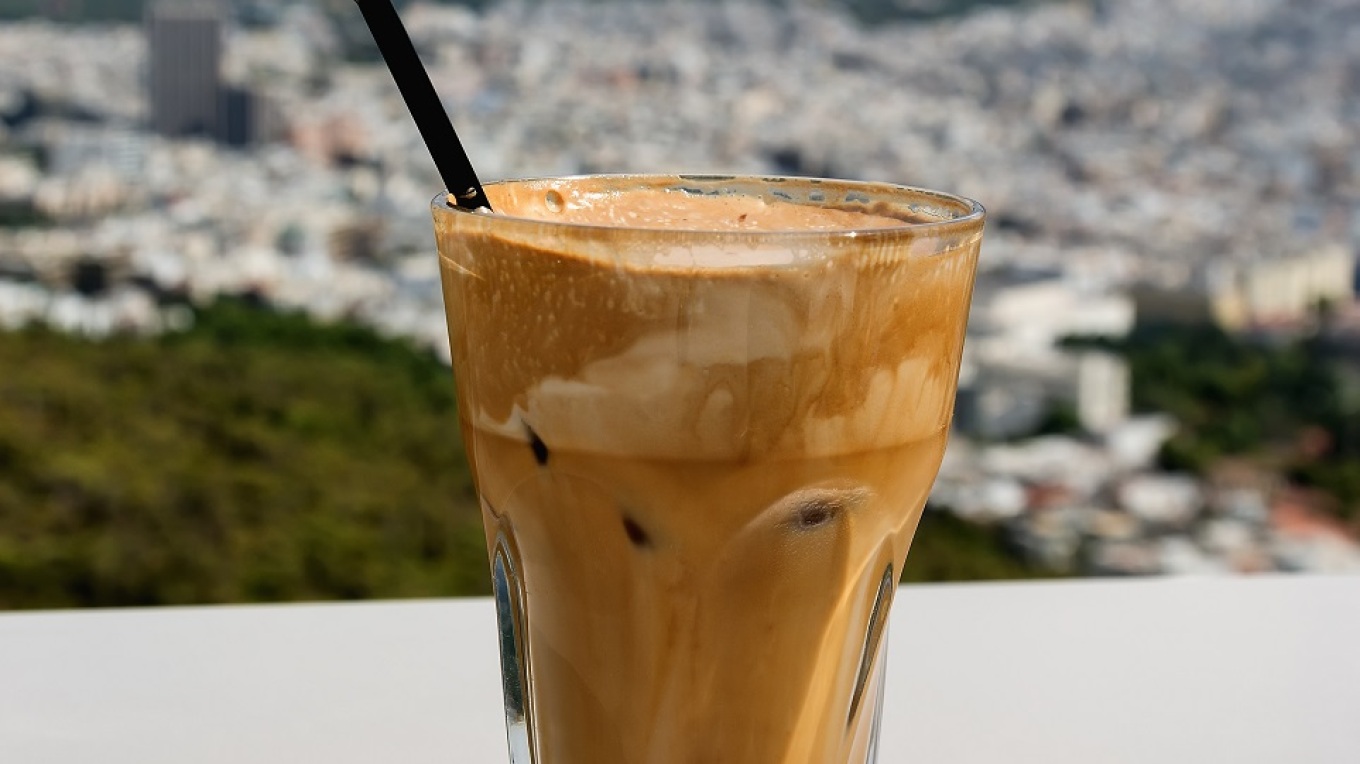
The Greek coffee ranks eighth and the legendary Greek frappé ninth — ahead of the Italian Americano, Irish coffee, and Italian macchiato.
Ask me anything
Explore related questions