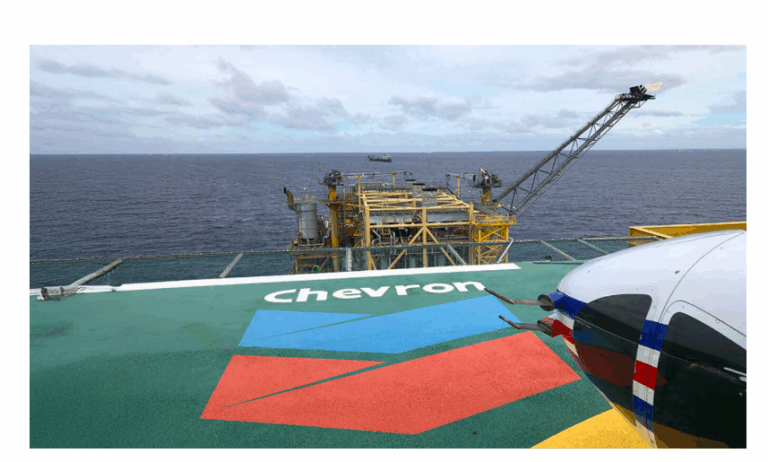
The deadline for the tender for the marine plots south of the Peloponnese and Crete expired at 5 pm today, with two companies, Chevron and Helleniq Energy, jointly bidding for the plots south of the Peloponnese and Crete.
Chevron’s bid submission is a milestone for Greece’s energy and geopolitical course. The American energy giant, with experience in major projects in the Mediterranean and internationally, sends a clear message of confidence in Greece and its prospects as an energy hub. Greece, with its strategic position at the crossroads of Europe, Africa, and the Middle East, is emerging as a critical link for the energy security of the European Union.
Helleniq Energy, through its subsidiary Helleniq Upstream, is also participating in the tender, confirming its commitment to be a key partner in the national strategy for hydrocarbon exploration and exploitation. The presence of a strong Greek group alongside an international energy leader creates prospects for synergies and strengthens the country’s position in its geopolitical and energy environment.
The geopolitical dimension
Chevron’s choice to locate south of Crete is of grave importance for the Eastern Mediterranean. Turkey continues to make unfounded claims of a “Blue Homeland”, attempting to challenge Greek sovereign rights through the Memorandum of Understanding with Libya. By its presence, Chevron acts as a strategic deterrent: the involvement of an American multinational makes it clear that any challenge will now touch American interests.
Of particular importance is the “South Crete II” block, part of which overlaps with the area of the Turkish-Columbian memorandum. If this falls to Chevron, it would constitute a practical annulment of the Turkish maps, confirming that the median line, as established by Greek law and international law, is the real boundary between Greece and Libya.
Prospects and challenges
The maritime blocks cover more than 46,000 square kilometres, with geological structures that point to large deposits in the Eastern Mediterranean, such as Egypt’s Zohr and Israel’s Leviathan.
What is clear is that the gestation period for the concessions is not short, as it will take up to 5 years for the first well to be drilled, as critical and time-consuming permitting and environmental study processes precede.
Ask me anything
Explore related questions