Disused military camps across the country are changing purpose—and residents—as the second phase of the Armed Forces’ New Structure, promoted by the Pentagon, releases thousands of buildable plots, now intended for military and social housing.
According to the Armed Forces’ housing program, the military residences will be constructed in four phases, with the first two already underway, including the construction of 1,059 apartments. Of these, 121 have already been delivered, with the total cost of the first wave of military housing amounting to €100 million.
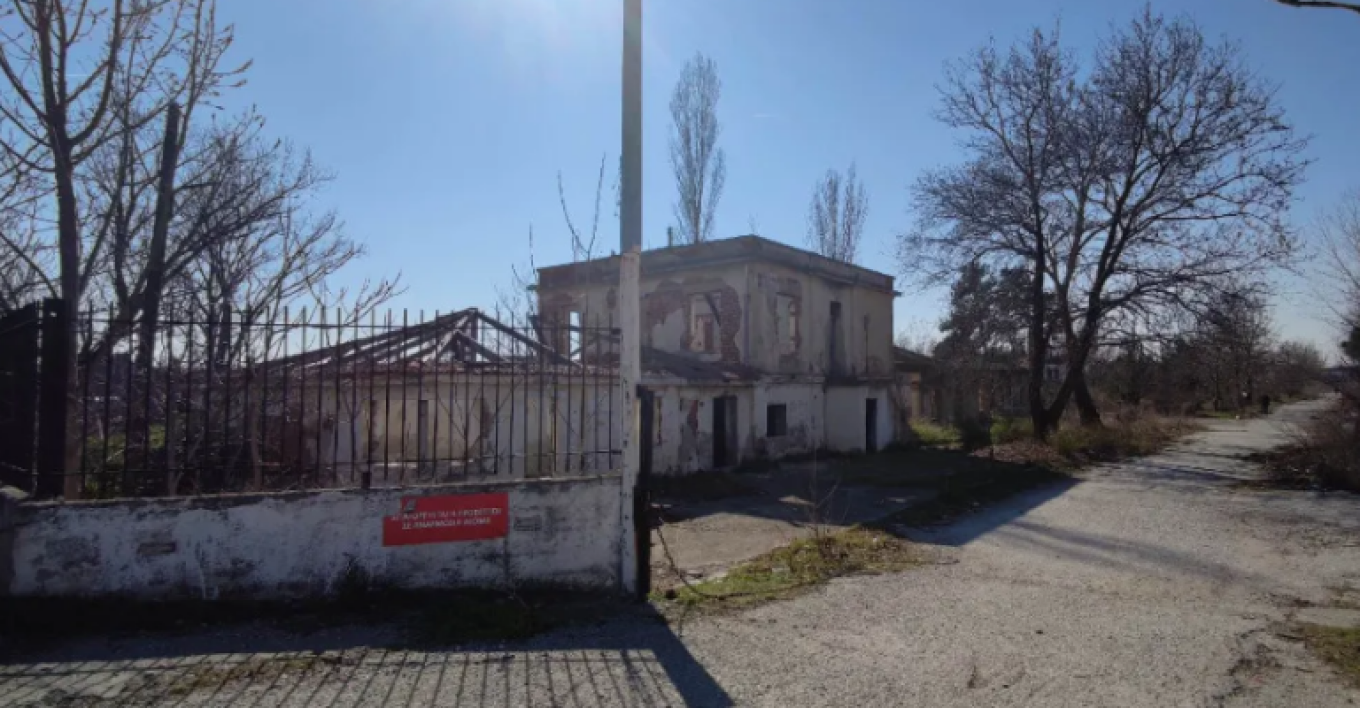
Camp “Ziakas,” Municipality of Kordelio–Evosmos, Thessaloniki
Plot size: 128 acres, construction of 600 apartments in total.
The map
Priority in the program’s launch was given to border regions, with particular emphasis on the islands, with construction underway as follows:
- 215 apartments in the islands of the Southeastern Aegean (Leros, Kos, Tilos, Rhodes, Karpathos, Kastellorizo)
- 224 apartments in the Northeastern Aegean (Lemnos, Lesvos, Chios, Ikaria, Samos, Agathonisi)
- 285 apartments in Eastern Macedonia and Thrace (Xanthi, Komotini, Orestiada, Didymoteicho, Soufli, Alexandroupoli, and Samothraki)
- 39 apartments in Central Greece (Skyros)
- 10 apartments in Central Macedonia (Thessaloniki)
- 36 apartments in Thessaly (Larissa)
- 26 apartments in the Peloponnese (Arachos, Kalamata)
- 224 apartments in Attica
According to the Ministry of Defense’s timeline, most of the above residences will be delivered to Armed Forces personnel by the summer of 2026, as the conditions faced during transfers are unprecedented. The housing shortage—even for high-ranking officers—has forced many, especially on islands in the Northern Aegean, to rent property until late May and then scramble for shelter once landlords reclaim their homes for summer tourist rentals.
Conditions for military staff are even more difficult compared to teachers, since the school year ends early in summer, allowing substitute teachers to return home, but not active Armed Forces officers. Under this framework, the program’s third and fourth phases foresee the construction of 1,000 additional apartments, 560 of which will be in the Eastern Aegean islands.
Announcements
The completion target for the additional 1,000 homes is September 2027. Defense Minister Nikos Dendias announced midweek the construction of another 600 homes at Camp Ziakas in western Thessaloniki by 2028, to initially house military staff and later citizens, alleviating the broader housing crisis.
“Ensuring better wages and living conditions for the personnel of our Armed Forces is a key priority—if not the top priority of the 2030 Agenda,” said the Defense Minister, adding that the Armed Forces housing program’s first phases will be “completed very soon, by summer 2026, in less than 12 months from now.”
It should be noted that the Ministry of Defense intends to allocate 15% of the above residences to public-sector workers—doctors, teachers, and healthcare staff—who are unable to serve in border or island regions due to high costs, leaving them in deadlock in recent years.
The solution
The housing shortage has been a central concern for the government. Beyond the military housing under construction, the Ministry of Social Cohesion and Family is advancing its social housing plan through the “Social Antiparochi” bill currently under debate in Parliament. “We are opening the way for Social Leasing, laying the foundation for a sustainable housing policy,” said Minister of Social Cohesion and Family Domna Michailidou in committee discussions, as Article 32 of the bill for the first time provides for cooperation between her ministry and the Pentagon to increase housing stock.
In this way, inactive military camps will be repurposed: the Pentagon will handle the construction, while the Ministry of Social Cohesion and Family will finance the projects. Of the social housing developed from military sites, 25% will go to military personnel, while the remaining 75% will be designated as social housing.
Funding
The project will be carried out through programmatic agreements, funded by both national and—mainly—European resources, coordinated by the Ministry of Social Cohesion and Family. For its part, the Ministry of Defense will prepare studies, manage tenders, execute, and supervise the works, while retaining ownership of the land and buildings. These agreements will also specify lease terms, ranging from 2 to 4 generations, with projections from the two ministries estimating about 1,000 residences per investment.
PHOTO: EUROKINISSI
Ask me anything
Explore related questions