Evi Nomikou, Professor of Geological Oceanography at the University of Athens, spoke to Direct and Giorgos Evgenidis about the most “red” seismic zones shown on the map of Greece, as well as the areas that need to be “tsunami ready.”
The professor referred to the Santorini earthquakes, describing February as a “difficult month” while scientists tried to explain this rare geological phenomenon. “Kolumbo is a very active area because there are active faults nearby. When you have many tremors, you start to worry as a geologist.”
She noted that the scientific team has studied the area for more than twenty years and “has fully analyzed what is happening.” Explaining the findings, she said: “The magma chamber has been affected, which activated the faults. It’s a combination of magma and tectonics. In Greece, we have active volcanoes, and the most active is Santorini, which erupts every 70 years. But we are not talking about a destructive eruption.”
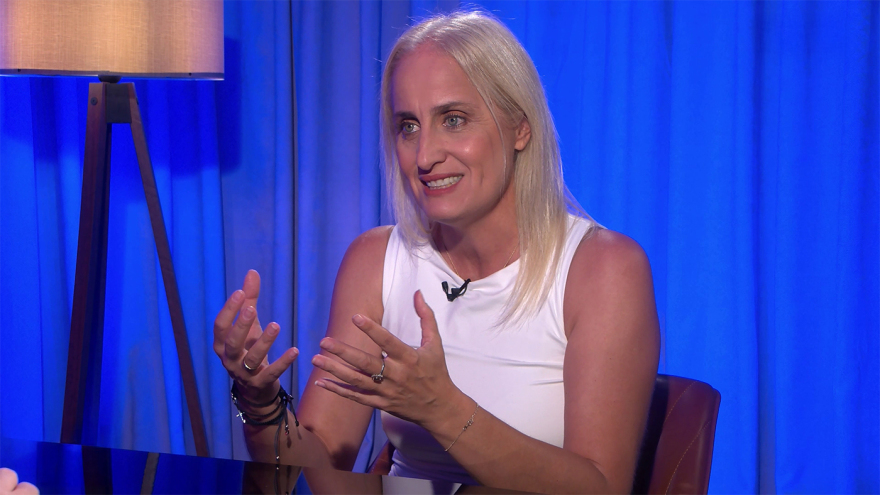
She clarified that the discussion concerns only Kolumbo and not Nea Kameni, emphasizing that “there has never been any mention of a possible eruption there.” She also stressed the need for better funding of marine research: “In December, we will retrieve the equipment to process the data and then redeploy it. The underwater seismographs are the only witnesses that hear the pulses of the volcano.”
The professor explained that the seismic tremors were caused by rising magma and rock fracturing: “This fracturing is the earthquake. The magma stopped rising at the end of March, and that’s when the earthquakes stopped.”
She pointed out that the map of Greece shows the red areas—the most active seismic zones. “If we also include the volcanoes, for example in Santorini, the zones are even more active. Conversely, if we move further north to the Cyclades, they are aseismic; we do not expect earthquakes there.”
Referring to tsunami examples, she said the phenomenon is also a concern for Greece and mentioned the areas where residents must know that in the event of a major earthquake, they should move away from the coast: “Areas like Samos, Rhodes, and Kalamata must be ‘tsunami ready.’”
She also mentioned the high cost of international research: “The German ship cost €100,000 per day, paid by Germany. Greece is a paradise to study these phenomena; it’s the supermarket of natural disasters. But it also requires investment from the Greek state.”
Finally, she referred to the Geopark of Nisyros: “Nisyros is a volcanology museum. For the first time, marine areas are included. Geopark means that residents protect the environment, and the island becomes a hub for higher-quality tourism. Large infrastructure is not needed—just protection.”

Ask me anything
Explore related questions