

Although it is too early to draw firm conclusions about why the Turkish side requested a “postponement,” speculation remains. Ankara cited Erdoğan’s participation in a gathering of Muslim leaders with former U.S. President Donald Trump. Yet Athens does not rule out the possibility of second thoughts within Erdoğan’s team, particularly since, after the meeting was arranged, the Turkish president received the highly significant invitation from Trump to meet at the White House.
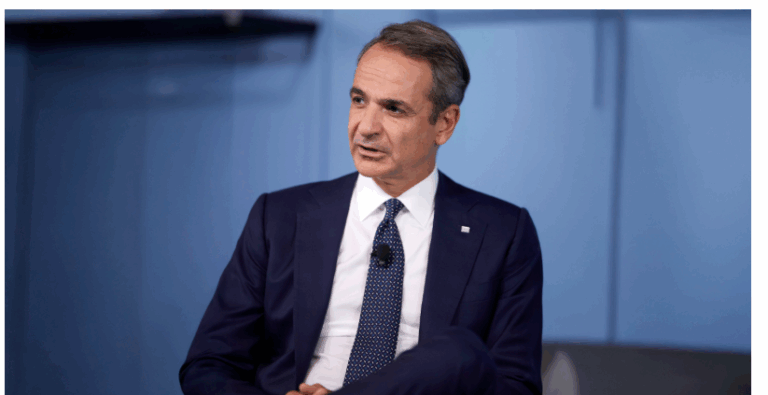
Mitsotakis: Open Channels, but No Concessions
Speaking with Wall Street Journal editor Emma Tucker, Mitsotakis acknowledged the serious challenges in Greek-Turkish relations. Still, he stressed the importance of dialogue:
“These were not always easy meetings, but I have always supported keeping open lines of communication with Turkey and addressing problems openly,” he said, noting that he has already met Erdoğan seven times as prime minister.
On the issue of Chevron’s entry into exploration south of Crete, Mitsotakis was categorical:
“We have nothing to discuss with Turkey. We are exercising our sovereign rights south of Crete, this is recognized by Chevron, and we will continue down that path,” he said, adding pointedly: “If what we are doing causes some discomfort to Turkey, so be it. C’est la vie, as the French would say.”
Greek Diplomacy: Dialogue Must Continue
Earlier, Foreign Minister Giorgos Gerapetritis struck a similar tone, emphasizing that “there is no question of halting dialogue.” He noted that a structured framework now exists between Greece and Turkey, allowing communication and helping to prevent crises. He also predicted that “there will be an opportunity in the near future for the two leaders to meet.”
The government’s strategy aims to prevent the canceled meeting from becoming a major setback that could deepen mistrust and suspicion at a time when Greek-Turkish rapprochement already faces serious challenges.
Erdoğan’s Calculations
Analysts suggest Erdoğan may have avoided the meeting with Mitsotakis to protect his image before his White House visit. Raising disputes with Greece—over territorial sovereignty, Cyprus, or threats against U.S. energy interests such as ExxonMobil and Chevron—could have undermined the message he wants to project in Washington.
The outcome of Erdoğan’s talks with U.S. President Trump is expected to shape his next moves, not only for Greek-Turkish relations but also for Turkey’s broader ambitions. Ankara hopes to reset bilateral ties with Washington, remove sanctions and arms embargoes, and secure a role in shaping the region’s new security architecture.
Ask me anything
Explore related questions