





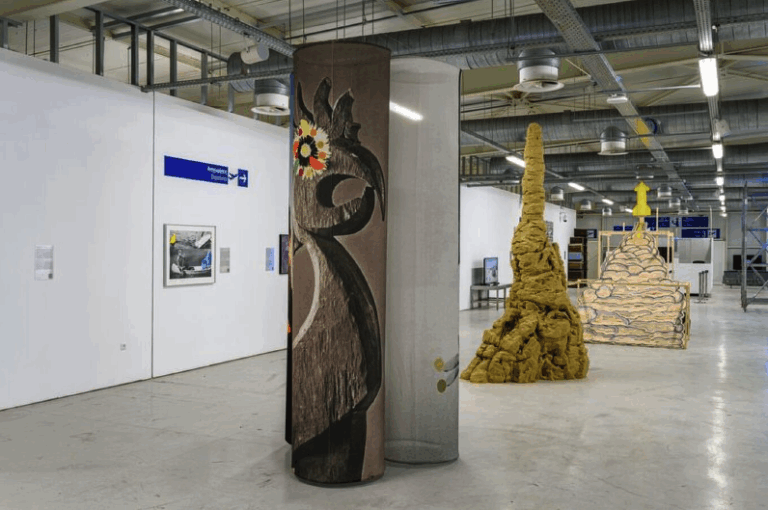
A bold and rare artistic endeavor opens today at the Athens International Airport, titled “all aboard.” The exhibition, which will run for one month and offers free admission to the public, features works by 40 artists from around the globe.
The pieces are displayed in the Express Facility building, located adjacent to the airport’s western runway. Curated by Kostas Prapoglos, the show seeks to create a multifaceted meeting point where contemporary art dialogues with architectural memory and the functionality of a space in transit.
Beyond its physical setting, the exhibition addresses existential and philosophical themes, focusing on the dynamics of transition as a dense lived experience. It explores stasis and mobility as existential domains, probing whether movement is evolution or escape.
The airport—both a geographic and psychological crossroads—is transformed into a liminal space where experience is inscribed. The inert infrastructure is reactivated, becoming a vessel of memory, time, and displacement. This space, poised between function and pause, transcends its role as mere passage. Chronological coordinates fold in on themselves, and the notion of time becomes elastic, dissolving Newtonian linearity and enabling an experience rooted in Bergson’s durée—a fluid, asymmetric, heterogeneous form of conscious experience.
The history of the airport is woven into the artistic inquiry. From the dawn of flight to the present day, airports have served as sites of exploration and cultural connection. The participating artists are invited to reimagine this silent space as fertile ground for creative reconstruction, drawing from personal, collective, and historical memory to present the journey not as destination but as a complex experiential field. The aim is no longer the endpoint but the in-between, a waiting zone where the self is deconstructed and reconstructed.
At the core of the exhibition are themes of memory, identity, and spatial fissures. The artists examine how an airport may mirror human wandering, highlighting narratives of displacement, separation, and reconnection. The psychogeography of the airport is not about movement of bodies or goods alone, but a latent tension composed of anticipation, desire, and loss.
This environment’s mutability underscores both geographic and emotional fluidity. How does one’s sense of self form in a world where mobility is routine? What constitutes belonging in such a context? These questions revolve around identity as ongoing process, engaging Deleuze’s philosophy of becoming.
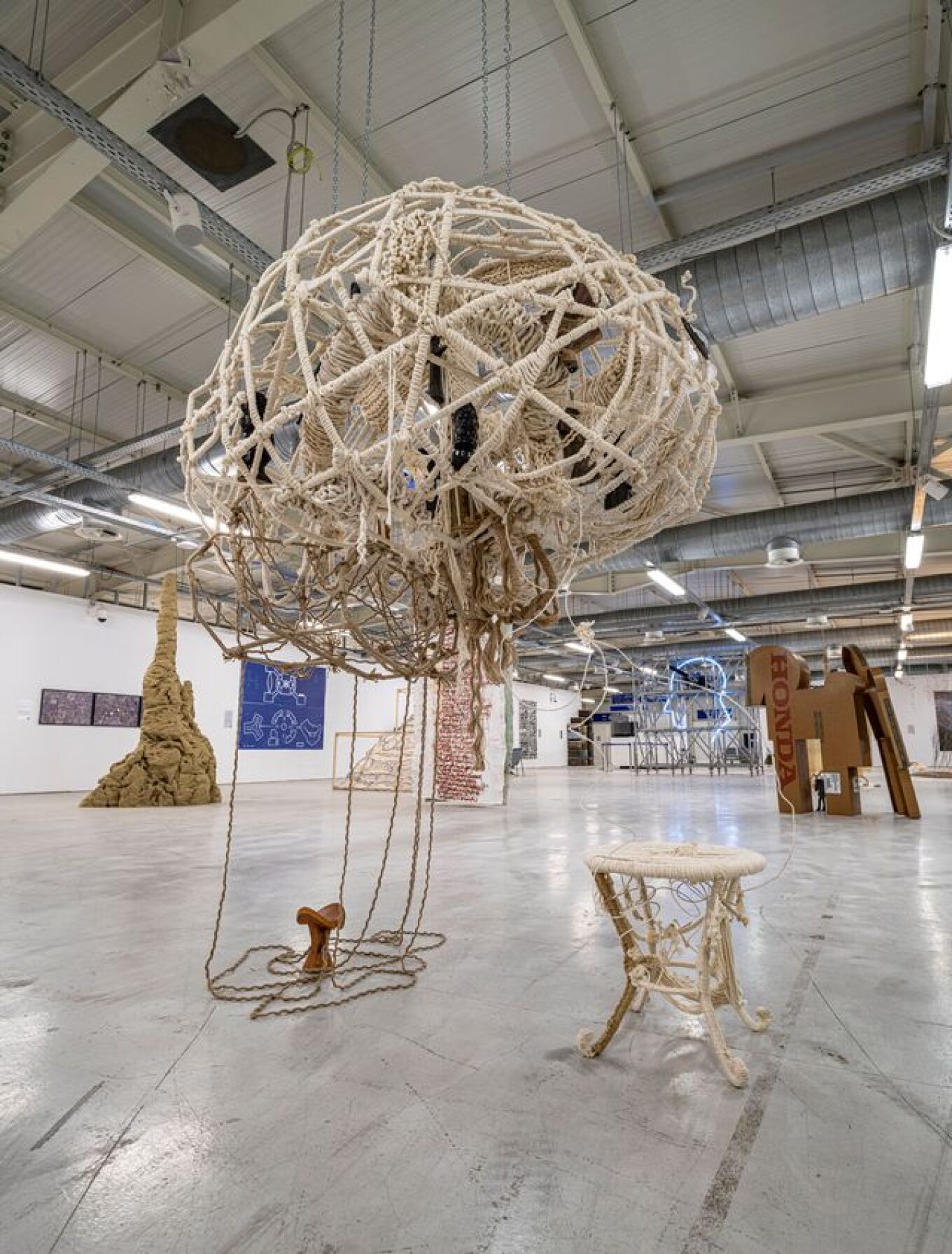
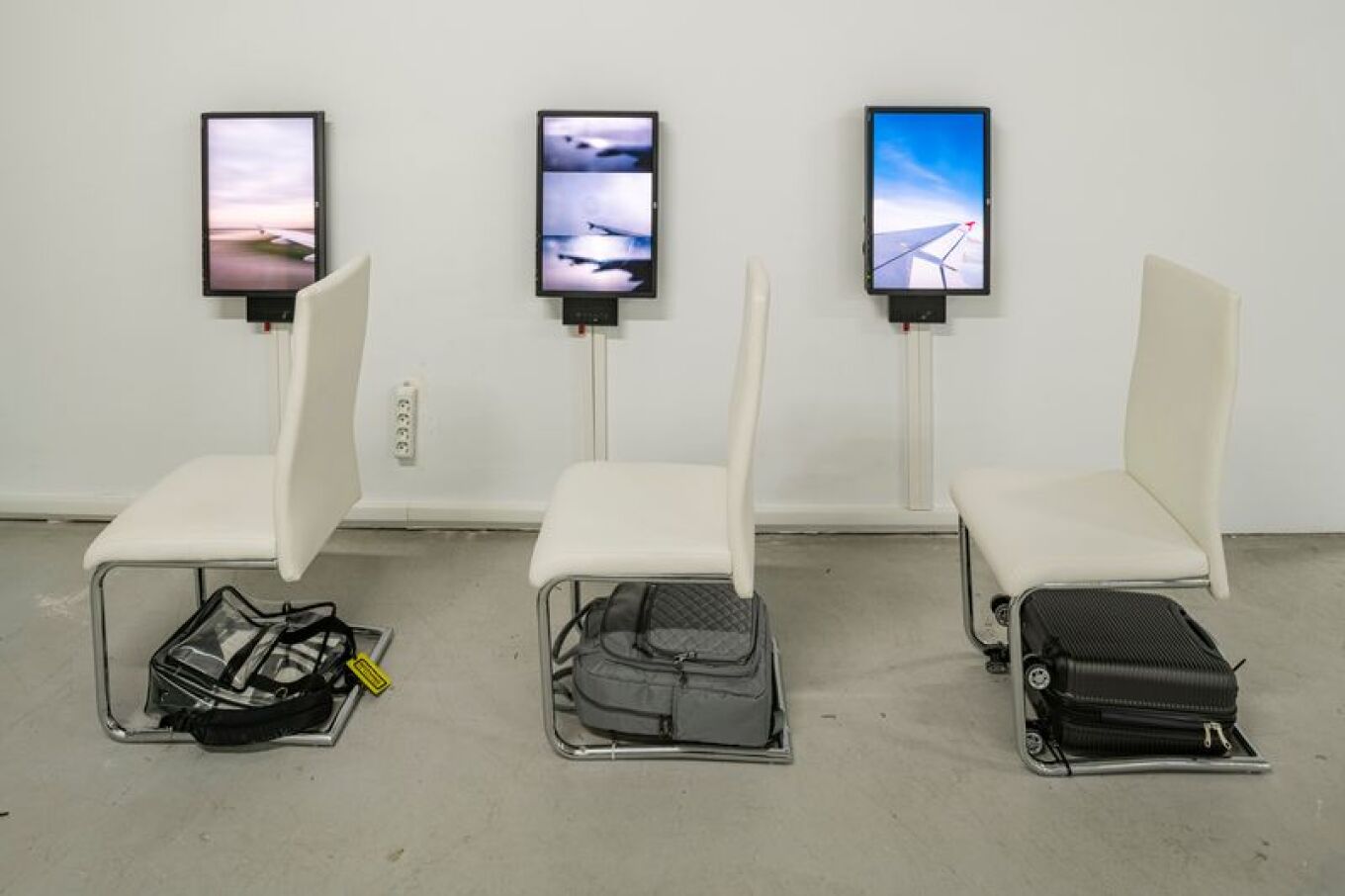
Flight, once a symbol of freedom, now bears distinct traces of control, restriction, and borders—a transformation intensified under the recent pandemic paradigm. The artworks probe the conditions and constraints of movement, touching on migration, globalization, and the often invisible limits of surveillance. Biometric scanning, data collection, and algorithmic oversight reconfigure the traveler as a fragmented, quantified entity subject to continuous interpretation.
This exhibition attempts a new framing of the airport, pushing it beyond mere utility. Waiting areas, corridors, and checkpoints gain existential weight. Acts of departure, transit, and return become imbued with deep ontological meaning. The waiting state functions as a transitional experience without beginning or end, stretching time and deepening introspection.
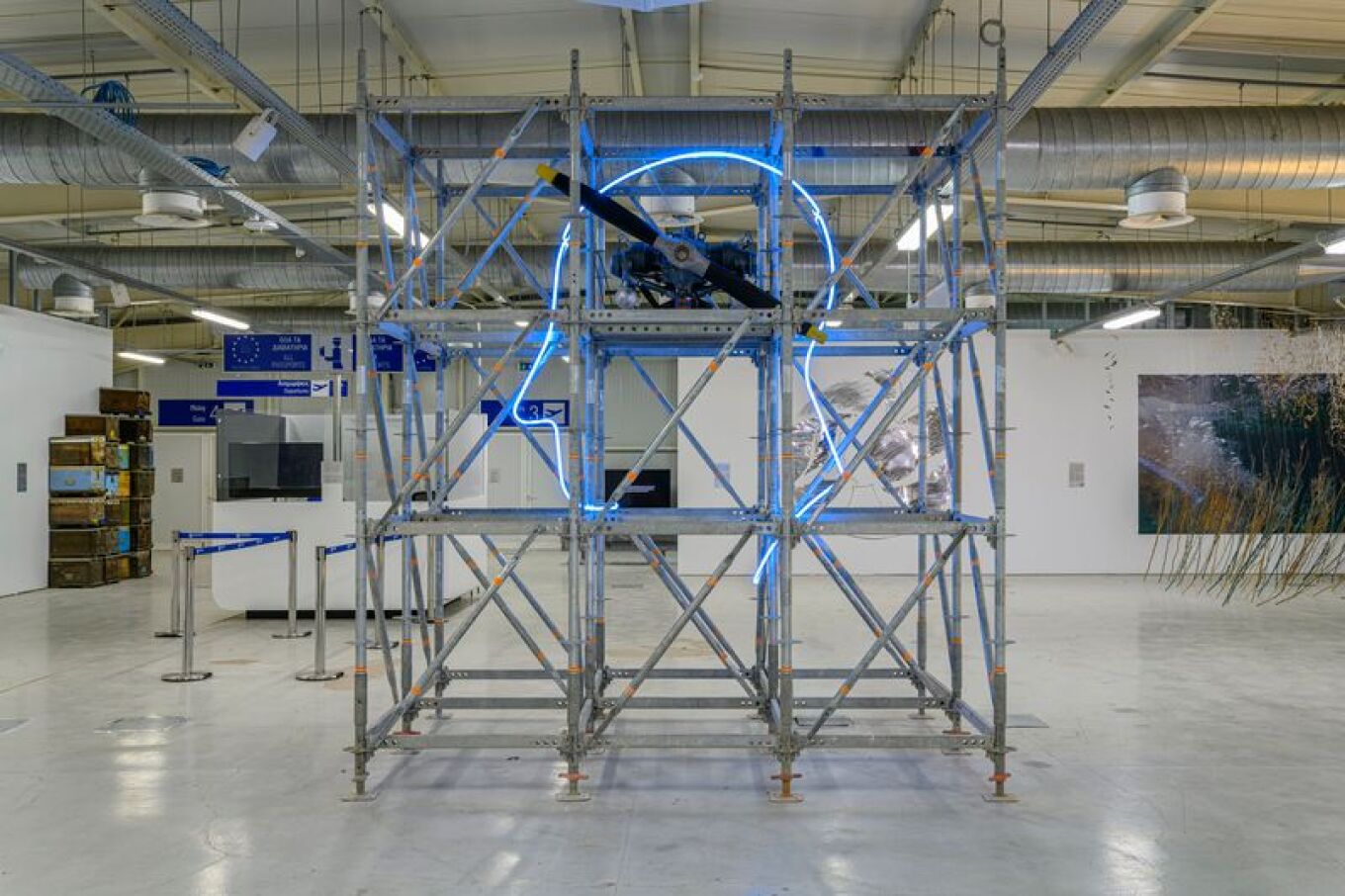
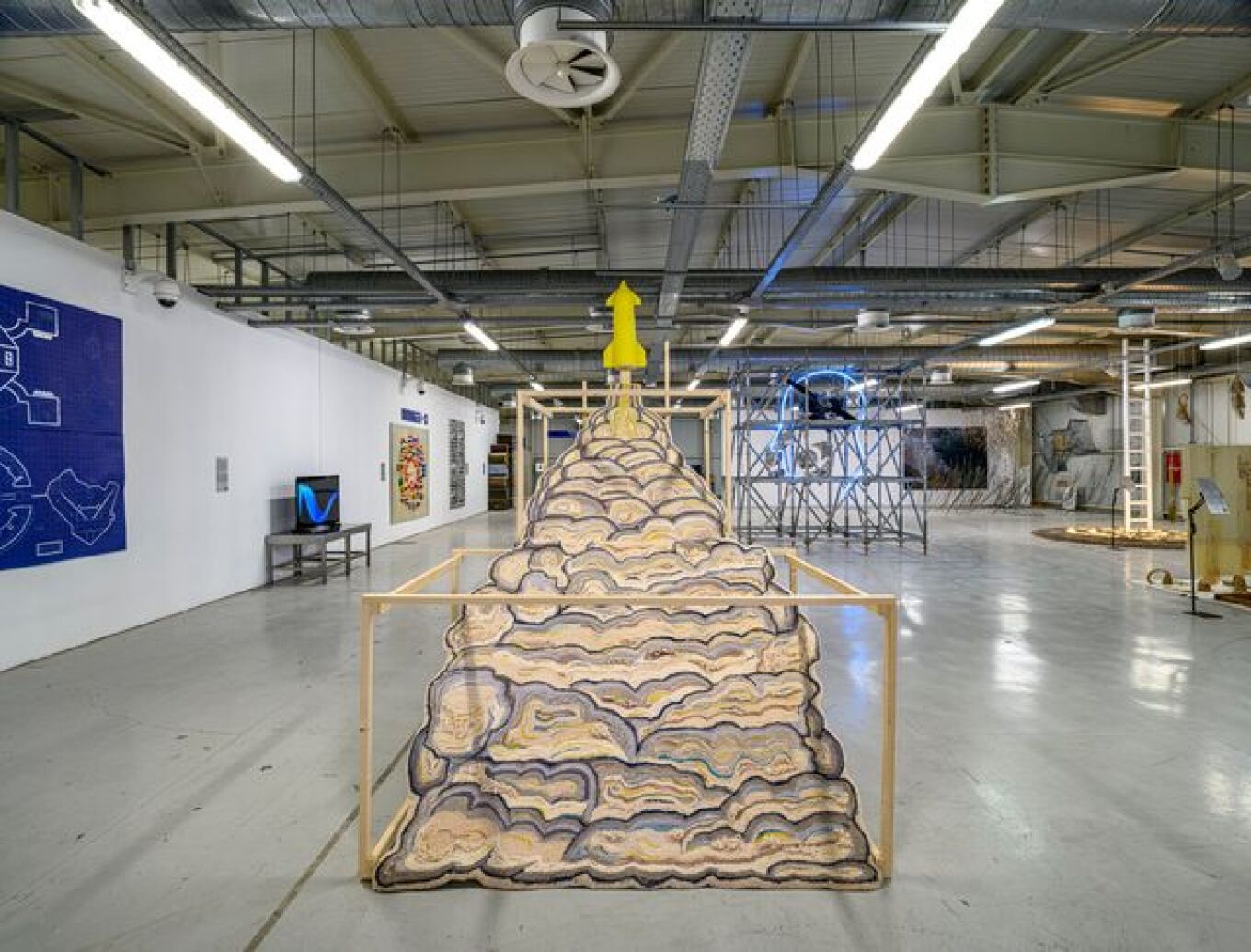
The journey transcends material bounds and becomes allegory. Takeoff and landing initiate an internal fusion of past, present, and potential futures. The 40 artists present installations, sculptures, video, performance works, and paintings to articulate this layered terrain. The airport’s visual and auditory systems, along with aircraft noise, are transformed into poetic subtext, intensifying the emotional resonances embedded in the act of travel.
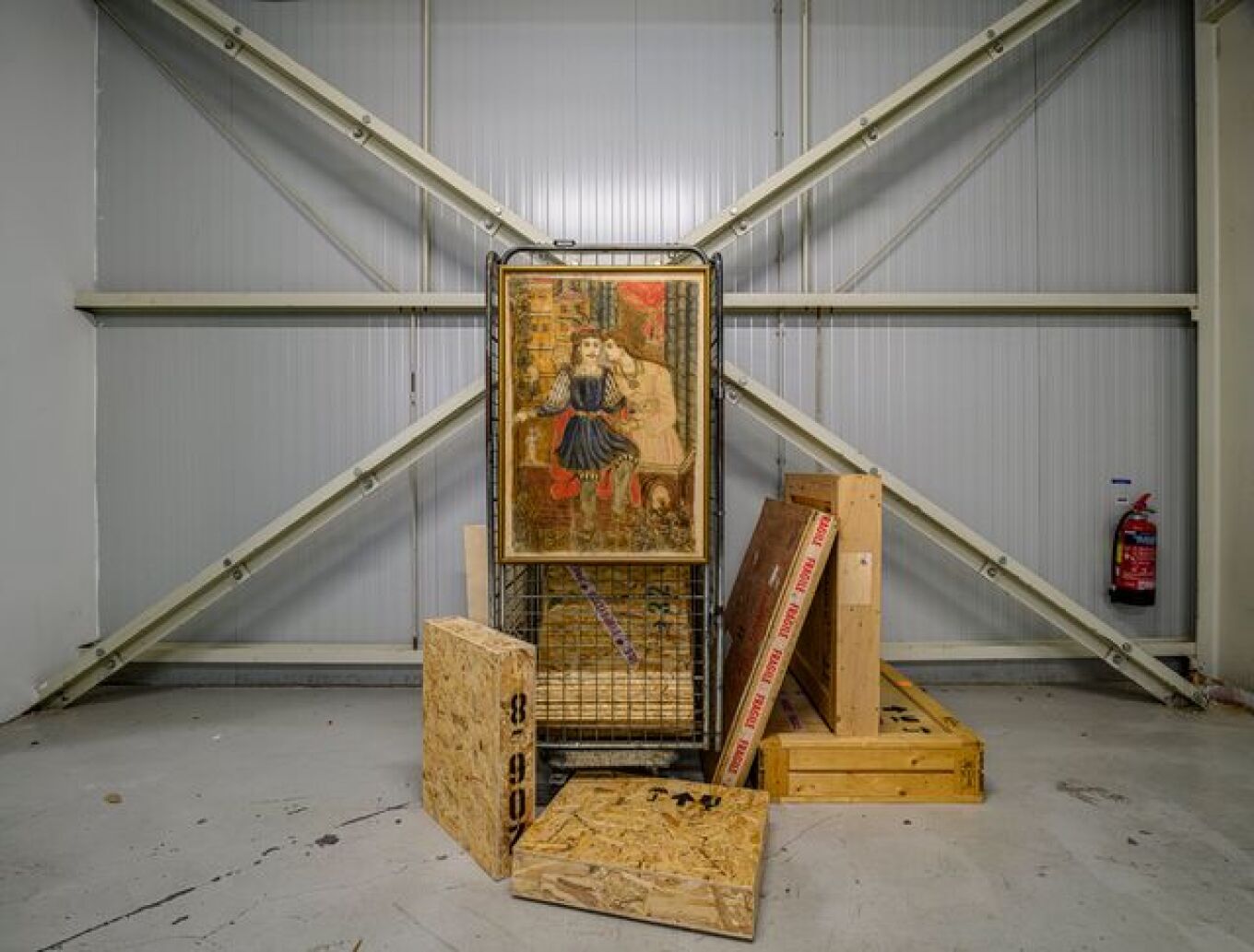
Choosing to “inhabit” a building with art is intentional. The exhibition becomes an act of reformation—poetic creation where the obsolete becomes generative. Through artistic vision, the space functions as an archive of suspended intentions, a locus for semiotic excavation.
Hidden ecosystems and other life forms remind us that human mobility unfolds within a wider ecological field. The rhythms of flora and fauna coexist with programmed human passage—underscoring interdependence. While human temporality is measurable, the natural world follows recurring cycles independent of schedules.
The show frames the airport as a messenger of possibility. Creators and spectators co-author an evolving story. Reviving the space mirrors humanity’s capacity for continual rebirth.
Meanwhile, the terminal becomes a springboard for reflection on consumption—a hallmark of modern travel. From the carbon footprint of aviation to the durability of souvenirs, the exhibition probes how experience becomes commodified. The spectacle of adventure, memory-as-data, and the curated self via social media animate an “Instagrammable” subjectivity.
The language of airports is terse, coded, and international. Announcements, signage, and automated voice systems compose a semantic web designed to guide—yet capable of disorientation. Beneath operational precision lies a deeper mechanism: an architecture of control and a façade of order. The infrastructure of signs and sounds reveals a latent desire to impose meaning on chaos—desire that can be reversed or reconfigured through artistic intervention. Retained signage, original lighting, and strategic placement of artworks (not aligned with expected passenger flow) collectively create subtle disorientation, triggering a reprogramming of spatial logic and perception.
Even the title “all aboard,” with its elegant novelty, functions as a Trojan horse. It adopts the language of welcome while hinting at predetermined trajectories. The choice seems spontaneous but adheres to a preexisting path. Beneath simplicity lies design, turning the programmed into internal impulse.
Visitors are urged to reconsider their role—not as passengers, but as co-creators of an existential landscape. What does it mean to be in motion? How do individual and collective histories shape the relationship between space and time? Transition is never neutral: it activates transcendence of thought, perception, and desire.
The exhibition features artists such as **Anna Amariotu, Alexandra Athanasiadi, Anna Andarti, Klitsa Antoniou, John Baldessari, Alexandros Vasmoulakis, Robert Cahen, Aikaterini Geygian, Irini Gonou, Susan Daboll, Maya Deren, Olafur Eliasson, Sophia Zarari, Roza Zeidan, Eleni Zouni, Michal Heiman, Elya Iliadi, Annita Kalimeri, Vasilis Karakatsanis, Lizi Kalliga, Jenny Marketou, Varvara Mavrakaki, Arianna Oikonomou, Michalis Parlamas, Ada Petranaki, Lia Petrou, Lina Pigadioti, Yulia Pinkusevich, Evi Savvaidi, Ismini Samanidou, Ridley Scott, Dimitra Skandali, Nadia Skordopoulou, Jesse Leroy Smith, Marianna Strapatsaki, Tonoptik, Nikos Tranos, Claire Tsalouchidi‑Hatzimina, Theofilos Chatzimichail, Francesca Woodman, among others.
Days & Hours:
Wednesday – Thursday – Friday – Saturday – Sunday: 12:00 – 19:00
Free Entry with a valid ID such as an ID card, driver’s license or passport.
Ask me anything
Explore related questions




