





Vasilopita/St. Basil’s pie is one of the most recognizable and beloved customs of the New Year. It is not merely a sweet bread, but a living bearer of history, faith, and cultural continuity, bridging Antiquity, Byzantium, and modern Greece, both within and beyond its borders.
The origin of Vasilopita, as we know it today, dates back to the early Byzantine period and is inseparably linked with Saint Basil the Great, Archbishop of Caesarea in Cappadocia.
Saint Basil the Great was not only a theologian, but also a social reformer. In Caesarea he founded the “Basileias,” an unprecedented complex of social welfare institutions for its time (hospitals, poorhouses, hostels).
This fact gives particular weight to the legend of the Vasilopita: it is not simply a miracle, but an expression of social justice and equality. Thus, ethos (the Basileias) is transformed into custom (the Vasilopita)!
According to tradition, when a provincial governor demanded heavy taxation from the inhabitants of Caesarea, Saint Basil asked the people to gather gold coins and jewelry.
When the danger was ultimately averted, and since the Saint did not know which valuables belonged to whom, he instructed that loaves of bread be baked, inside which the precious items were placed. In a miraculous manner, each family received the bread that contained its own valuables.
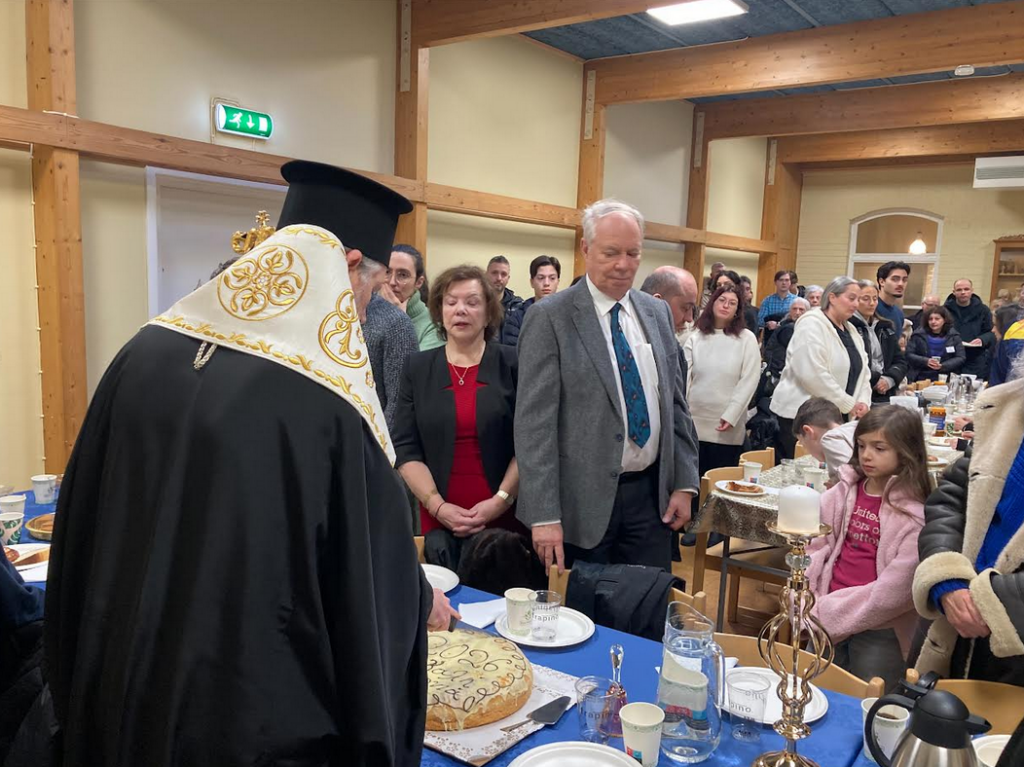
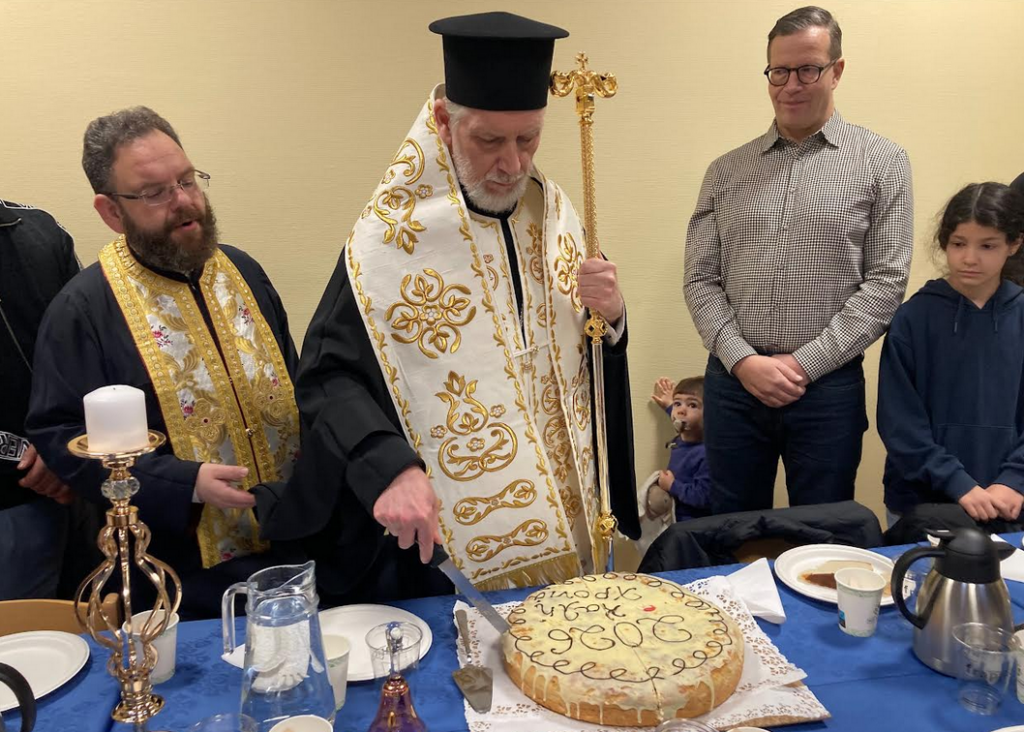
This event became the foundation of the custom of the Vasilopita, which was established to be cut on January 1st, the feast day of Saint Basil the Great, throughout the Byzantine Empire.
Although there was no Vasilopita in its present form in Ancient Greece, there existed related customs with strong symbolic meaning. Bread always held a sacred character in the Greek world.
In Ancient Greece, bread was offered to the gods as a symbol of life, fertility, and continuity—the so-called “plakountes” and “sacrificial loaves,” which were connected with festivals of the agricultural cycle and the changing of the seasons, as well as festivals in honor of the goddess Demeter, where bread and the fruits of the earth functioned as means of communication between humanity and the divine.
The concept of “fortune” was also already present, though not through a coin, but through omens and ritual acts. In antiquity, fortune was not considered random; it was regarded as the result of divine favor or displeasure.
In Roman tradition, the month of January was dedicated to the god Janus, the god of transitions and new beginnings. This two-faced deity symbolized looking simultaneously to the past and to the future.
The concept of the New Year was not uniform in Ancient Greece; each city had its own calendar. Nevertheless, the symbolic transition of time was accompanied by rituals of renewal, purification, and good wishes.
Throughout history, the transition into the new year has been associated with the concept of fortune. With Christianity, fortune is transformed theologically: it is no longer the result of fate, but the fruit of blessing.
The coin in the Vasilopita does not “predict” the future, but functions as a sign of spiritual joy, family unity, and communion of persons in Christ.
Many New Year customs were eliminated, reshaped, or Christianized, when the Church healed or replaced older practices connected with divination, disguises, and festivals of the Roman calendar.
It was called for the removal from Christian life of the “Kalends,” the “Vota,” the “Brumalia,” and related practices (disguises, rituals, and the like).
We thus see how strongly these customs persisted among the people, and we understand the mechanism by which certain elements were ultimately transformed rather than abolished, acquiring Christian content.
In the same spirit, Patristic literature provides direct testimony to reactions against the “Kalends.” Saint John Chrysostom’s homily “On the Kalends” (PG 48) is clear evidence of how the Church Fathers confronted New Year practices when these were linked to superstition and a notion of “happiness” detached from faith.
On the other hand, the very fact that today we have carols—that is, public Christmas and New Year songs of good wishes—shows that an originally “calendar-based” custom can survive while changing its content: from a social gift or wish of the Roman Kalends to a Christian blessing and family joy.
Therefore, certain customs that have survived to this day with pre-Christian origins were incorporated into the Christian worldview and constitute characteristic examples of cultural continuity, such as:
a) Good-luck charms and fortune: The ancient belief in fate and the favor of the gods was replaced by divine blessing.
b) The pomegranate: A symbol of fertility and abundance already in the Eleusinian Mysteries, it is preserved as a symbol of good fortune and transformed into a Christian symbol of abundance and the blessing of the fruits of the earth.
c) Breaking the pomegranate and entering with the right foot: Ancient apotropaic practices that survived as folk customs, expressing a popular wish for a good beginning.
d) Greetings and treats: These derive from the ancient eupeteries, that is, wishes for a good year and fruitful harvest.
By cutting the Vasilopita today, we repeat the same ritual not out of mere habit, but because within it we recognize ourselves as a link in a long historical chain, in which the hope for a good year, prosperity, generosity, and unity remains unchanged.
Ask me anything
Explore related questions




