






The gold sovereign is making a strong return to the spotlight, with the surge in gold prices globally driving new historic highs in the Greek market.
Within a year, its price has jumped 41%, with headlines noting that a single gold sovereign is now worth as much as the minimum monthly wage.
Official Rates and the Price Gap
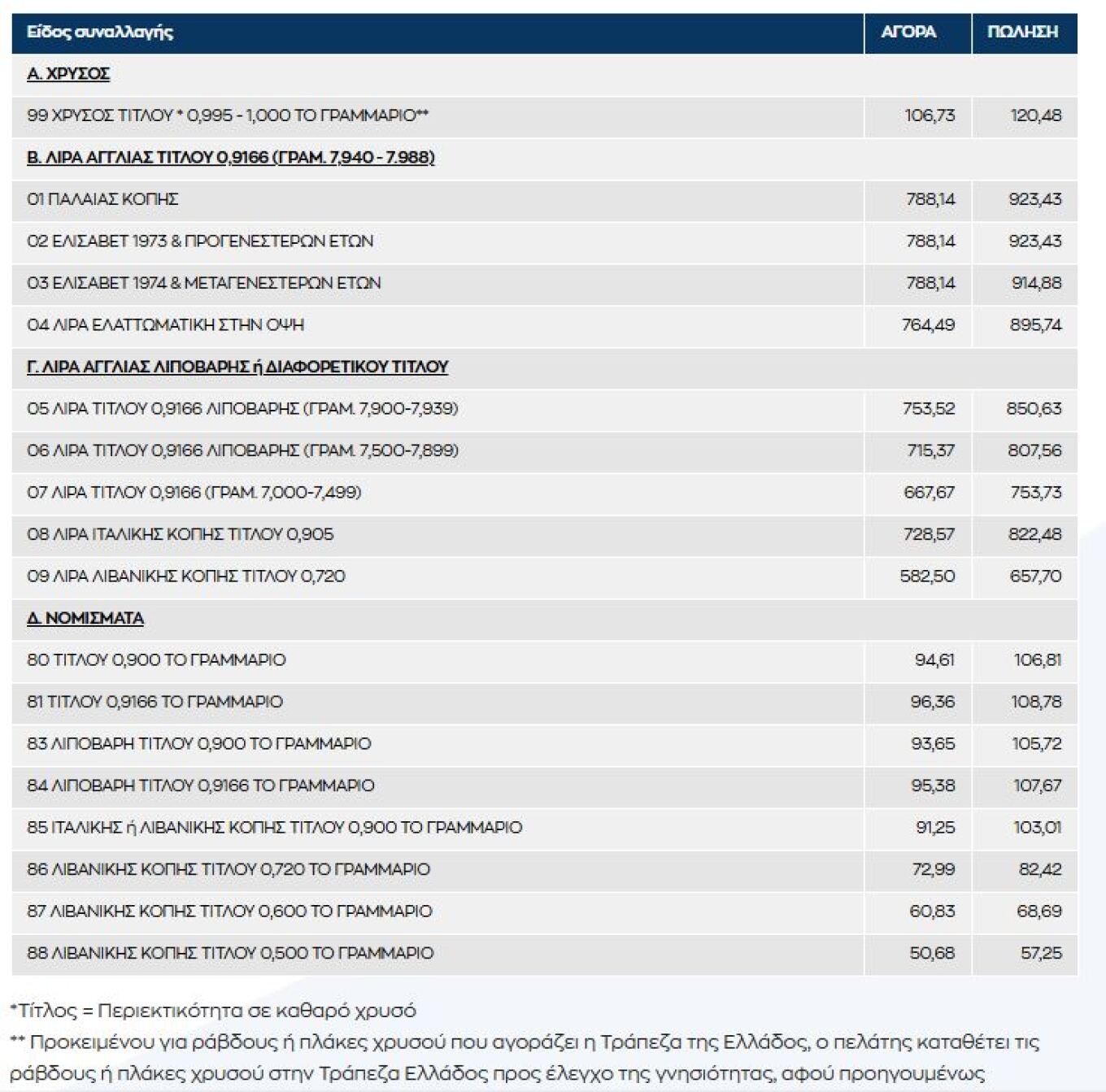
According to the latest price bulletins from the Bank of Greece, the selling price of a gold sovereign ranges between €894–€923, while the buying price stands at €763–€788.
The price spread (around €150) reflects costs for storage, transportation, and authenticity checks in official transactions.
In pawnshops and exchange outlets, purchase prices from individuals reach up to €800.
Where to Buy/Sell Officially
After the Bank of Greece, the only commercial bank offering investment gold products (like full and half sovereigns, as well as gold bars) is Piraeus Bank. As an official distributor for the Royal Mint of the UK, it holds its own stock and facilitates official gold coin transactions.
Bank of Greece Data: More Sellers Than Buyers
Data from the Bank of Greece shows that Greek households are selling far more coins than they are buying:
- In the first nine months of 2024, just 4,672 sovereigns were purchased, while 35,972 were sold.
- In the first nine months of 2025, 5,399 coins were bought, while 32,002 were sold.
This trend is attributed to cost-of-living pressures and the desire to cash in profits, given the sharp rise in gold prices over the last two years.
How Many Gold Sovereigns Do Greeks Own?
Though the Bank of Greece does not provide an official inventory, it’s estimated that since 2002, over 3 million gold sovereigns have been liquidated by Greeks, while around 1.5 million have been purchased.
This suggests that hundreds of thousands of sovereigns remain outside the banking system, often kept as family savings or “smart” emergency assets—a practice that became widespread during the 10-year financial crisis.
In 2024, 150,000 gold sovereigns circulated through official channels (Bank of Greece and Piraeus Bank). The Bank of Greece accounts for roughly one-third of all transactions, with Piraeus Bank handling the majority.
The “Parallel” Market: Pawnshops & Private Sales
Beyond official channels, there’s a vast private trade network of pawnshops, gold stores, and person-to-person deals.
These outlets set their own buy/sell prices, often favoring sellers during high-demand periods. However, no official statistics exist for this segment, and transactions are not monitored by the Bank of Greece—meaning buyers should be cautious.
When buying or selling, it’s critical to:
- Verify authenticity
- Request receipts and identification
- Work with certified appraisers
- Be aware of the coin’s origin, year, and condition
Current Parallel Market Prices (Approximate)
What to Look for When Buying
A genuine sovereign should:
- Weigh 7.988 grams
- Have a diameter of 22.05 mm
- Have a thickness of 1.52 mm
- Be made of 22-karat gold
Damage or wear can reduce the coin’s value. Buyers should also check mint origin, minting year, and design details.
Why Gold Is Rising Again
The renewed gold surge is driven by a combination of global economic and geopolitical factors:
- Slow pace of interest rate cuts by central banks → Investors turn to “safe havens” like gold
- Stock market uncertainty & political instability in the U.S., Europe, and Middle East
- Heavy gold buying by central banks, especially China, India, Turkey, and Poland
- Increased investment in gold ETFs, boosting demand
According to the World Gold Council, central banks purchased over 1,100 tonnes of gold in 2024–2025. China alone bought 225+ tonnes, followed by Poland, India, and Turkey.
Notably, just today, after the announcement of a ceasefire phase agreement in Gaza (under the Trump peace plan), gold prices dipped slightly (-0.6%) to $4,047/oz following the opening of European markets.
Ask me anything
Explore related questions




