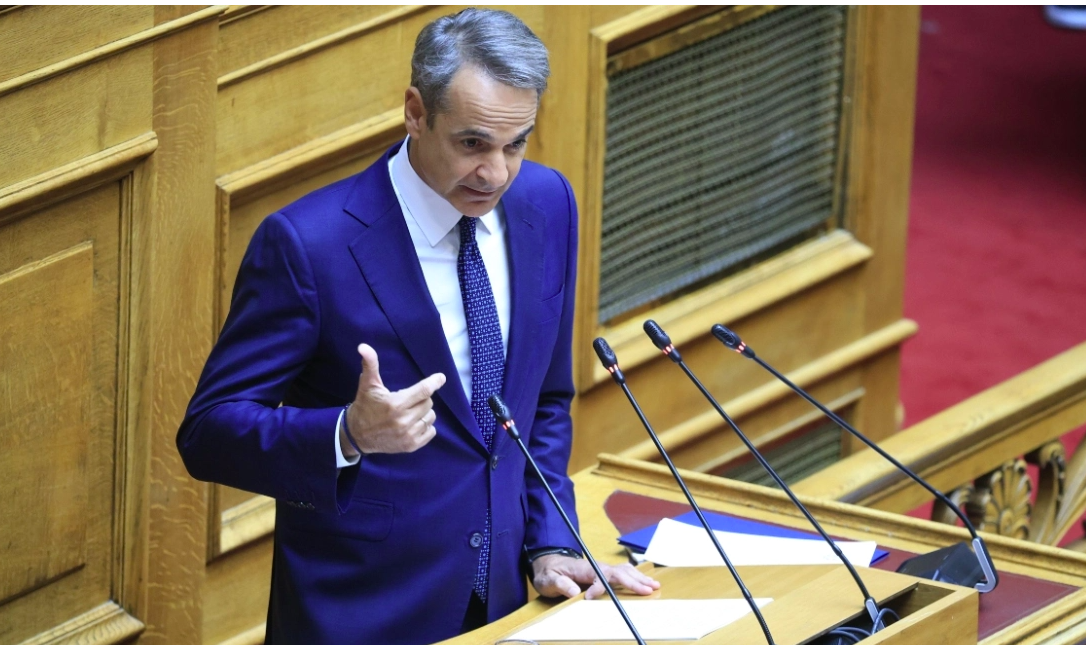
Kyriakos Mitsotakis began his rebuttal in the plenary session of Parliament in a strong tone.
“You know what effort it took to get the children out of Gaza. We didn’t do it for show or for communication purposes,” he emphasized, responding to Ms. Konstantopoulou. “If we had recognized the state of Palestine, would it have helped us or made our role more difficult the next day? Greece is correctly positioned to play a meaningful role in the peace process the following day,” he said.
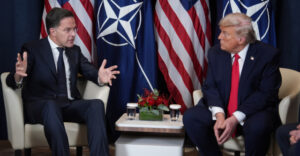
“President Trump’s style may be jarring, but be careful, Mr. Androulakis: Mr. Trump is an elected president, and the U.S. is a strategic partner of Greece,” he noted.
“If we hadn’t been invited, what would you have said?” he asked, addressing Mr. Androulakis, who had criticized his presence at the Gaza Summit.
“We have said many times that we must impose on ourselves a framework of self-discipline: if we want to have discussions that citizens can follow, we must respect the speaking times. I consider it an insult — both to me and to Parliament — that all the leaders, given 20 minutes, spoke almost twice as long. This situation cannot continue.
We must understand that parliamentary democracy has rules, and those rules must be respected.”
Closing
A second comment: I want to refer to the SYRIZA party and what happened during the vote on the labor bill. Listening to the discussion, one would think we had entered… a labor Middle Ages. Yet, when we saw the voting results, 47 articles — more than half — received over 180 positive votes. SYRIZA, in order not to expose itself and vote in favor, withdrew; so that its unbearable double-talk and hypocrisy would not be revealed.
I will also respond to Ms. Konstantopoulou. You referred to a trial that started yesterday in Larissa and asked me to take a position for or against the defendants. You have confused us. Your party, SYRIZA, had set up a “shadow operation.” You did everything you could to prevent the trial from starting, which, however, will begin — and justice will be served there.
Justice is administered in courts by judges, not on TV panels or political platforms.
Kyriakos Mitsotakis began his second speech in Parliament with an attack on Zoe Konstantopoulou.
“If we hadn’t been invited, what would you have said?” he asked, addressing Mr. Androulakis, who had criticized his presence at the Gaza Summit.
Prime Minister Kyriakos Mitsotakis will brief the MPs on foreign policy, with an emphasis on Gaza and Greek-Turkish relations, as part of the discussion at the level of political leaders, held at his request.
Although the discussion concerns foreign policy issues, it is considered certain that it will extend to all topics that are currently in the spotlight, such as government decisions regarding the Tomb of the Unknown Soldier, farmers’ payments, and the start of the Tempi trial.
“I come to today’s discussion with a sense of responsibility and a willingness to find common ground, to present the truths about foreign policy,” said Mr. Mitsotakis at the start of his speech, noting that over the past six years, Greece has been steadfastly defending its national interests and promoting peace and stability.
“Russia is attempting to regain the influence it once had, while in the Middle East and Africa there are conflict zones. At the same time, we face new challenges: the climate crisis, the food crisis, the impacts of artificial intelligence, among others. Instead of seeking universal solutions to these common issues, as happened after World War II, the truth is that multilateralism is retreating. Power often replaces justice,” he added.
Mr. Mitsotakis emphasized that for these reasons he welcomed Mr. Androulakis’ request to have a broader discussion, not just about the Palestinian issue. “I directed the discussion toward a comprehensive briefing on foreign policy, so that all political leaders could take a position on the full range of issues facing our country, with the hope that there will be consensus on foreign policy matters. These issues are not resolved in cafés with empty slogans. Diplomacy cannot be confused with ‘revolutionary gymnastics.’”
“I am proud because our homeland stands tall and proud, confident in its own strength,” not merely observing developments but striving to shape them. “No one can speak of a strong Greece if the country does not have a strong economy.” Economic indicators also influence the country’s international image.
At the same time, he referred to the country’s deterrence capabilities. Greece possesses Rafale fighter jets, expects to receive its first F-35s in 2028, and the Navy is set to receive the first Belharra frigate before the end of the year, with three more to follow. Greece is also in discussions with Italy regarding additional frigate acquisitions. “At the same time, we are raising the ‘Achilles Shield’ against threats.”
Greece, he said, is evolving into an energy hub. “Six years ago, the volume of natural gas entering our country covered exclusively domestic needs. Today, 17 billion cubic meters of natural gas pass through our country, making Greece a provider of energy security for the Balkans, with the potential to reach Ukraine. You can understand how significant our country’s energy hub has become,” he added.
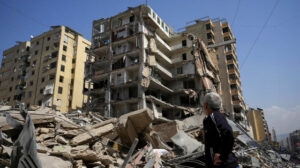
Regarding Gaza, he stated that Greece has sought a ceasefire and the release of hostages from the very beginning. At the same time, he emphasized that Greece maintains its longstanding position in favor of a Palestinian state, which should emerge at the conclusion of a political process under the auspices of the United Nations. Greece is simultaneously strengthening its partnership with Israel, regardless of which government is in power there, while also deepening ties with several Arab countries. “Our cooperation with Egypt has been upgraded to a strategic partnership,” he noted.
Concerning the Monastery of Saint Catherine in Sinai, he said the issue had been exploited. “The question of rights over the Monastery did not arise yesterday. Today, there is a preliminary, mutual understanding between the two sides regarding the matter. The final word will rest with the Holy Sinai Monastic Brotherhood, which will ensure the Monastery’s character in perpetuity. Any transformation of the Monastery is prohibited. It becomes the center of Orthodoxy, with the Greek state present.”
Ask me anything
Explore related questions